Jordann Shields
jordann.shields@energy.gatech.edu
Program Support Coordinator
IRI/Group and Role
Energy > Leadership
Energy

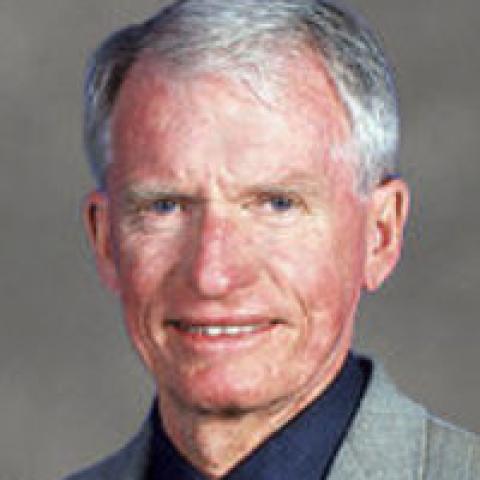
Dr. Sam Shelton is a nationally recognized expert in energy systems. He is the founding director of the Georgia Tech Strategic Energy Institute, an interdisciplinary technology development-based resource. The institute is actively engaged with industry to facilitate near-term, high-impact solutions to national and regional energy challenges. As a professor for 35 years, he developed in-class and web delivered undergraduate and graduate level energy technology courses. He is currently teaching 30,000 students enrolled in a MOOCs course, Energy 101, with a focus on energy supplies, independence, economics, and society’s demands.
His primary research focus has been the development and commercialization of sustainable energy technology. He has received over $30 million in R&D funding for this work. Dr. Shelton holds eight patents in sustainable energy technologies and founded two companies developing, manufacturing and marketing energy-efficient products. Starting in the 1980s, he was among the pioneers developing commercial solar energy technologies and the assessment of offshore wind farms. His favorite hobby is flying experimental airplanes
Thermal Systems; Wind; System Design & Optimization; Biofuels
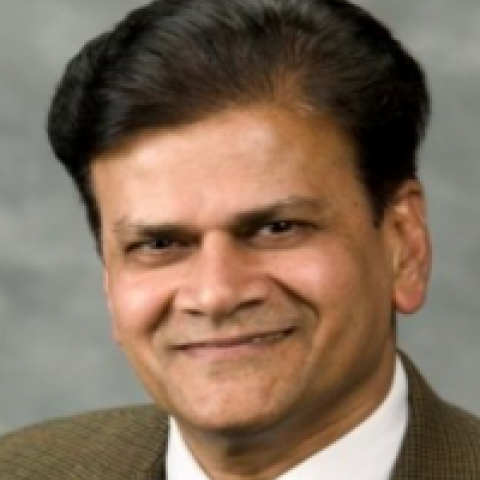
Over past three decades, Suresh has led a remarkably rich professional journey to unleash human potential through innovation, entrepreneurship, mentoring and leadership. Today, he applies his deep global business expertise to foster 21st century ecosystems to “industrialize innovation” for economic growth. Inspired by his hands-on experiences he authored “The 3rd American Dream” (2014); an insightful business book illustrating building blocks for growth that enable transformation at individual, societal and national level. A former GE-executive, he is a clear and pragmatic thought-leader. Starting his early career as a Naval Aviation Officer, his work experience includes industrial manufacturing, R&D and business operations in UK, USA, India and other countries. He has worked at British Aerospace, Rolls-Royce, MATRA, NASA, and General Electric. During 90s, he received international recognition for pioneering roles in globalization of GE while setting up global facilities in over 15 countries. Later, he co-authored his first best-seller book: ‘Global Outsourcing’ (2005) – still a reference work in many executive-MBA programs.
Electrical Grid
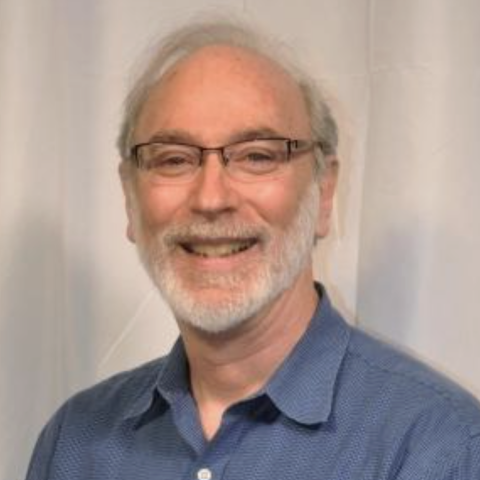
Dr. Seitzman joined Georgia Tech in 1994. He has expertise in the fields of optical flow diagnostics and sensors, combustion and combustion control, high temperature gas dynamics, laser spectroscopy, flow-field imaging and solid propellant combustion. He has authored more than 150 papers on these subjects. His experience includes development of optical sensors and diagnostics based on planar laser-induced fluorescence, line-of-sight absorption, chemiluminescence, particle image velocimetry, Raman scattering and laser-induced incandescence of soot, and their application in systems ranging from laboratory flames to high pressure combustors. Dr. Seitzman helped pioneer the development of planar laser-induced fluorescence (PLIF) and laser-induced incandescence as quantitative measurement techniques, and optical sensing of flame emission for active combustion control. The applications for this work include aircraft and spacecraft propulsion, ground-based power production, and heating systems.
Teaching Interests
Professor Seitzman's teaching interests include core aerospace engineering subjects with emphasis on propulsion, thermodynamics, fluid mechanics, physical gas dynamics, combustion processes and technical communications at both undergraduate and graduate levels. His instruction integrates fundamental engineering principles and practical applications. He actively involves students in problem-solving and critical analysis to foster a deeper understanding of these subjects.
Research Interests
Professor Seitzman's research centers on combustion, optical flow diagnostics and sensors, and high temperature gas dynamics, and involves both experimental and modeling approaches. His work aims to improve the robustness, reliability and emissions performance of combustion-based propulsion systems and energy conversion devices, as well as improving experimental techniques used to measure reacting and compressible flow fields. Research efforts engage both graduate and undergraduate students in advancing knowledge and developing novel methods in these areas.
Research
Lab/Collaborations:
Disciplines:
AE Multidisciplinary Research Areas:
Education
B.S., Mechanical Engineering, 1982, University of Texas at Austin; M.S., Mechanical Engineering, 1983, Stanford University; Ph.D., Mechanical Engineering, 1991, Stanford University;
Distinctions & Awards
AIAA Associate Fellow; Associate Editor of AIAA Journal of Propulsion and Power; School of Aerospace Engineering Most Valuable Faculty Award (6 times in last 11 years); NASA/DoD UAPT Outstanding Researcher (2007); Billiee Pendleton-Parker Faculty Freshman Partner of the Year (2004); National Science Foundation CAREER Award (1995);
Recent Publications
Combustion
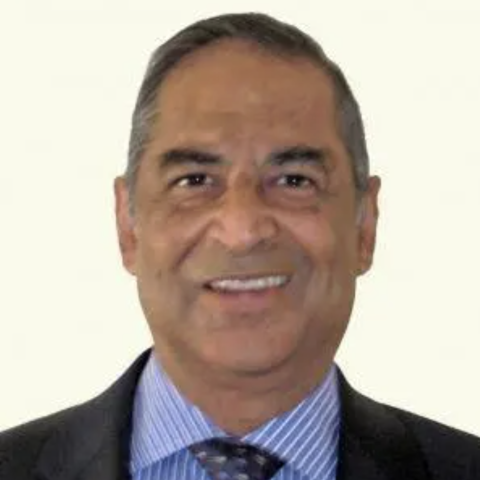
Professor Sankar is a Regents Professor and Sikorsky Professor in the Guggenheim School of Aerospace Engineering at the Georgia Institute of Technology. As Director of the School's Computational Fluid Dynamics Lab, he leads a research and education program focused on the modeling and simulation of unsteady viscous flow around aircraft, helicopters, horizontal axis wind turbines, and turbo-machinery components. He teaches undergraduate and graduate level courses in the areas of aerodynamics, helicopter theory, wind energy, aerodynamic design, and computational aerodynamics. Prior to joining the Georgia Tech faculty in 1982, Dr. Sankar worked at Lockheed Martin in Marietta, GA. While at Lockheed, he contributed to the development of 2-D and 3-D flow analyses that solve 3-D unsteady transonic flow over airfoils, wing-alone, wing-body, and complete aircraft configurations. He also extended 2-D transonic design methodologies to 3-D transonic wing and wing-body configurations. He also worked closely with researchers at Ford Motor Co on 3-D Navier-Stokes simulations of next generation automobile configurations. Dr. Sankar is the author or co-author of more than 400 technical publications in the fields of spatially and temporally high-order algorithm development, 3-D unsteady transonic flow over aircraft configurations, helicopter aerodynamics, compressor stall and surge, and aerodynamic design. He is an AIAA Fellow, a Technical Fellow of the American Helicopter Society, and a member of the American Society of Mechanical Engineers.
Teaching Interests
Professor Sankar's teaching interests encompass fundamental aerospace engineering and mechanical engineering topics at both undergraduate and graduate levels. These include solid mechanics, structural analysis, composite materials, and fracture mechanics. His instruction emphasizes the integration of theoretical principles with practical applications to prepare students for advanced study and professional practice. He is committed to engaging students through research-informed teaching and fostering critical thinking skills in engineering mechanics and materials behavior.
Research Interests
Professor Sankar's research focuses on the mechanics of materials and structures with particular emphasis on the behavior and failure of advanced composites and multifunctional materials. His work includes the development of micromechanical models, characterization of damage and fracture processes, and the study of multifunctional materials under mechanical and environmental loading. He applies computational and experimental methods to understand material response and to inform the design of lightweight, durable aerospace structures.
Research
Lab/Collaborations:
Disciplines:
AE Multidisciplinary Research Areas:
Education
Distinctions & Awards
o Fellow, AIAA
o Technical Fellow, AHS
o Georgia Tech Award for Development of Graduate Research Assistants, 1997
o Sigma Gamma Tau Most valuable Professor Award 2005, 2006, 2007, 2015
o NASA Group Achievement Award, UH60 Airloads Workshop, June 2007
Wind
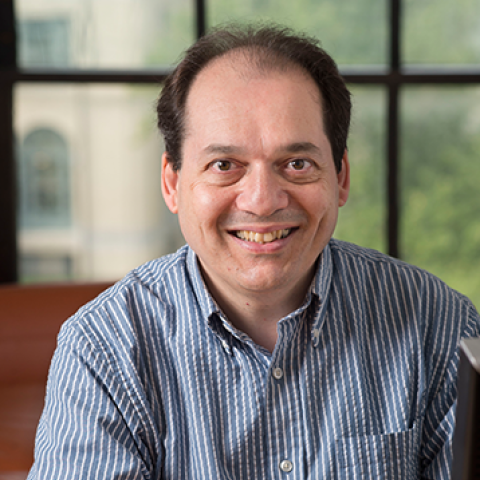
Nick Sahinidis is the Butler Family Chair and Professor in the H. Milton Stewart School of Industrial and Systems Engineering and the School of Chemical and Biomolecular Engineering at Georgia Tech. His current research activities are at the interface between computer science and operations research, with applications in various engineering and scientific areas, including: global optimization of mixed-integer nonlinear programs: theory, algorithms, and software; informatics problems in chemistry and biology; process and energy systems engineering. Sahinidis has served on the editorial boards of many leading journals and in various positions within AIChE (American Institute of Chemical Engineers). He has also served on numerous positions within INFORMS (Institute for Operations Research and the Management Sciences), including Chair of the INFORMS Optimization Society. He received an NSF CAREER award, the INFORMS Computing Society Prize, the MOS Beale-Orchard-Hays Prize, the Computing in Chemical Engineering Award, the Constantin Carathéodory Prize, and the National Award and Gold Medal from the Hellenic Operational Research Society. Sahinidis is a member of the U.S. National Academy of Engineering and a fellow of AIChE and INFORMS.
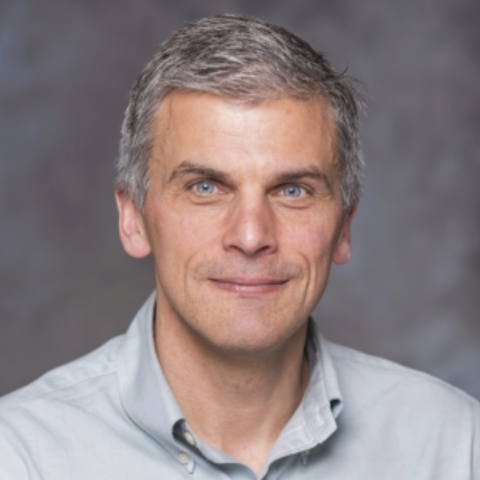
Research in the Sadighi group focuses on the design and synthesis of late transition metal complexes in unusual coordination environments and oxidation states. We are particularly interested in the synthesis of small clusters of low-coordinate late transition metals, with the goal of achieving difficult bond-forming and bond-breaking processes to develop new catalytic cycles. Metal–metal interactions represent an important aspect of these clusters, with implications for cooperative substrate activation and for multielectron reactions.
Catalytic reactions of interest include the transformation of carbon dioxide to liquid fuels. This field has seen remarkable recent advances, but important opportunities and challenges remain. These challenges are complementary to the development of renewable energy: A conversion of CO2 to chemical fuel could make CO2 a currency, rather than a waste product, of energy use. Another area of interest is the reaction chemistry of labile metal fluorides in carbon–fluorine bond-forming reactions. Finally, low-valent late metal clusters show promise in key steps of aerobic oxidation catalysis, with potential industrial and environmental importance.
Inorganic Chemistry; organometallic chemistry; catalysis applied to energy and sustaibability
Catalysis
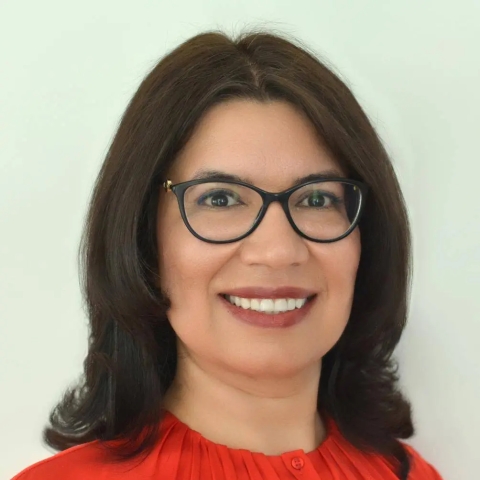
Maryam Saeedifard received the B.S. and M.S. degrees from Isfahan University of Technology, Isfahan, Iran, in 1998 and 2002, respectively, and the Ph.D. degree from the University of Toronto, Canada, in 2008, all in electrical engineering.
From 2007 to 2008, she was with ABB Corporate Research Center, Dattwil-Baden, Switzerland, working in the power electronic systems group. She joined Purdue University in January 2010, where she served as an assistant professor in the School of Electrical and Computer Engineering. Since January 2014, she has been on the ECE faculty at the Georgia Institute of Technology.
Her main research focus has been in the area of Power Electronics and Applications of Power Electronics in Power Systems and Transportation Systems. She has served on the technical program committees of the IEEE Power Electronics Society, IEEE Applied Power Electronics Conference and Exposition (APEC), and IEEE Industrial Electronics Conference (IECON). She is an editor for IEEE Trans. on Sustainable Energy, IEEE Trans. on Power Delivery, and IEEE Trans. on Power Electronics.
Electric Vehicles; Electrical Grid; Electronics
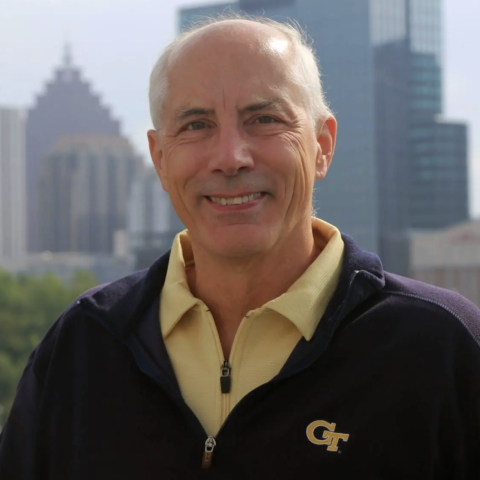
Prof. Armistead (Ted) Russell is the Howard T. Tellepsen Chair and Regents’ Professor of Civil and Environmental Engineering at Georgia Tech, where his research is aimed at better understanding the dynamics of air pollutants at urban and regional scales and assessing their impacts on health and the environment to develop approaches to design strategies to effectively improve air quality. He earned his M.S. and Ph.D. degrees in Mechanical Engineering at the California Institute of Technology, conducting his research at Caltech’s Environmental Quality Laboratory. His B.S. is from Washington State University. Dr. Russell was a member of EPA’s Clean Air Science Advisory Committee (CASAC) and a member of the National Research Council’s Board on Environmental Studies and Toxicology. He has served on and chaired multiple NASEM committees. He chaired the CASAC NOx-SOx, Secondary NAAQS review panel, the Ambient Air Monitoring Methods Subcommittee and the Council on Clean Air Compliance Analysis’ Air Quality Modeling Subcommittee.
Research
Professor Russell’s research interests are conducting fundamental and applied studies on air quality modeling, health effects of air pollutants, aerosol dynamics, environmental economics and control strategy design, atmospheric chemistry, computer modeling and numerical methods, including application of emerging artificial intelligence approaches to improving air quality and environmental management globally.
Education
Ph.D., California Institute of Technology, 1985
M.S., California Institute of Technology, 1980
B.S., Washington State University, 1979
Teaching
Professor Russell’s teaching interests include environmental engineering principles and their application to critical issues, air quality and the formation, fate and impacts of air pollution, and mathematical methods in environmental engineering.
Distinctions & Awards
Climate/Environment
Biography
Research Interests:
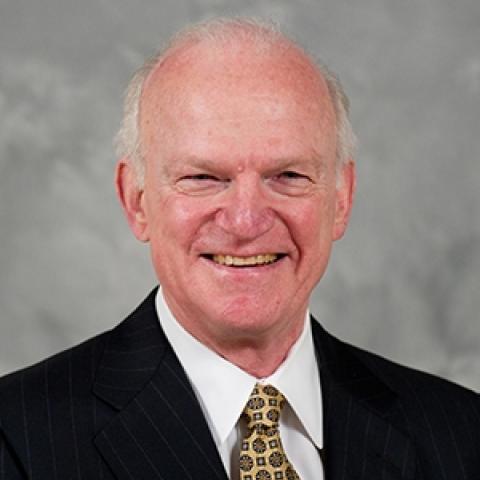
Processes involving separation and/or purification are of great practical importance and are at the core of the discipline of chemical engineering. Dr. Rousseau has focused his research on these processes and related phenomena. A large body of his work has been on crystallization, which is one of the most important means by which separation or purification is conducted. He has led studies of crystal nucleation and growth and the role these phenomena have in determining crystal morphology, purity, and size distributions. Dr. Rousseau is particularly interested in the application of crystallization technology to the recovery and purification of high-value-added chemicals, including biologically produced materials.
The use of crystallization in separation and purification processes is an important and valued methodology in numerous industries, including those manufacturing commodity and specialty chemicals, pharmaceuticals, foodstuffs, and a variety of biologically synthesized products. Crystallizers may be operated in either a batch or continuous mode, and the crystalline product usually must have characteristics that are intrinsic to a specific application and/or that facilitate fluid-solid separation.
Recent research topics in the Rousseau group include:
Education
B.S. 1966, Louisiana State University M.S. 1968, Louisiana State University Ph.D. 1969, Louisiana State University
Separations Technology; Biofuels; Energy & Water; Separation Technologies