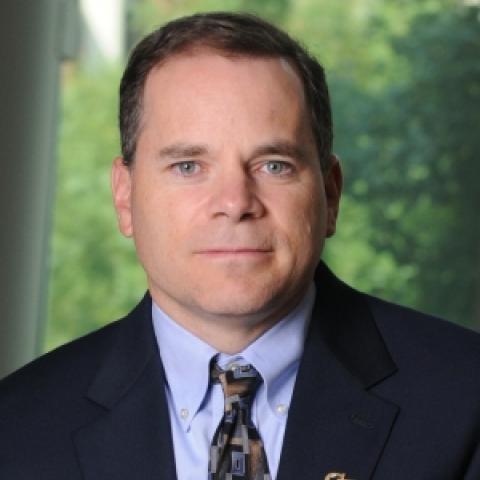
Brian Stone is a key expert in energy utilization, conservation, climate change, and social and environmental impacts.
Brian Stone Jr. is a Professor in the School of City and Regional Planning at the Georgia Institute of Technology, where he teaches urban environmental planning and directs the Urban Climate Lab. Stone’s program of research is focused on urban scale drivers of climate change and has been supported by the National Science Foundation, US Centers for Disease Control and Prevention, and US Environmental Protection Agency. His work on urbanization and climate change is regularly featured in The New York Times, The Washington Post, and on National Public Radio. He is author of The City and the Coming Climate: Climate Change in the Places We Live, which received a Choice Outstanding Academic Title Award, and the recently published Radical Adaptation: Transforming Cities for a Climate Changed World (Cambridge University Press). Stone holds degrees in environmental management and urban planning from Duke University and the Georgia Institute of Technology.
Biography:
Brian Stone Jr., Ph.D., is a Professor in the School of City and Regional Planning at the Georgia Institute of Technology, where he teaches in the area of urban environmental planning and design. Stone's program of research is focused on the spatial drivers of urban environmental phenomena, with an emphasis on urban scale climate change, and is supported by the National Science Foundation, U.S. Centers for Disease Control and Prevention, and U.S. Environmental Protection Agency.
He is Director of the Urban Climate Lab at Georgia Tech. Stone's work on urbanization and climate change has been featured on CNN and National Public Radio, and in print media outlets such as The New York Times and The Washington Post.
He is author of Radical Adaptation: Transforming Cities for a Climate Changed World (Cambridge University Press, 2024) and The City and the Coming Climate: Climate Change in the Places We Live (Cambridge University Press), which received a Choice Outstanding Academic Title Award for 2012. Stone holds degrees in environmental management and planning from Duke University and the Georgia Institute of Technology.
Teaching Interest:
Professor Stone's teaching interests focus on the role of the built environment in amplifying or moderating environmental impacts such as extreme heat, flooding, and associated health effects. He regularly teaches classes on environmental planning, climate change management, and planning theory.
Research Interest:
Professor Stone's research focuses on the spatial drivers of urban environmental phenomena, with a particular emphasis on urban-scale climate change. He is Director of the Georgia Tech Urban Climate Lab.
List of Recent Scholarly Work:
Gronlund, Carina, Hondula, David, Mallen, Evan, O’Neill, Marie, Rajput, Mayuri, Krayenhoff, Scott, Broadbent, Ashley, Grijalva, Santiago, Larsen, Larissa, Harlan, Sharon, Stone, Brian. 2025. Advancing extreme heat risk assessments to better capture individually-experienced temperatures: A new approach to describe individual and subgroup vulnerabilities. Environmental Health Perspectives, in press.
Huang, Kangning, Stone, Brian, Guan, Cheng, Liang, Jiayong. 2025. “Declining urban density attenuates rising population-weighted exposure to surface heat extremes.” Nature Scientific Reports, 15: 13860.
Jiang, Timothy, Krayenhoff, Scott, Martilli, Alberto, Nazarian, Negin, Stone, Brian, Voogt, James 2025. “Prioritizing urban heat adaptation infrastructure based on multiple outcomes: Comfort, health and energy.” Proceedings of the National Academy of Sciences, 122: e2411144122.
Stone, Brian. 2024. Radical Adaptation: Transforming Cities for a Climate Changed World. New York: Cambridge University Press.
Dey, Shuv, Mallen, Evan, Stone, Brian, Joshi, Yogendra. 2024. “Using Multiscale Atmospheric Modeling to Explore the Impact of Surface Albedo on Anthropogenic Heat Release.” Journal of Heat and Mass Transfer, 146: 052901-1-052901-12.
Stone, Brian, Mallen, Evan, Gronlund, Carina, Hondula, David, O’Neil, Marie, Rajput, Mayuri, Grijalva, Santiago, Lanza, Kevin, Harlon, Sharon, Larsen, Larissa, Augenbroe, Godfried, Krayenhoff, Scott, Broadbent, Ashley, Georgescu, Matei. 2023. “How Blackouts During Heat Waves Amplify Climate Risk.” Environmental Science & Technology, 57: 8245-8255.