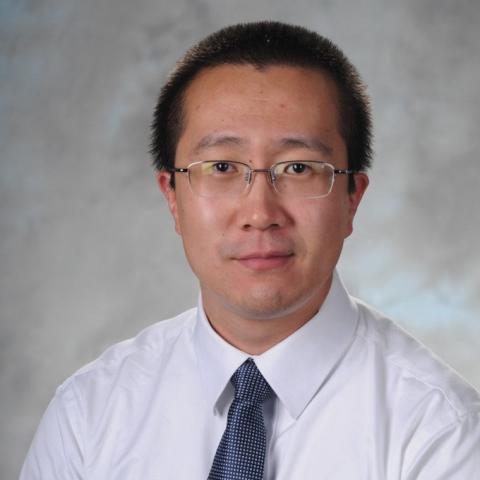
Costas Tsouris

Costas Tsouris's profile picture
costas.tsouris@ce.gatech.edu

Biography

Costas Tsouris is a chemical engineer with a Diploma of Engineering from the Aristotle University of Thessaloniki-Greece, and Masters and Ph.D. degrees from Syracuse University. Since 1992, he has worked in the Chemical Technology, Nuclear Science and Technology, Environmental Sciences, and Energy and Transportation Science Divisions at the Oak Ridge National Laboratory (ORNL). He is currently a Joint Faculty with Georgia Institute of Technology and ORNL.

Research

Separations and chemical processing: Chemical conversions and separations, Process intensification, process innovation: Novel reactors, novel processes, separations enhanced by electric and magnetic fields, combined reaction/separation with applications in biofuels production, Separations for energy applications: electrosorption of ions and electrical double-layer formation in energy storage devices, nuclear fuel reprocessing, liquid extraction, phase separation, Conventional and biofuel cells: Performance characterization via electrochemical impedance spectroscopy and neutron imaging, Carbon capture and storage: CO2 capture and storage (CCS), integrated assessment of CCS, Role of gas hydrates in energy problems: a means for carbon storage in the deep ocean, a source of natural gas, a method for water desalination, Transport and fate of biological and inorganic particles in the environment: colloidal and surface interaction forces

Affiliate
Phone
(404) 894-9366
Additional Research

Separations Technology

IRI/Group and Role
Energy > Research Community
Energy
University, College, and School/Department
Georgia Institute of Technology > College of Engineering

Rick Trebino

Rick Trebino's profile picture
rick.trebino@physics.gatech.edu

Education

B.A. in Physics from Harvard University 1977

M.S. in Applied Physics from Stanford University 1979

Ph.D. in Applied Physics from Stanford University 1983

Honors & Awards

2013: Fellow of the Society of Photo-Instrumentation Engineers

2010: Finalist in the Bertholdt Leibinger Prize competition for the most innovative optics invention

2010: Prism Award for the best optics invention of 2009 for the BOA pulse compressor

2009: Optical Society of America’s top optics developments of 2009 for measurements of superluminal Bessel pulses

2008: Awarded Fellow of the American Association for the Advancement of Science

2006: Fellow of the American Physical Society

2005: Circle of Excellence Award for the invention of a short-pulse GRENOUILLE

2003: R&D 100 Award for one of the top 100 technical inventions of the year for the invention of GRENOUILLE (A highly simplified ultrashort pulse measurement device)

2003: Best Optics Paper of the Year (Optical Society of America)

2000-2002 LEOS Distinguished Lecture

1999 Edgerton Prize of the SPIE

1995 Sandia National Laboratories Award for Exceptional Technical Accomplishments

1999 OSA Fellow

1997 Sandia National Laboratories Award for the Invention of Efficient, Exact Achromatic Phase-Matching

1996 Sandia National Laboratories Award for the Invention of Frequencey-Resolved Optical Gatting

1995 Sandia National Laboratories Award for Exceptional Technical Accomplishments

1995 Sandia National Laboratories Citation for Meritorious Achievement

1994 Sandia National Laboratories Award for Technical Excellence and Leadership

Research

The development of more powerful devices for manipulating and measuring potentially very complex light with ultrafast variations.

 Over 200 publications; see www.frog.gatech.edu/prose.html.

Books

 Frequency-Resolved Optical Gating: The Measurement of Ultrashort Laser Pulses, Kluwer Academic Publishers, Boston, 2002

Papers

  1. ·  J. Cohen, P. Bowlan, V. Chauhan, and R. Trebino, "Measuring temporally complex ultrashort pulses using multiple-delay crossed-beam spectral interferometry," Opt. Expr., 18(7), 6583 (2010).
  2. ·  P. Bowlan, H. Valtna-Lukner, M. Lõhmus, P. Piksarv, P. Saari, and R. Trebino, "Measurement of the spatio-temporal field of ultrashort Bessel-X pulses," Opt. Lett., 34(15), 2276, (2009).
  3. ·  R. Trebino, P. Bowlan, P. Gabolde, X. Gu, S. Akturk, and M. Kimmel, "Simple devices for measuring complex pulses," Laser & Photon. Rev., 3, 314 (2009).
  4. ·  M.A. Coughlan, M. Plewicki, S.M. Weber, P. Bowlan, R. Trebino, and R.J. Levis, "Specified electric-field construction from shaped pulses: The specific method," Opt. Expr., (2009).
  5. ·  D. Lee, P. Gabolde, and R. Trebino. "Toward single-shot measurement of broadband ultrafast continuum." J. Opt. Soc. Am. B, 25, A25 (2008).
Professor, School of Physics
Phone
(404) 385-1223
Additional Research

Electronics

IRI/Group and Role
Energy > Research Community
Energy
University, College, and School/Department
Georgia Institute of Technology > College of Sciences > School of Physics
Research Areas
Energy
  • Advanced Manufacturing for Energy

John Tien

John Tien's profile picture

The Hon. John Tien is a distinguished external fellow at the Georgia Tech Strategic Energy Institute and the Georgia Tech Research Institute. He is also a distinguished professor of the practice in both the Sam Nunn School of International Affairs and the School of Cybersecurity and Privacy and a senior fellow at the Belfer Center for Science and International Affairs at the Harvard Kennedy School. 

Before joining Georgia Tech, Tien was deputy secretary of the U.S. Department of Homeland Security (DHS) from 2021 to 2023. In that role, he was the DHS chief operating officer, overseeing a budget of $105 billion and facilities in all 50 U.S. states and all territories as well as more than 3,000 personnel stationed overseas in more than 75 countries. 

Alongside the secretary of Homeland Security, Deputy Secretary Tien led the policy development, operational oversight, and risk management of the department’s statutory mission areas and subordinate agencies, including cybersecurity and protection of America’s critical physical and cyber infrastructure; disaster preparedness and recovery; supply chain optimization, border security, and free and fair trade; air, pipeline, and rail security; maritime physical and cyber security; citizenship and immigration services; protection of senior officials and safeguarding the U.S. financial system; and counter-narcotics production and trafficking. 

In his broader policy administration role, Deputy Secretary Tien served as a member of the National Security Council’s Deputies Committee, the board of the National Counterterrorism Center, and the President’s Management Council. 

Upon his retirement from DHS in 2023, he was awarded two of DHS’ highest civilian awards: the DHS Distinguished Service Medal, and the United States Coast Guard Distinguished Public Service Medal. 

Tien previously served in the Obama administration as a National Security Council (NSC) senior director for Afghanistan and Pakistan, the Bush administration as an NSC director for Iraq, and the Clinton administration as a White House Fellow for the United States Trade Representative. 

From 2011 to 2021, he held various senior leadership positions at Citigroup as a managing director in their Citi Retail Services and Global Consumer Bank organizations. Before Citigroup, he was a U.S. Army officer, retiring at the rank of colonel. His Army career included commanding an 1,100-soldier armored task force in combat in Iraq, serving overseas for nearly a decade, and teaching political science at West Point. Col. Tien’s military awards and decorations include the Bronze Star Medal, Combat Action Badge, and Valorous Unit Award. 

Tien is now serving on the corporate board of directors for Union Pacific Railroad, on the Carter Presidential Center’s Board of Councilors, and as a founding board member of the Avalon Action Alliance, a nonprofit focused on nationally scaling proven healthcare programs to help heal veterans and first responders who struggle with depression, PTSD, and traumatic brain injury. He is also an executive partner and ambassador for the Master’s in Business for Veterans program at Emory University’s Goizueta Business School. 

Tien holds a B.S. in civil engineering from the United States Military Academy at West Point and an M.A. in philosophy, politics, and economics from Oxford University, where he was a Rhodes Scholar. He is a life member of the Council on Foreign Relations. He lives with his wife Tracy in Atlanta and volunteers with and supports numerous local civic institutions including the High Museum of Art.

Distinguished External Fellow / Professor of the Practice
IRI/Group and Role
Energy > Staff
Energy
Research Areas
Energy
  • Energy and National Security
  • Energy Systems, Grid Resilience, and Cybersecurity
  • Supply Chain

Iris Tien

Iris Tien
itien@ce.gatech.edu
Assistant Professor, School of Civil and Environmental Engineering
Williams Family Early-Career Professor, School of Civil and Environmental Engineering
Phone
(404) 894-8269
Additional Research

Smart Infrastructure

IRI/Group and Role
Energy > Research Community
Energy
University, College, and School/Department
Georgia Institute of Technology > College of Engineering
Research Areas
Energy
  • Built Environment
  • Energy Systems, Grid Resilience, and Cybersecurity
  • AI Energy Nexus
  • Sustainable Communities
  • Energy and National Security

Valerie Thomas

Valerie Thomas's profile picture
valerie.thomas@isye.gatech.edu

Valerie Thomas is the Anderson-Interface Chair of Natural Systems and Professor in the H. Milton School of Industrial and Systems Engineering, with a joint appointment in the School of Public Policy. 

Dr. Thomas's research interests are energy and materials efficiency, sustainability, industrial ecology, technology assessment, international security, and science and technology policy. Current research projects include low carbon transportation fuels, carbon capture, building construction, and electricity system development. Dr. Thomas is a Fellow of the American Association for the Advancement of Science, and of the American Physical Society. She has been an American Physical Society Congressional Science Fellow, a Member of the U.S. EPA Science Advisory Board, and a Member of the USDA/DOE Biomass Research and Development Technical Advisory Committee. 

She has worked at Princeton University in the Princeton Environmental Institute and in the Center for Energy and Environmental Studies, and at Carnegie Mellon University in the Department of Engineering and Public Policy.

Dr. Thomas received a B. A. in physics from Swarthmore College and a Ph.D. in theoretical physics from Cornell University.

Anderson-Interface Chair of Natural Systems
Professor, School of Industrial and Systems Engineering
RBI Initiative Lead: Sustainability Analysis
Phone
(404) 894-0390
Additional Research

Hydrogen Transport/Storage; Biofuels; ClIMaTe/Environment; Electric Vehicles; System Design & Optimization; Energy and Materials Efficiency; Sustainability; Industrial Ecology; Technology Assessment; Science and Technology Policy

IRI/Group and Role
Sustainable Systems > Core Partners
Renewable Bioproducts > Affiliated Faculty
Energy > Hydrogen Group
Energy > Research Community
Energy
Matter and Systems > Affiliated Faculty
University, College, and School/Department
Georgia Institute of Technology > College of Engineering > School of Industrial Systems Engineering
Research Areas
Sustainable Systems
  • Climate Science, Solutions, and Policy
Matter and Systems
  • Built Environment Technologies
Energy
  • Electric Vehicles
  • Energy Economics, Policy, and Public Health
  • Fuels
  • Supply Chain
  • Carbon Capture, Utilization and Storage
Renewable Bioproducts
  • Pulp, Paper, Packaging and Tissue

David Taylor

David Taylor's profile picture
david.taylor@gatech.edu

Education

  • Ph.D., Electrical Engineering, University of Illinois, Urbana‑Champaign
  • M.S., Electrical Engineering, University of Illinois, Urbana‑Champaign
  • B.S., Electrical Engineering, University of Tennessee, Knoxville

Research Interests

Professor Taylor’s research spans the theory and application of control systems, with emphasis on electromechanics, electromobility, robotics, and sensing. His recent research includes ultrasonic and radio frequency sensing for localization, powertrain optimization for energy efficiency and transient performance in hybrid and electric vehicles, perception and control for human driven and fully autonomous vehicles, and smart charging schemes for electric vehicles considering electric grid impact.

Teaching Interests

Professor Taylor’s teaching focuses on Control System Design, a course emphasizing state-space control algorithms and their implementation on microcontroller devices. Lab projects expose students to both theoretical foundations and practical applications. He also co-leads the EcoCAR cross-disciplinary student team that participates in funded Advanced Vehicle Technology Competitions. This team receives industry training as they design, build, and test efficient powertrains and autonomous driving features.

Publications

  • P. Barsa, K. Cunningham and D. Taylor, “Design of an adaptive cruise controller with integral action and feedforward compensation,” Proceedings of the IEEE/AIAA Transportation Electrification Conference and Electric Aircraft Technologies Symposium, 2025.
  • K. Cunningham, P. Barsa and D. Taylor, “Optimized acceleration and braking for dual motor all-wheel-drive electric vehicles,” Proceedings of the IEEE/AIAA Transportation Electrification Conference and Electric Aircraft Technologies Symposium, 2025.
  • C. Viteri, K. Sastry, M. Leamy and D. Taylor, “Smart charging of electric vehicle fleets with solar power and energy storage,” Proceedings of the IEEE/AIAA Transportation Electrification Conference and Electric Aircraft Technologies Symposium, 2025.
  • L. Leon, P. Barsa and D. Taylor, “Comparative assessment of motion trajectories for electric vehicles considering time and energy,” Proceedings of the 50th Annual Conference of the IEEE Industrial Electronics Society, 2024.
  • D. Dickson, K. Cunningham and D. Taylor, “Loss-minimizing operation of vehicle powertrains with front and rear electric drive units,” Proceedings of the 50th Annual Conference of the IEEE Industrial Electronics Society, 2024.
Professor, School of Electrical and Computer Engineering
Phone
(404) 894-8910
Additional Research

Electric Vehicles

IRI/Group and Role
Energy > Research Community
Energy
University, College, and School/Department
Georgia Institute of Technology > College of Engineering > School of Electrical and Computer Engineering
Research Areas
Energy
  • Electric Vehicles
  • Water, Wind, and Solar
  • Energy Storage
  • Energy Systems, Grid Resilience, and Cybersecurity

Martial Taillefert

Martial Taillefert's profile picture
martial.taillefert@eas.gatech.edu

Awards

Outstanding Undergraduate Research mentor, Georgia Tech, 2007 Petroleum Research Fund, Young Investigator Award, 2004 CAREER Award from NSF, 2003

Education

Ph.D., Civil Engineering, Northwestern University, 1997 M.S., Analytical Chemistry, University of Geneva, 1993 B.S., Chemistry, University of Geneva, 1991

Research

Geochemistry of freshwater and marine environments Geomicrobiology In situ measurements in sediments Analytical speciation of trace metals Interactions between chemical and biological processes at redox interfaces Dynamic biogeochemical modeling (reactive transport)

Research Keywords

Biogeochemistry Climate, Oceanography, and Weather

Professor, School of Earth and Atmospheric Sciences
Associate Chair for Graduate Studies, School of Earth and Atmospheric Sciences
Phone
404.894.6043
Additional Research

Climate Environment

IRI/Group and Role
Energy > Research Community
Energy
University, College, and School/Department
Georgia Institute of Technology > College of Sciences > School of Earth and Atmospheric Sciences
Research Areas
Energy
  • Critical Minerals
  • Carbon Capture, Utilization and Storage
  • Energy Economics, Policy, and Public Health

Phanish Suryanarayana

Phanish Suryanarayana's profile picture
phanish.suryanarayana@ce.gatech.edu

Phanish Suryanarayana joined the School of Civil and Environmental Engineering at the Georgia Institute of Technology in August 2011. He received his B.Tech. from Indian Institute of Technology, Madras, India in 2005. He obtained his M.S. in Aeronautics from California Institute of Technology in 2006. Subsequently, he received his Ph.D. in Aeronautics from California Institute of Technology in 2011 for his thesis titled "Coarse-graining Kohn-Sham Density Functional Theory". His research interests are in the areas of multiscale modeling, ab-initio calculations, density functional theory, continuum mechanics and smart materials. Overall, he is interested in developing efficient numerical methods for solving problems arising in a variety of fields. On a personal level, Dr. Suryanarayana is a sports enthusiast. He plays badminton, cricket, waterpolo, and ultimate frisbee. He also is an avid gamer (PC) and enjoys playing bridge and other board game

Professor, School of Civil and Environmental Engineering
Phone
404.894.2773
Office
Mason 5139A
Additional Research
  • Computational Materials Science
  • Energy Use & Conservation
  • High Performance Computing
IRI/Group and Role
Data Engineering and Science > Faculty
Energy > Research Community
Data Engineering and Science
Energy
University, College, and School/Department
Georgia Institute of Technology > College of Engineering > School of Civil and Environmental Engineering
Research Areas
Energy
  • Energy Storage
  • Nuclear
  • Critical Minerals
  • Combustion, Propulsion, and Hypersonics
  • Carbon Capture, Utilization and Storage

Andy Sun

Andy Sun's profile picture
andy.sun@isye.gatech.edu

Andy Sun is an Affiliate Associate Professor in the H. Milton Stewart School of Industrial and Systems Engineering at Georgia Tech.

Dr. Sun has a wide range of interests in both theory and applications of deterministic optimization and optimization under uncertainty.

  • On the deterministic side, Dr. Sun's recent research has focused on solving nonconvex optimization problems with a network structure, e.g. optimizing network flows with a nonconvex flow law, nonconvex quadratic programming on a graph, consensus optimization, and market matching. Dr. Sun has also been working on developing distributed algorithms for solving these nonconvex problems with convergence guarantees. Dr. Sun is also very interested in the problem of certifying the existence and uniqueness of solutions of polynomial systems with network structures using complex analysis and algebraic geometric methods. Dr. Sun has recently been interested in optimization with dynamical constraints, again with connection to network flow problems, where the flows are described by ODEs or PDEs.
  • On the uncertainty side, Dr. Sun has developed the first efficient algorithm for solving two-stage robust optimization problems that are much faster than Benders decomposition, cutting plane methods for multistage robust linear optimization much scalable than duality approach, models for decision-dependent uncertainty, and recently a fast exact algorithm (SDDiP) for multistage stochastic integer programming. His team is working toward developing efficient algorithms for multistage robust and stochastic programs with integer decisions.
  • On the application side, Dr. Sun has extensively worked on core optimization problems for electric power system operations and planning, and collaborated with major utility companies and system operators in the US. Dr. Sun's work on robust optimization for the Unit Commitment problem and strong convexification for optimal power flow problems have attracted substantial interests and follow-up research both in industry and academia.

Dr. Sun got his undergraduate degree from Tsinghua University in Beijing (major in Electronic Engineering), master degree in Media Arts and Sciences from MIT (working on analog computation and analog integrated circuit design), and doctoral degree in Operations Research from MIT. After PhD, Dr. Sun did a one-year postdoc at the IBM T. J. Watson Research Center in Yorktown Heights, NY.

Awards and Honors

  • Student Award: Alvaro Lorca, INFORMS George B. Dantzig Dissertation Award, Finalist 2017
  • INFORMS Energy, Natural Resources, and Environment (ENRE) Best Paper in Energy, First Place 2017
  • INFORMS Energy, Natural Resources, and Environment (ENRE) Best Paper in Energy, Second Place 2016
  • INFORMS Junior Faculty Interests Group (JFIG) Paper Competition, 3rd Place. 2014
  • Student Award: Hongfan Chen, INFORMS Undergraduate Research Award, First Place 2014
Anderson-Interface Early Career Professor
Associate Professor
Phone
(404) 385-7571
Additional Research

Electrical Grid

IRI/Group and Role
Energy > Research Community
Energy
University, College, and School/Department
Georgia Institute of Technology > College of Engineering > School of Industrial Systems Engineering
Research Areas
Energy
  • Energy Systems, Grid Resilience, and Cybersecurity

Wenting Sun

Wenting  Sun's profile picture
wenting.sun@aerospace.gatech.edu

Education

  • B.E., Engineering Physics, 2005, Tsinghua University
  • M.E., Engineering Physics, 2007, Tsinghua University
  • Ph.D., Mechanical and Aerospace Engineering, 2013, Princeton University

Background

Prof. Wenting Sun received his B.E. and M.E. degrees from Tsinghua University, Beijing in 2005 and 2007, respectively, and his Ph.D. degree from Princeton University in 2013. He joined Georgia Tech in July 2013. Dr. Sun’s research spans on combustion simulation, combustion kinetics, and plasma/ozone assisted combustion. He develops new numerical algorithms to accelerate large scale CFD simulation using predictive kinetic models. His work on plasma/ozone assisted combustion is to induce plasma generated species into combustion system to enable combustion at extreme conditions. Dr. Sun has developed a high pressure shock tube with unique capability allowing investigation of combustion kinetics for future power generation systems.

Research

  • Dr. Sun’s research spans on combustion simulation, combustion kinetics of conventional and alternative fuels, and new combustion technologies to enhance combustion process. Key to his research is developing new numerical algorithms to accelerate large scale CFD simulation using predictive kinetic models. His work on plasma/ozone assisted combustion is to induce plasma generated species into combustion system to enable combustion at extreme conditions, such as those in supersonic combustion Ramjet engines hypersonic propulsion. Dr. Sun has developed a high pressure shock tube with unique capability allowing investigation of combustion kinetics at supercritical carbon dioxide conditions for the next generation of power generation systems. The new supercritical carbon dioxide oxy-combustion power generation system features high efficiency and almost 100% carbon capture, which will change the landscape of power generation. He also developed a novel super rapid combustion machine to study fundamental turbulence/autoignition interaction to improve combustion models.

(1) Kinetic Model Reduction and Dynamic Adaptive Kinetics for Turbulent Combustion

High-fidelity simulation of combustion systems is a critical element for combustor and engine design. However, to model a combustion system, a chemical kinetic model including hundreds, even thousands, of species and reactions are needed to describe the fuel oxidation and heat release process. For each species in the kinetic model, one ordinary differential equation needs to be solved. The complicated kinetic model makes high-fidelity simulation very challenging and even prohibited because of the limitation of the needed computation power. For example, for large-scale simulations such as LES or DNS, using a predictive detailed kinetic model is prohibited. Thus, there exists a gap between the development of a detailed, predictive combustion kinetic model and high-fidelity large-scale simulation. We work on developing new algorithms to enable and accelerate large scale numerical simulations on combustion with predictive kinetic models. Recently, we  developed a new algorithm GPS (Global Pathway Selection) methond for kinetic model reduction to decrease the number of species in the detailed kinetic model efficiently from hundreds/thousands to tens through the analysis of element flux. Therefore, the reduced predictive kinetic models can be employed by LES or DNS for high-fidelity simulation. This algorithm constructs element flux graphs for considered elements, for example, C, O, and H for hydrocarbon combustion systems. Based on the constructed element flux graphs, important species which transfer significant element flux can be selected in the kinetic model. The global pathways for selected species can be identified by searching the shortest paths with the constructed element flux graphs. In this way, a reduced kinetic model can be constructed for use in complex CFD simulation. For given accuracy, the smaller the number of species needed in the reduced model, the more efficient the reduced kinetic model is, with the added benefit of considerably shorter simulation time. The GPS software and source code can be download here.

To further reduce the computation time of large-scale high-fidelity simulation, we developed a new numerical framework for DNS of turbulent combustion. The principle behind this multidisciplinary work is that different regions in the computation domain have different thermodynamic states; so only a small portion of species in the kinetic model needed to be calculated in the simulation. Therefore, different regions at different times can employ different reduced kinetic models generated on-the-fly with a much smaller number of species to further accelerate the simulation. The new framework was demonstrated using a canonical turbulent premixed flame employing a real jet fuel kinetic model (see plots blow). With high accuracy, the new numerical framework provides a significant speed-up of computation and the total CPU time is reduced by a factor of approximately 20. This new numerical framework enabled DNS with predictive kinetic models with good accuracy and parallel scalability.

The new regime-independent framework for 3D DNS of turbulent combustion with detailed kinetics is developed by incorporating on-the-fly adaptive kinetics (OAK), correlated transport (CoTran) techniques, and an efficient point-implicit ODE solver (ODEPIM) into a conventional DNS platform. All three methods are modified and optimized to adapt to 3D turbulent combustion and parallel high performance computing (HPC). A canonical turbulent premixed flame configuration corresponding to the thin reaction-zone regime is considered, where an initially planar premixed flame front interacts with a decaying isotropic turbulence. The computational domain consists of a cube with length 0.015 m. With the new numerical frame work, calculation of chemistry can be accelerated 46 times, calculation of transport can be accelerated 72 times, and overall acceleration of calculation is 20 times. See our publication here.

With the new capability enabled by the above-mentioned new numerical frame work, we further investigated the sensitivity of DNS predictions to chemical kinetic models. DNS of a canonical temporally evolving turbulent non-premixed flame was conducted using two different kinetic models. This simulation would not have been possible without the newly developed numerical framework discussed above. It was found that at laminar conditions, the two kinetic models provided very close predictions on combustion properties such as autoignition delays, flame speeds, and extinction strain rates. However, at turbulent conditions, different predictions were observed. The temperature predicted by these two kinetic models can vary by as much as 100 K. Detailed systematic analysis revealed that the sensitivity to the chemical kinetic models was magnified by the effects of unsteadiness and turbulence. This study has resolved an important question faced by the combustion community for a long time, that a different selection of kinetic models affects the prediction of DNS of turbulent combustion even though the kinetic models behave similarly at laminar conditions. See our related publication here.

(2) Ozone Assisted Combustion

Plasma/ozone-assisted combustion is a promising technique to improve engine performance, increase lean burn flame stability, reduce emissions, and enhance low temperature fuel oxidation and processing. Plasma/ozone-assisted combustion takes advantage of the dramatically different kinetics between plasma/ozone and combustion to enhance and control the combustion process. We work on using plasma generated species to enhance and control combustion process. One ongoing project is to study the effect of ozone addition on combustion.

One well known reaction pathway to enhance combustion by ozone addition through ozone decomposition (O3àO2+O). Different from conventional understanding in which ozone was known to enhance flame speeds owing to its unique capability to release atomic oxygen (O3àO+O2)  at elevated temperature conditions, We also discovered that ozone (through ozonolysis reactions) can induce explosive reactions at extremely low temperature conditions (even at room temperature) in combustion systems with unsaturated hydrocarbons, such as ethylene. It is common sense that combustion only occurs at high temperature conditions and can only be initiated by ignitors producing a high temperature environment. However, by taking advantage of ozonolysis reactions,(e.g., C2H4+O3àCH2O+H2+CO2, typically studied in atmosphere chemistry community regarding ozone layer depletion and pollution) autoignition was demonstrated at room temperature conditions. A new autoignition-assisted flame stabilization mechanism was also reported by us. Our work on ozone-enhanced combustion bridges the study in the atmosphere chemistry community and in the combustion community. It will provide a solution to enable low-temperature combustion and combustion at near limiting conditions for the development of advanced engines. This research also has the potential to develop a new aerated fuel injection technique and a fuel coking removal technique, therefore changing the cycle efficiency.

In this experiment, ozone is doped into synthetic air and ethylene is used as fuel to create autoigniting environment in diffusion jet flame. the flame dynamics of autoigniting flame is investigated. Figure below shows high speed images right after the fuel jet was turned on. Ozonolysis reactions between O3 and C2H4 produce large amount of CH2O and release heat. The chemiluminescence measurement indicates the formation of a cloud of CH2O, then an auignition kernel occured inside the CH2O cloud. In such a environment, flame could propagate orders of magnitude faster than its corresponding laminar flame speed.

(3) High Pressure Combustion Kinetics

Recently, we developed a new and unique high pressure shock tube to study high pressure combustion kinetics. It enables measurement of critical fundamental combustion parameters in a completely new pressure region, especially those associated with combustion at a supercritical carbon dioxide (sCO2) condition suitable for a future power generation system. This is a regime where combustion kinetics has never been explored before. The sCO2 power cycle has higher efficiency and allows almost 100% carbon capture with no NOx emission (Zero Carbon Natural Gas, selected as 10 breakthroughs technologies in 2018 by MIT Technology Review). Once successful, this technique will potentially change the landscape of ground power generation. However, the sCO2 power cycle requires the combustor to run in the pressure range of 100 atm to 300 atm with high CO2 concentration, which is completely different from the operating regime of conventional gas turbines. For the first time in this field, we obtained autoignition delay of CH4/O2/CO2 autoignition delays at 100±7 atm at the sCO2 condition as shown in the plot below. Comparison with selected kinetic models shows that GRI 3.0 which is widely used in industries has been proven to have large deviation from experiments at sCO2 condition.

(4) Combustion Instability Control Using Plasma

In this project, we use non-equilibrium nanosecond pulsed plasma to control combustion instability. At a condition close to lean blowoff, flame starts to oscillate (a) and finally blows off with further decrease of equivalence ratio. With plasma activation, the lean blowoff limits can be significantly extended and flame can be stablized without osscilation (a'). At certain conditions, plasma also change the morphology of flames (b) and (b').

Distinctions & Awards

Bernard Lewis Fellowship, the Combustion Institute, 2012

Distinguished Paper, the 33rd International Symposium on Combustion, 2011

Selected Publications

[1]. W. Sun, Y. Ju, “Non-equilibrium plasma-assisted combustion: A review of recent progress” 2013 Journal of Plasma and Fusion Research, 89(4), 209-219 (invited paper)

[2]. B. Brumfield, W. Sun, Y. Ju, G. Wysocki “Detection of HO2 by Faraday rotation spectroscopy” 2013 J. Phys. Chem. Lett. 4(6), 872-876

[3]. W. Sun, S. H. Won, T. Ombrello, C. Carter, Y. Ju, “Direct ignition and the S-curve transition by in situ nano-second pulsed discharge in methane/oxygen/helium counterflow flame” 2013 Proceedings of the Combustion Institute, 34, 847-855

[4]. H. Guo, W. Sun, F. M. Haas, T. Farouk, F. Dryer, Y. Ju, “Measurements of H2O2 in low temperature dimethyl ether oxidation” 2013 Proceedings of the Combustion Institute, 34, 573-581

[5]. W. Sun, M. Uddi, S. H. Won, T. Ombrello, C. Carter, Y. Ju, “Kinetic effects of non-equilibrium plasma-assisted methane oxidization on diffusion flame extinction limits” 2012 Combustion and Flame, 159(1) 221-229

Professor, Guggenheim School of Aerospace Engineering
Phone
(404) 894-0524
Additional Research

Combustion

IRI/Group and Role
Energy > Research Community
Energy
University, College, and School/Department
Georgia Institute of Technology > College of Engineering > Guggenheim School of Aerospace Engineering
Research Areas
Energy
  • Combustion, Propulsion, and Hypersonics
  • Fuels
Subscribe to Energy