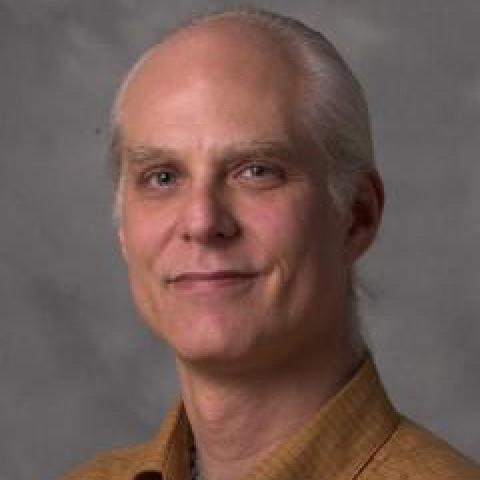
Casey Wichman

Casey Wichman
wichman@gatech.edu

Dr. Casey Wichman is an applied microeconomist working on issues at the intersection of environmental and public economics. His research focuses on how people interact with the natural and built environment, and what that behavior reveals about the value of environmental amenities. His research spans water and energy demand, valuation of environmental resources and infrastructure, urban transportation, public goods provision, demand for outdoor recreation, and climate change. Methodologically, he relies on the application of program evaluation techniques, often using large micro-data sets, to estimate causal effects of environmental policies on economic behavior. 

Prior to joining Georgia Tech, Dr. Wichman served as the Research Director of the Energy and Environment Lab at the University of Chicago and as a Fellow at Resources for the Future, an environmental economics think-tank in Washington, DC. He received his Ph.D. from the University of Maryland in 2015, and his doctoral work earned outstanding doctoral dissertation awards from both the Association of Environmental and Resource Economists and the Association of Agricultural and Applied Economists.

Associate Professor, School of Economics
Additional Research

Applied EconometricsEnvironmental EconomicsPublic Economics

IRI/Group and Role
Energy > Faculty Council
Energy > Research Community
Energy
University, College, and School/Department
Georgia Institute of Technology > Ivan Allen College of Liberal Arts > School of Economics
Research Areas
Energy
  • Energy Economics, Policy, and Public Health

Chelsea White

Chelsea White
cwhite@isye.gatech.edu

Chelsea C. White III is the Schneider National Chair in Transportation and Logistics and Professor in the H. Milton Stewart School of Industrial and Systems Engineering at Georgia Tech​. 

His most recent research interests include analyzing the role of real-time information and enabling information technology for improved logistics and, more generally, supply chain productivity and risk mitigation, with special focus on the U.S. trucking industry. 

His involvement with the IEEE includes serving as President of the Systems, Man, and Cybernetics (SMC) Society (1992 - 93). He received the Norbert Wiener Award in 1999 and the Joseph G. Wohl Outstanding Career Award in 2005, both from the IEEE SMC Society, and an IEEE Third Millennium Medal. The Norbert Wiener Award is the SMC’s highest award recognizing lifetime contributions in research. He is the recipient of the 2008 IEEE ITSS ITS Outstanding Research Award for “significant contributions in research and development in global transportation and logistic systems.” He is a Fellow of the IEEE, a Fellow of INFORMS, a former member of the Executive Board of CIEADH (Council of Industrial Engineering Academic Department Heads), and the founding chair of the IEEE TAB Committee on ITS (now an IEEE Society). He is a former member of the World Economic Forum trade facilitation council. He is currently the Systems Strategies theme leader for the DHS National Center for Food Protection and Defense and the Industry Studies Association liaison to INFORMS. 

Dr. White is the former editor of the IEEE Transactions on Systems, Man, and Cybernetics, Parts A and C, and was the founding editor of the IEEE Transactions on Intelligent Transportation Systems (ITS). He has served as the ITS Series book editor for Artech House Publishing Company. He is co-author (with A.P. Sage) of the second edition of Optimum Systems Control (Prentice-Hall, 1977), co-editor (with D.E. Brown) of Operations Research and Artificial Intelligence: Integration of Problem Solving Strategies (Kluwer, 1990), and co-editor (with D.L. Belman) of Trucking in the Information Age (Ashgate, 2005). He has published primarily in the areas of the control of finite stochastic systems and knowledge-based decision support systems. 

He has been a keynote speaker at a variety of international conferences and meetings. He has made presentations at the Council on Competitiveness and the Brookings Institution on the impact of information technology for international freight distribution, security, and productivity. He has represented ITS America by providing testimony during a roundtable discussion entitled Reauthorization of the Federal Surface Transportation Research Program, held by the U.S. Senate Committee on Environment and Public Works. He has testified before the California Senate Committee on Transportation & Housing Public Hearing on ITS and before the Joint Georgia State Senate/House Future of Manufacturing Study Committee on trends & challenges in supply chain & logistics engineering. 

He has served on the faculties of the University of Virginia (1976 - 1990) and UM (1990 - 2001). He has served as school chair of the Stewart School of Industrial and Systems Engineering (2005-10), where he is the director of the Trucking Industry Program (TIP) and the former executive director of The Logistics Institute. He serves on the boards of directors for Con-way, Inc. (NYSE: CNW), The Logistics Institute-Asia Pacific, the Industry Studies Association, and the Bobby Dodd Institute, and is a former member of the board of ITS America (a Utilized Federal Advisory Committee) and the ITS World Congress. 

Chelsea C. White III received his Ph.D. from the University of Michigan (UM) in 1974 in Computer, Information, and Control Engineering.

Schneider National Chair in Transportation and Logistics
Phone
404.894.2303
Office
Groseclose Building, Room 430
Additional Research
Hydrogen Transport/Storage; Analyzing the role of real-time information and enabling information technology for improved logistics; supply chain productivity and risk mitigation
IRI/Group and Role
Manufacturing > Affiliated Faculty
Energy > Hydrogen Group
Energy > Research Community
Manufacturing
Energy
University, College, and School/Department
Georgia Institute of Technology > College of Engineering > School of Industrial Systems Engineering

Chip White

Chip White
cwhite@isye.gatech.edu
Schneider National Chair in Transportation and Logistics
Professor, School of Industrial and Systems Engineering
Phone
(404) 894-2301
Additional Research

Smart Infrastructure; System Design & Optimization

IRI/Group and Role
Energy > Research Community
Energy
University, College, and School/Department
Georgia Institute of Technology > College of Engineering > School of Industrial Systems Engineering
Research Areas
Energy
  • Energy Systems, Grid Resilience, and Cybersecurity

Donald White

Donald White
don.white@ce.gatech.edu

Don White is a professor in the School of Civil and Environmental Engineering (CEE). He has been a member of the CEE faculty at Georgia Tech since 1997. Prior to joining Georgia Tech, White served on the faculty at the Purdue University School of Civil Engineering from 1987 to 1996. He received his doctorate in Structural Engineering from Cornell University in 1988, and is an alumnus of North Carolina State University. Prior to graduate study, White worked as a structural engineer in Raleigh, NC.

White’s research covers a broad area of design and behavior of steel and composite steel-concrete structures as well as computational mechanics, methods of nonlinear analysis and applications to design. White is a member of the AISC Technical Committees 4, Member Design, and 10, Loads, Analysis and Stability, the AISI Bridge Design Advisory Group, the AISC Specification Committee, and several AASHTO/NSBA Steel Bridge Collaboration Task Groups. He is past Chair of the SSRC Task Group 29, Second-Order Inelastic Analysis of Frames and currently serves on the Executive Committee of the SSRC.

White has served as a major contributor to the steel design and structural analysis sections of the AASHTO LRFD Bridge Design Specifications and the ANSI/AISC Specification for Structural Steel Build­ings during the past 20 years. He was a lead author on the 1997 ASCE publication Effective Length and Notional Load Approaches for Assessing Frame Stability: Implications for American Steel Design, which was a precursor of the development of the AISC Direct analysis Method of design, referred to as the DM. Furthermore, White was a major participant ad hoc task group efforts leading to the development of the DM, which is the preferred method of stability design in the AISC Specification for Design of Steel Building Structures. Subsequent to these developments, the Metal Building Manufacturers Association (MBMA) provided White the opportunity to extend a number of these developments to updated procedures for design of frames using web-tapered members, which is captured within the AISC/MBMA Design Guide 25. White received the 2005 Special Achievement Award and the 2009 T.R. Higgins lectureship award from AISC for his research on design criteria for steel and composite steel-concrete members in bridge and building construction. He received the 2006 Shortridge Hardesty Award from ASCE for his research on advanced frame stability concepts and practical design formulations. For efforts leading to the comprehensive update to the 2005 AASHTO LRFD provisions for steel I- and box-girder bridge design, and unification of AASHTO LRFD provisions for straight and curved girder bridge design, White received the 2007 Richard S. Fountain Bridge Task Force Award and, with M. Grubb and W. Wright, the 2006 Richardson Medal from the Engineers’ Society of Western Pennsylvania.

White has conducted research on a wide range of topics relating to stability analysis and design and construction engineering of steel bridge structures. This includes work on construction simulation of curved and skewed steel bridges, investigation of the behavior of thin-web girders, and stability of components and structural systems during construction and in their final constructed condition. He was one of several researchers privileged to be involved closely with curved steel bridge experimental testing at the FHWA Turner Fairbank Highway Research Center from 1997 through 2005. White was P.I. and lead author of the NCHRP Report 725, Guidelines for Analytical Methods and Construction Engineering of Curved and Skewed Steel Girder Bridges. This work contributed additional substantive advances to the state-of-the-art in the engineering of curved and skewed steel girder bridge structures. White is currently P.I. on a multi-year FHWA-sponsored effort with the goal of modernizing the AASHTO LRFD provisions pertaining to all types of noncomposite box-section members including truss members, edge girders in cable-stayed spans, arch ribs, arch ties, and tower legs.

Professor, School of Civil and Environmental Engineering
Phone
404.894.5839
Office
Mason 5139B
Additional Research

Computer-Aided Engineering; computational mechanics; Structural Materials

IRI/Group and Role
Energy > Research Community
Energy
University, College, and School/Department
Georgia Institute of Technology > College of Engineering > School of Civil and Environmental Engineering
Research Areas
Energy
  • Built Environment

Marc Weissburg

Marc Weissburg
marc.weissburg@biology.gatech.edu
Professor, School of Biological Sciences
Brook Byers Professor
Phone
404.894.8433
Office
ES&T 2238
Additional Research

Bio-inspired materials

IRI/Group and Role
Sustainable Systems > Byers Professors
Energy > Research Community
Sustainable Systems
Energy
University, College, and School/Department
Georgia Institute of Technology > College of Sciences > School of Biological Sciences
Research Areas
Sustainable Systems
  • Ecosystem and Environmental Health
  • Sustainability Education Research
Energy
  • Energy Economics, Policy, and Public Health

Donald Webster

Donald Webster
dwebster@ce.gatech.edu
Karen and John Huff School Chair, School of Civil and Environmental Engineering
Professor, School of Civil and Environmental Engineering
Phone
(404) 894-6704
IRI/Group and Role
Energy > Research Community
Energy
University, College, and School/Department
Georgia Institute of Technology > College of Engineering
Research Areas
Energy
  • Combustion, Propulsion, and Hypersonics
  • Energy Economics, Policy, and Public Health

Rebecca A. Watts Hull

Rebecca A. Watts Hull
rwattshull@gatech.edu

Rebecca Watts Hull is assistant director, faculty development for sustainability education initiatives for the Center for Teaching and Learning (CTL), with a courtesy appointment in the School of History and Sociology. Rebecca works with faculty to incorporate Education for Sustainable Development into their course design and teaching practices. She partners with other units to lead strategic initiatives related to sustainability education, including Sustainability Next’s Education for Sustainable Development implementation plan. Prior to her current role, Rebecca served as a Service Learning and Partnerships Specialist with the Center for Serve-Learn-Sustain (SLS), and she continues to collaborate closely with Georgia Tech's community-based learning initiatives. She facilitates the "Scaling up Sustainability Across the Curriculum Community of Practice" of the Association for the Advancement of Sustainability in Higher Education (AASHE) which supports collaboration among sustainability education professionals at dozens of colleges and universities. Rebecca also serves on AASHE's Advisory Council and STARS Steering Committee. Before her work at Georgia Tech, Rebecca held sustainability and educational leadership roles in the public, private and nonprofit sectors with responsibilities that included faculty development, science and environmental curriculum design, and community-based environmental education and advocacy. Rebecca earned an M.S. and Ph.D. from Georgia Tech in History and Sociology of Technology and Science, focusing her research on social movements and organizational change, and holds an M.S. in Natural Resources and Environment from the University of Michigan. She has taught Sustainability Leadership at Emory University, Environment and Sustainability Studies at Agnes Scott College, and American Environmental History, Social Movements, Community Organizing, and Organizing for Social Change at Georgia Tech.

Assistant Director
Senior Academic Professional
Faculty Development for Sustainability Education Initiatives, Center for Teaching and Learning
IRI/Group and Role
Energy
Sustainable Systems > Core Partners
University, College, and School/Department
Georgia Institute of Technology
Research Areas
Sustainable Systems
  • Sustainability Education Research

Jingfeng Wang

Jingfeng Wang
jingfeng.wang@ce.gatech.edu
Associate Professor, School of Civil and Environmental Engineering
Phone
(404) 385-4653
Additional Research

Water

IRI/Group and Role
Energy > Research Community
Energy
University, College, and School/Department
Georgia Institute of Technology > College of Engineering
Research Areas
Energy
  • Water, Wind, and Solar
  • AI Energy Nexus
  • Energy Storage
  • Carbon Capture, Utilization and Storage
  • Fuels

Mitchell Walker II

Mitchell Walker II
mitchell.walker@ae.gatech.edu

Dr. Walker's primary research interests lie in electric propulsion, plasma physics, and hypersonic aerodynamics/plasma interaction. He has extensive design and testing experience with Hall thrusters and ion engines. Dr. Walker has performed seminal work in Hall thruster clustering, vacuum chamber facility effects, plasma-material interactions, and electron emission from carbon nanotubes. His current research activities involve both theoretical and experimental work in advanced spacecraft propulsion systems, diagnostics (including THz time-domain spectroscopy and Thomson scattering), plasma physics, helicon plasma sources, magnetoplasmadynamic thrusters, and pulsed inductive thrusters. Dr. Walker also teaches the undergraduate Jet & Rocket Propulsion course, as well as the graduate level Rocket Propulsion, Electric Propulsion, and Gasdynamics courses.

Professor, Guggenheim School of Aerospace Engineering
William R.T. Oakes, Jr. School Chair and Professor
Phone
404-385-2757
Office
Tech Tower 307
Additional Research

Energy Harvesting; Thermal Systems

IRI/Group and Role
Energy > Research Community
Energy
University, College, and School/Department
Georgia Institute of Technology > College of Engineering > Guggenheim School of Aerospace Engineering
Research Areas
Energy
  • Combustion, Propulsion, and Hypersonics

Germán Vergara

Germán Vergara
vergara@gatech.edu
Associate Professor, School of History and Sociology
Phone
404.894.0535
Office
Old CE Building G20
Additional Research

Agriculture, Health, and the Environment Energy, Climate and Environmental Policy Global Cities and Urban Society History of Technology/Engineering and Society Modern Global History/Science, Technology, and Nationalism

IRI/Group and Role
Energy > Research Community
Energy
University, College, and School/Department
Georgia Institute of Technology
Research Areas
Energy
  • Energy Economics, Policy, and Public Health