Julie Kozyreva

kozyreva@robotics.gatech.edu
Assistant Director, Financial Operations
Office
KACB 1120
IRI/Group and Role
Robotics > Staff
Robotics

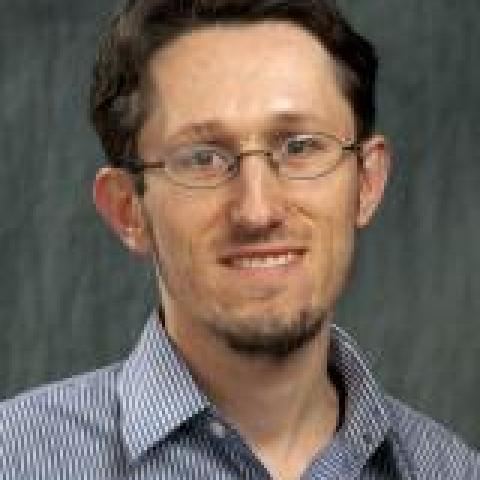
I am an Assistant Professor at the School of Interactive Computing in the College of Computing. I am also affiliated with the Georgia Tech Research Institute and serve as an Associate Director of ML@GT which is the machine learning center recently created at Georgia Tech. Previously I was a Research Scientist at SRI International Sarnoff in Princeton, and before that received my Ph.D. in 2010 with Professor Ron Arkin as my advisor. I lead the RobotIcs Perception and Learning (RIPL) lab. My areas of research specifically focus on the intersection of learning methods for sensor processing and robotics, developing novel machine learning algorithms and formulations towards solving some of the more difficult perception problems in these areas. I am especially interested in moving beyond supervised learning (un/semi/self-supervised and continual/lifelong learning) as well as distributed perception (multi-modal fusion, learning to incorporate information across a group of robots, etc.).


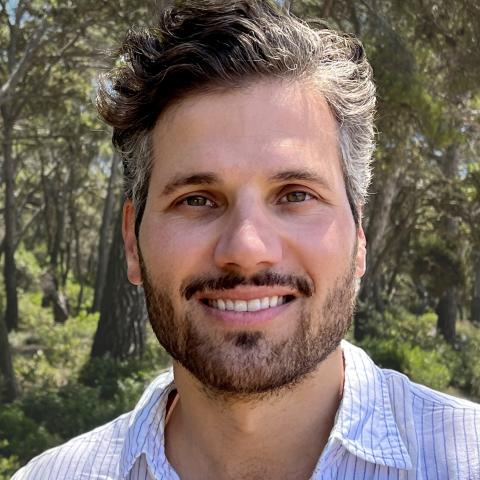
Benjamin Joffe is a Research Scientist in the Aerospace, Transportation & Advanced Systems Laboratory at the Georgia Tech Research Institute. He holds an M.S. in Computer Science from Georgia Tech. His work is at the intersection of Computer Vision, Machine Learning, and Robotics. His research interests include 3D Perception for highly-variable and deformable objects; robot learning for manipulation tasks; real-world generalization from synthetic and multi-modal data; Machine Learning for chemical sensing and biomanufacturing; Deep Learning algorithms for novel modalities and low-data scenarios.
3D PerceptionAgricultural RoboticsComputer VisionMachine Learning for Chemical & Bio SensingRobot LearningRobotic Manipulation

Autonomy

Omer T. Inan received his B.S., M.S., and Ph.D. degrees in Electrical Engineering from Stanford University in 2004, 2005, and 2009, respectively.
He worked at ALZA Corporation in 2006 in the Drug Device Research and Development Group. From 2007-2013, he was chief engineer at Countryman Associates, Inc., designing and developing several high-end professional audio products. From 2009-2013, he was a visiting scholar in the Department of Electrical Engineering at Stanford. In 2013, he joined the School of ECE at Georgia Tech as an assistant professor.
Inan is generally interested in designing clinically relevant medical devices and systems, and translating them from the lab to patient care applications. One strong focus of his research is in developing new technologies for monitoring chronic diseases at home, such as heart failure.
He and his wife were both varsity athletes at Stanford, competing in the discus and javelin throw events respectively.
Medical devices for clinically-relevant applicationsNon-invasive physiological monitoringHome monitoring of chronic diseaseCardiomechanical signalsMedical instrumentation
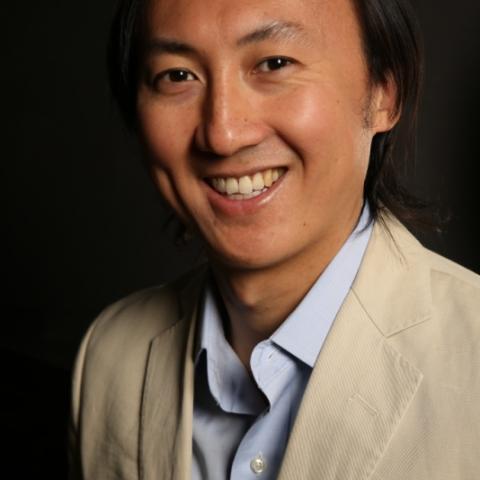
David Hu is a fluid dynamicist with expertise in the mechanics of interfaces between fluids such as air and water. He is a leading researcher in the biomechanics of animal locomotion. The study of flying, swimming and running dates back hundreds of years, and has since been shown to be an enduring and rich subject, linking areas as diverse as mechanical engineering, mathematics and neuroscience. Hu's work in this area has the potential to impact robotics research. Before robots can interact with humans, aid in minimally-invasive surgery, perform interplanetary exploration or lead search-and-rescue operations, we will need a fundamental physical understanding of how related tasks are accomplished in their biological counterparts. Hu's work in these areas has generated broad interest across the fields of engineering, biology and robotics, resulting in over 30 publications, including a number in high-impact interdisciplinary journals such as Nature, Nature Materials, Proceedings of the National Academy of Sciences as well as popular journals such as Physics Today and American Scientist. Hu is on editorial board member for Nature Scientific Reports, The Journal of Experimental Biology, and NYU Abu Dhabi's Center for Center for Creative Design of Materials. He has won the NSF CAREER award, Lockheed Inspirational Young Faculty award, and best paper awards from SAIC, Sigma Xi, ASME, as well as awards for science education such as the Pineapple Science Prize and the Ig Nobel Prize. Over the years, Hu's research has also played a role in educating the public in science and engineering. He has been an invited guest on numerous television and radio shows to discuss his research, including Good Morning America, National Public Radio, The Weather Channel, and Discovery Channel. His ant research was featured on the cover of the Washington Post in 2011. His work has also been featured in The Economist, The New York Times, National Geographic, Popular Science and Discover His laboratory appeared on 3D TV as part of a nature documentary by 3DigitalVision, "Fire ants: the invincible army," available on Netflix.
Fluid Mechanics: Fluid dynamics, solid mechanics, biomechanics, animal locomotion, and physical applied mathematics. Dr. David Hu's research focuses on fundamental problems of hydrodynamics and elasticity that have bearing on problems in biology. He is interested in the dynamics of interfaces, specifically those associated with fluid-solid and solid-solid interactions. The techniques used in his work include theory, computation, and experiment. He is also interested in pursuing biomimetic technologies based on nature's designs.

Ai-Ping Hu is a principal research engineer in the Georgia Tech Research Institute’s Intelligent Sustainable Technologies Division. He received his BS in Mechanical & Aerospace Engineering from Cornell University and Ph.D. from the Georgia Institute of Technology. Prior to joining GTRI in 2009, Dr. Hu co-founded a start-up robotics company applying learning control to achieve high precision in lightweight flexible manufacturing robots. His current research interests include agricultural robotics, nonlinear control and vision-guided manipulation.
Agricultural Robotics; Nonlinear Control; Vision-Guided Manipulation
Autonomy