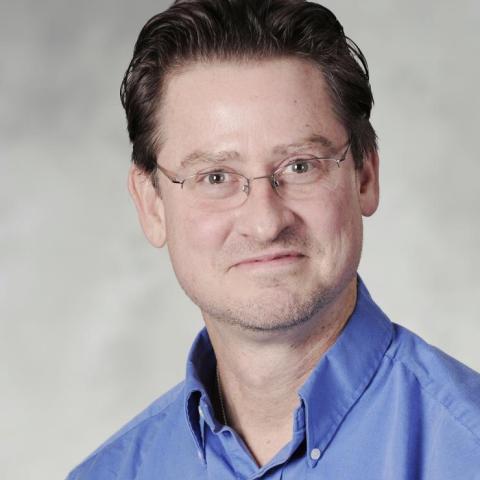
Thomas Habetler
Electrical Grid; Electronics
- Energy Systems, Grid Resilience, and Cybersecurity
- Energy Storage
Electrical Grid; Electronics
Dr. Grijalva joined the Georgia Institute of Technology in the summer of 2009 as Associate Professor of Electrical and Computer Engineering. He is the Director of the Advanced Computational Electricity Systems (ACES) Laboratory, where he conducts research on real-time power system control, informatics, and economics, and renewable energy integration in power. From 2012-2015, Dr. Grijalva served as the Strategic Energy Institute (SEI) Associate Director for Electricity Systems, responsible for coordinating large efforts on electricity research and policy at Georgia Tech. Dr. Grijalva received the Electrical Engineer degree from EPN-Ecuador in 1994, the M.S. Certificate in Information Systems from ESPE-Ecuador in 1997, and the M.S. and Ph.D. degrees in Electrical Engineering from the University of Illinois at Urbana-Champaign in 1999 and 2002, respectively. He was a post-doctoral fellow in Power and Energy Systems at the University of Illinois from 2003 to 2004. From 1995 to 1997, he was with the Ecuadorian National Center for Energy Control (CENACE) as engineer and manager of the Real-Time EMS Software Department. From 2002 to 2009, he was with PowerWorld Corporation as a senior software architect and developer of innovative real-time and optimization applications used today by utilities, control centers, and universities in more than 60 countries. Dr. Grijalva is a leading researcher on ultra-reliable architectures for critical energy infrastructures. He has pioneered work on de-centralized and autonomous power system control, renewable energy integration in power, and unified network models and applications. He is currently the principal investigator of various future electricity grid research projects for the US Department of Energy, ARPA-E, EPRI, PSERC as well as other Government organizations, research consortia, and industrial sponsors. Research interests: Power system and smart grid computation De-centralized and autonomous power control architectures Ultra-reliable electricity internetworks Seamless integration of large-scale renewable energy Electricity markets design and power system economics
Electrical Grid; Electronics
Dr. Ghalichechian joined the Georgia Institute of Technology as an Assistant Professor in August 2021. Prior to joining Georgia Tech, he was an Assistant Professor at The Ohio State University (OSU), Columbus, from 2017 to 2021. During this period, he established the RF Microsystems Laboratory with research in the area of millimeter-wave antennas and arrays.
Dr. Ghalichechian received his B.S. in Electrical Engineering from Amirkabir University of Technology, Iran in 2001. He received his M.S. and Ph.D. in Electrical Engineering from the University of Maryland-College Park in 2005 and 2007, respectively, with research focused on electrostatic micromotors. From 2007 to 2012, he was with the Research Department of FormFactor, Inc. (Livermore, California) as a Senior Principal Engineer. During this period, he helped design and develop microsprings for advanced probe cards used in testing memory and SoC devices. Dr. Ghalichechian joined the Department of Electrical and Computer Engineering and the ElectroScience Laboratory at OSU as a Research Scientist in 2012. From 2016 to 2017, he held a Research Assistant Professor position at OSU.
Prof. Ghalichechian is currently an Associate Editor of the IEEE Antennas and Wireless Propagation Letters (AWPL). He is a recipient of the 2018 College of Engineering Lumley Research Award at OSU, 2019 NSF CAREER Award, 2019 US Air Force Faculty Summer Fellowship Award, and 2020 ECE Excellence in Teaching Award at OSU.
Millimeter-wave (30-300 GHz) antennas and arrays5G/6G antenna systemsReconfigurable antennas and componentsOn-chip antennas and arraysReflectarrays and phased arraysExploiting non-linear properties of phase-change materials for RF sensors
Russell D. Dupuis earned all of his academic degrees from the University of Illinois at Urbana-Champaign. He received his bachelor's degree with "Highest Honors-Bronze Tablet" in 1970. He received his master's in electrical engineering in 1971, and his Ph.D. in 1973. His alma mater has honored him with the University of Illinois Alumni Loyalty Award, and the Distinguished Alumnus Award. Dupuis worked at Texas Instruments from 1973 to 1975. In 1975, he joined Rockwell International where he was the first to demonstrate that MOCVD could be used for the growth of high-quality semiconductor thin films and devices. He joined AT&T Bell Laboratories in 1979 where he extended his work to the growth of InP-InGaAsP by MOCVD. In 1989 he became a chaired professor at the University of Texas at Austin. In August 2003, he was appointed Steve W. Chaddick Chair in Electro-Optics at Georgia Tech in ECE. He is currently studying the growth of III-V compound semiconductor devices by MOCVD, including materials in the InAlGaN/GaN, InAlGaAsP/GaAs, InAlGaAsSb, and InAlGaAsP/InP systems.
Optical Materials, III-V semiconductor devices, epitaxial growth, ultra-dense and ultra-fast optical, interconnects
During my research career I have observed “new” material systems develop and offer promise of wondrous device performance improvements over the current state of the art. Many of these promises have been kept, resulting in numerous new devices that could never have been dreamed of just a few short years ago. Other promises have not been fulfilled, due, in part, to a lack of understanding of the key limitations of these new material systems. Regardless of the material in question, one fact remains true: Without a detailed understanding of the electrical and optical interaction of electronic and photonic “particles” with the material and defect environment around them, novel device development is clearly impeded. It is not just a silicon world! Modern electronic/optoelectronic device designs (even silicon based devices) utilize many diverse materials, including mature dielectrics such as silicon dioxide/nitrides/oxynitrides, immature ferroelectric oxides, silicides, metal alloys, and new semiconductor compounds. Key to the continued progress of electronic devices is the continued development of a detailed understanding of the interaction of these materials and the defects and limitations inherent to each material system. It is my commitment to insure that new devices are continuously produced based on complex mixed family material systems.
Compund semiconductors, optical materials, III-V semiconductor devices
Professor Doolittle is a native of Jonesboro, Georgia. He graduated from Georgia Tech with a bachelor's degree in electrical engineering with highest honors in 1989. He later received his Ph.D. in electrical engineering in 1996 from Georgia Tech.
His thesis work revolved around identifying the device limiting defects in photovoltaic silicon materials using several custom designed and patented tools. He later worked as a Research Engineer II in the area of compound semiconductor growth with emphasis on wide bandgap semiconductors. He joined the Georgia Tech faculty in 2001.
During his time at Georgia Tech he has helped develop academic programs in the areas of microelectronic fabrication, materials growth, characterization, and measurement system design. Professor Doolittle consults with industry in the areas of law, materials testing, MBE growth, and test equipment development.
His hobbies include bible studies, classic cars, playing the guitar, and reading. Most of his free time is spent with his two teenage children.
Electrical Grid; Energy Storage
Utilities; Electric Vehicles; Electrical Grid
Suman Datta is the Joseph M Pettit Chair of Advanced Computing and Georgia Research Alliance (GRA) Eminent Scholar and Professor in the School of Electrical and Computer Engineering at Georgia Tech. He received his B.Tech degree in electrical engineering from the Indian Institute of Technology, Kanpur, India, and his Ph.D. degree in electrical and computer engineering from the University of Cincinnati, Ohio. His research group focuses on semiconductor devices that enable new compute models such as in-memory compute, brain-inspired compute, cryogenic compute, resilient compute etc.
From 2015 to 2022, Datta was the Stinson Endowed Chair Professor of Nanotechnology in the Electrical Engineering Department at the University of Notre Dame, where he was the Director of a multi-university microelectronics research center, ASCENT, funded by the Semiconductor Research Corporation (SRC) and the Defense Advanced Research Projects Agency (DARPA). Datta also served as the Director of a six-university research center for Extremely Energy Efficient Collective Electronics (EXCEL), funded by the SRC and National Science Foundation (NSF) to explore an alternate computing hardware that leverages continuous-time dynamics of emerging devices to execute optimization, learning, and inference tasks.
From 2007 to 2015, he was a Professor of Electrical Engineering at The Pennsylvania State University, where his group pioneered advances in compound semiconductor-based quantum-well field effect transistors and tunneling field effect transistors.
From 1999 to 2007, he was in the Advanced Transistor Group at Intel Corporation, where he led device R&D effort for several generations of high-performance logic transistors such as high-k/metal gate, Tri-gate and strained channel CMOS transistors. He has published over 425 journal and refereed conference papers and holds more than 187 issued patents related to semiconductor devices. In 2013, Datta was named a Fellow of the Institute of Electrical and Electronics Engineers (IEEE) for his contributions to high-performance advanced silicon and compound semiconductor transistor technologies. In 2016, he was named Fellow of the National Academy of Inventors (NAI) in recognition of his inventions that have made a tangible impact on quality of life, economic development, and the welfare of society.
High-performance heterogenous compute with advanced CMOSBrain-inspired collective state computing with advanced CMOS and beyond-CMOS semiconductorsEmerging semiconductors like ferroelectric field effect transistors, insulator-to-metal phase transition oxides, high mobility semiconducting oxides for near and in-memory compute and storageSemiconductors for cryogenic computing and harsh environment computing
Cressler grew up in Georgia, and received the B.S. degree in physics from Georgia Tech in 1984. From 1984 until 1992 he was on the research staff at the IBM Thomas J. Watson Research Center in Yorktown Heights, NY, working on high-speed Silicon and Silicon-Germanium (SiGe) microelectronic devices and technology. While continuing his full-time research position at IBM, he went back to pursue his graduate studies at Columbia University in 1985, receiving his M.S. and Ph.D. degrees in applied physics in 1987 and 1990, respectively.
In 1992 Cressler left IBM Research to pursue his dream of becoming a professor, and joined the faculty at Auburn University, where he served until 2002, when he left to join Georgia Tech. He is presently a Regents Professor and the Schlumberger Chair in Electronics at Georgia Tech.
Cressler is interested in the understanding, development, and application of new types of silicon-based bandgap-engineered microelectronic devices and circuits for high-speed electronics in emerging 21st century communications systems. He and his team have published over 700 technical papers in this field, and he has written five non-fiction books (two for general audiences). He has recently become enamored with writing historical fiction. His novels are interfaith love stories set in medieval Muslim Spain, including: Emeralds of the Alhambra, Shadows in the Shining City, and Fortune’s Lament (with a fourth in the works). His hobbies include wine collecting, cooking, gardening, fly fishing, mushroom foraging, and hiking.
Silicon-Germanium (SiGe) microelectronic devices and technologySi-based RF/microwave/mm-wave heterostructure devices and circuitsRadiation effects in electronicsCryogenic electronicsReliability physics and modelingTransistor-level numerical simulation and compact circuit modeling