Christopher Jones

Christopher Jones's profile picture
cjones@chbe.gatech.edu

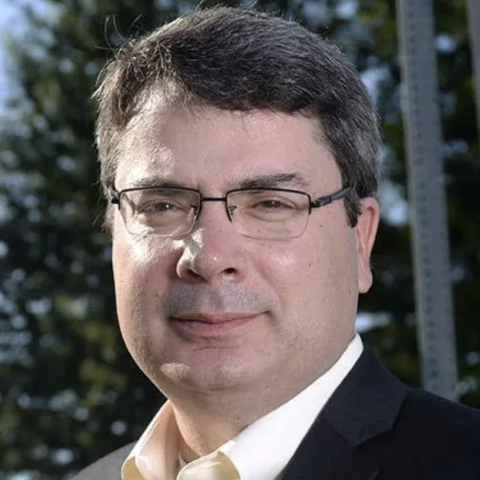
Chris Jones was born in suburban Detroit, Michigan in July of 1973. After his primary and secondary schooling and 14 years living Troy, Michigan, he enrolled as a chemical engineering student at the University of Michigan. In route to earning a BSE in chemical engineering, Chris carried out research on transition metal carbide and nitride catalytic materials under the direction of Levi Thompson. After graduating in 1995, Chris moved to Pasadena, California, to study inorganic materials chemistry and catalysis under Mark E. Davis at Caltech. There he earned M.S. and Ph.D. degrees in chemical engineering in 1997 and 1999, respectively. Subsequently, he studied organometallic chemistry and olefin polymerization under the direction of both Davis and John E Bercaw at Caltech. He started as an assistant professor at Georgia Tech in the summer of 2000 and was promoted to associate professor in July 2005. In May, 2005, he was appointed the J. Carl and Sheila Pirkle Faculty Fellow, followed by a promotion to professor in July 2008. He was named New-Vision Professor of Chemical and Biomolecular Engineering in July 2011. In 2015, he became the Love Family Professor of Chemical and Biomolecular Engineering, and in 2019 the William R. McLain Chair. Chris was named the associate vice president for research at Georgia Tech in November 2013. In this role, he directed 50% of his time on campus-wide research administration with a primary focus on interdisciplinary research efforts and policy related to research institutes, centers and research core facilities. In 2018, he served as the interim executive vice-president for research, before returning full time to his research and teaching roles in chemical and biomolecular engineering in 2019.

Jones directs a research program focused primarily on catalysis and CO2 separation, sequestration and utilization. A major focus of his laboratory is the development of materials and processes for the removal of CO2 from air, or “direct air capture” (DAC). In 2010 he was honored with the Ipatieff Prize from the American Chemical Society for his work on palladium catalyzed Heck and Suzuki coupling reactions. That same year, he was selected as the founding Editor-in-Chief of ACS Catalysis, a new multi-disciplinary catalysis journal published by the American Chemical Society. In 2013, Chris was recognized by the North American Catalysis Society with the Paul E. Emmett Award in Fundamental Catalysis and by the American Society of Engineering Education with the Curtis W. McGraw Research Award. In 2016 he was recognized by the American Institute of Chemical Engineers with the Andreas Acrivos Award for Professional Progress in Chemical Engineering, distinguishing him as one of the top academic chemical engineers under 45. In 2020, after ten years building and leading ACS Catalysis, he was selected as the founding Editor-in-Chief of JACS Au by an international editorial search committee commissioned by the ACS. Dr. Jones has been PI or co-PI on over $72M in sponsored research in the last seventeen years, and as of December 2020, has published over 300 papers that have been cited >28,000 times. He has an H-Index of 82 (Google Scholar).

Professor and John F. Brock III School Chair, School of Chemical and Biomolecular Engineering
Phone
404.385.1683
Office
ES&T 2202
Additional Research

CO2 capture, catalysis, membrane and separations, separations technology, catalysis, carbon capture, biofuels

IRI/Group and Role
Renewable Bioproducts > Affiliated Faculty
Energy > Research Community
Energy
University, College, and School/Department
Georgia Institute of Technology > College of Engineering > School of Chemical and Biomolecular Engineering
Research Areas
Energy
  • Carbon Capture, Utilization and Storage
  • Fuels
Renewable Bioproducts
  • Bioindustrial Manufacturing and Biorefining
  • Pulp, Paper, Packaging and Tissue
Sheldon Jeter

Sheldon Jeter's profile picture
sheldon.jeter@me.gatech.edu

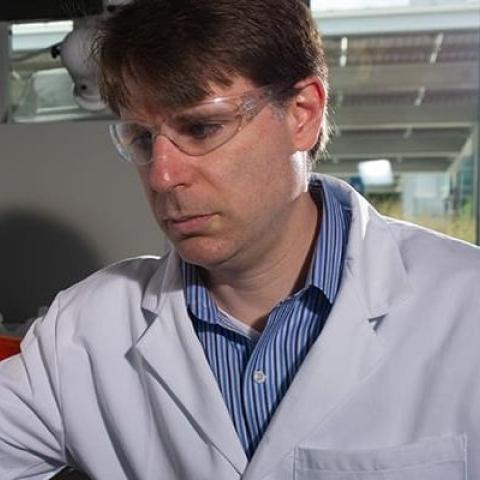
Dr. Jeter's research background includes systems and theoretical thermo-dynamics, and heat and mass transfer, thermal and fluid energy systems, engineering education, and advanced engineering thermodynamics. He began at Tech in 1978 as a Research Engineer.

Research

Dr. Jeter's research interests include both basic and applied research. His basic research is focused on two-phase heat and mass transfer, such as the experimental investigation of heat transfer to boiling liquids, whereas his theoretical basic research includes work on the thermodynamics of mixtures and radiation.

Dr. Jeter's applied research is largely devoted to improving the performance of existing energy systems and developing innovative energy systems, particularly fluid and thermal energy systems.

Distinctions & Awards

  • Registered Professional Engineer in Georgia

Patents

  • Electrode Arrangement for Electrohydrodynamic Enhancement of Heat and Mass Transfer, with S.I. Abdel-Khalik, U.S. Patent No. 6,374,909, April 23, 2002.
  • A Film Pump for Applying a Monolayer Film Over Water Surfaces, U. S. Patent No. 5,558,845, with M. T. Pauken and S. I. Abdel-Khalik, October 1996.
  • Loop Timing Chain, U. S. Patent 4,027,792, June 7, 1977
  • Tufting Needle, U. S. Patent 4,015551, April 5, 1977

Representative Publications

  • F. F. Abedelall, et al. 2005. Pressure Drop Caused by Abrupt Flow Area Changes in Small Channels. Experimental Thermal and Fluid Science 29, 425-434.
  • S. M. Jeter and Hany A. M. Al-Ansary. 2004. Numerical and Experimental Analysis of Single-Phase and Two-Phase Flow in Ejectors. The International Journal of HVAC Research 10(4), 521-538.
  • S. M. Jeter, C. C. Pascual and S. I. Abdel-Khalik. 2002. Visualization of Boiling Bubble Dynamics Using a Flat Uniformly Heated Transparent Surface. International Journal of Heat and Mass Transfer 45, 691-696.
  • R. M. Stoddard, et al. 2002. Onset of Flow Instability and Critical Heat Flux in Thin Horizontal Annuli. Experimental Thermal and Fluid Sciences 26, 1-14.
  • T. M. Remley, et al. 2001. Validation of EHD-Enhanced Nucleate Boiling Correlations. ASHRAE Transactions 107, 326-336.
Associate Professor, Woodruff School of Mechanical Engineering
Phone
(404) 894-3211
Additional Research

Energy Storage; Solar; Thermal Systems

IRI/Group and Role
Energy > Research Community
Energy
University, College, and School/Department
Georgia Institute of Technology > College of Engineering

Seung Soon Jang

Seung Soon Jang's profile picture
SeungSoon@mse.gatech.edu

Seung Soon Jang joined the School of Materials Science and Engineering at the Georgia Institute of Technology in July 2007. Jang worked at Samsung Electronics and the Materials and Process Simulation Center (MSC) at CalTech performing various researches in nanoelectronics, fuel cell, and interfacial systems as a director of Supramolecular Technology for six years.

His research interest includes computations and theories to characterize and design nanoscale systems based on the molecular architecture-property relationship, which are especially relevant to molecular electronics, molecular machines, fuel cell technology and biotechnology.

Professor, School of Materials Science and Engineering
Director, Computational NanoBio Technology Lab
Phone
404.385.3356
Office
Love 351
Additional Research

Jang's research interest is to characterize and design nanoscale systems based on the molecular architecture-property relationship using computations and theories, which are especially relevant to designing new biomaterials for drug delivery and tissue engineering. Currently, he is focusing on 1) NanoBio-mechanics for DNA, lipid bilayer, and hydrogel systems; 2) Molecular interaction of Alzheimer proteins with various small molecules. Dr. Jang is also interested in various topics such as nanoelectronics, nanostructured energy technologies for fuel cell, battery and photovoltaic devices.;Computational mechanics; Nanostructured Materials; Polymeric composites; Biomaterials; Fuel Cells; Delivery and Storage

IRI/Group and Role
Bioengineering and Bioscience > Faculty
Energy > Hydrogen Group
Energy > Research Community
Bioengineering and Bioscience
Energy
University, College, and School/Department
Georgia Institute of Technology > College of Engineering > School of Materials Science Engineering
Research Areas
Energy
  • Fuels
  • Advanced Manufacturing for Energy

Vida Jamali

Vida Jamali's profile picture
vida@gatech.edu

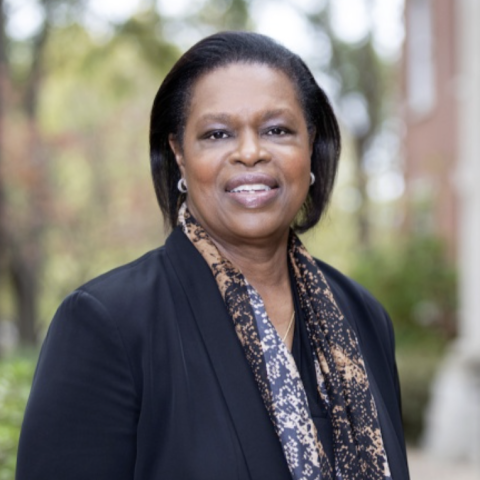
Vida Jamali earned her Ph.D. in chemical and biomolecular engineering from Rice University under the guidance of Professor Matteo Pasquali and her B.S. in chemical engineering from Sharif University of Technology. Jamali was a postdoctoral researcher in Professor Paul Alivisato's lab at UC Berkeley and Kavli Energy Nanoscience Institute before joining Georgia Tech. The Jamali Research Group uses experimental, theoretical, and computational tools such as liquid phase transmission electron microscopy, rheology, statistical and colloidal thermodynamics, and machine learning to study the underlying physical principles that govern the dynamics, statistics, mechanics, and self-organization of nanostructured soft materials, in and out of thermal equilibrium, from both fundamental and technological aspects.

Assistant Professor, School of Chemical and Biomolecular Engineering
Phone
404.894.5134
Office
ES&T 1222
Additional Research

Studying dynamics and self-assembly of nanoparticles and macromolecules in heterogeneous chemical and biological environmentsInvestigating individual to collective behavior of active nanomachinesHarnessing the power of machine learning to understand physical rules governing nanostructured-soft materials, design autonomous microscopy experimentation for inverse material design, and develop new statistical and thermodynamic models for multiscale phenomena

IRI/Group and Role
Bioengineering and Bioscience > Faculty
Data Engineering and Science > Faculty
Energy > Research Community
Matter and Systems > Affiliated Faculty
Data Engineering and Science
Bioengineering and Bioscience
Energy
University, College, and School/Department
Georgia Institute of Technology > College of Engineering > School of Chemical and Biomolecular Engineering
Research Areas
Artificial Intelligence
Energy
  • Energy Storage

Jechiel Jagoda

Jechiel Jagoda's profile picture
jeff.jagoda@aerospace.gatech.edu

Dr. Jagoda joined the Georgia Institute of Technology in 1979 after three years at the Centre National de La Recherche Scientifique, Mulhouse, France and the Technical University of Munich, F. R. Germany. His prime research interests lie in the area of combustion and propulsion with special emphasis on combustion diagnostics, unsteady and pulse combustion, micro-combustors, low NOx combustors and combustion control. He has extensive experience in optical diagnostics including Schlieren imaging, laser Doppler velocimetry, phase Doppler velocimetry, as well as Rayleigh, Raman and Mic scattering. Dr. Jagoda has published 54 refereed publications, numerous non_refereed papers and given over 100 presentations at national and international meetings. He is a member of Sigma Xi and The Combustion Institute and has served a three-year term on the Technical Committee for Propellants and Combustion of the AIAA. He serves as a reviewer for several journals and sponsoring agencies. He was a member of the Program Subcommittee for the 19th and 22nd through 31st Symposia (International) on Combustion.

Teaching Interests

Professor Jagoda's teaching interests include core aerospace engineering courses at the undergraduate and graduate levels, emphasizing the fundamental principles of aerospace structures, dynamics, and materials. His instruction integrates theoretical foundations and practical applications, fostering a comprehensive understanding of aerospace engineering concepts. Professor Jagoda is committed to developing student capabilities through a blend of lectures, problem-solving sessions, and project-based learning experiences.

Research Interests

Professor Jagoda's research focuses on the mechanics and behavior of advanced aerospace materials and structures. His work involves investigating the mechanical properties, durability, and failure mechanisms of materials used in aerospace applications. Emphasis is placed on experimental and computational methods to understand material responses under various loading conditions, aiming to improve structural performance and reliability in aerospace systems.

Research

Lab/Collaborations:

  • Ben T. Zinn Combustion Laboratory
  • Strategic Energy Institute (SEI)

Disciplines:

  • Propulsion & Combustion
  • Aerodynamics & Fluid Mechanics

AE Multidisciplinary Research Areas:

  • Sustainable Transportation and Energy Systems

Education

B.Sc. Physics, Imperial College of Science & Technology, University of London (1971); Ph.D., Combustion Physics, Imperial College of Science & Technology, University of London (1976);

Distinctions & Awards

Associate Fellow of the AIAA; Sigma Xi Junior Faculty Research Award, 1985; School of Aerospace Engineering Most Valuable Professor Award, 1985 and 1988;

Professor Emeritus, Guggenheim School of Aerospace Engineering
Phone
(404) 894.3060
Additional Research

Combustion

IRI/Group and Role
Energy > Research Community
Energy
University, College, and School/Department
Georgia Institute of Technology > College of Engineering > Guggenheim School of Aerospace Engineering
Research Areas
Energy
  • Combustion, Propulsion, and Hypersonics

Javier Irizarry

Javier Irizarry
javier.irizarry@coa.gatech.edu

Javier  Irizarry is a Professor, Director of CONECTech Lab, and Associate Dean for Academic Affairs and Outreach in the Georgia Tech School of Building Construction. As Associate Dean, Javier Irizarry has oversight of programs and initiatives for the College in the areas of academic affairs and outreach. In this role, Javier oversees the development and continuous improvement of academic offerings in the College through assessment and accreditation. Javier also oversees the College’s recruitment activities such as the pre-college summer program and is focused on addressing issues of diversity and inclusion in the College of Design academic disciplines.  

A pioneer of research on Uncrewed Aerial System applications in the built environment, Javier is Director of the CONECTech Lab at Georgia Tech, which aims to establish the Construction 4.0 framework for developing next-generation technology-enhanced solutions for construction problems. He has over 20 years of academic and industry experience and has authored over 100 academic articles. His research has been nationally and internationally recognized and focuses on construction information technologies including virtual and augmented reality, reality capture technology, and Uncrewed Aerial Systems application in the AEC domain. Javier is a registered Professional Engineer (PE) as well as a FAA Licensed Drone Pilot.

Research Interests:

Professor Irizarry’s research focuses on construction information technologies including virtual and augmented reality, reality capture technology, and Uncrewed Aerial Systems application in the AEC domain.

Teaching Interests:

Professor Irizarry’ teaching is focused on technology applications in the AEC domain at the undergraduate and graduate levels. Dr. Irizarry also teaches traditional construction management topics including construction safety, and project management. 

Educational Background:

  • Ph.D. (Civil Engineering), Purdue University, May 2005
  • Masters in Engineering Management, Polytechnic University of Puerto Rico, May 2000
  • B.S. (Civil Engineering), University of Puerto Rico, Mayagüez, May 1995

Recent Scholarly Output:

  1. Haonan Qi, Zhipeng Zhou,Javier Irizarry, Xiaopeng Deng, Yifan Yang, Nan Li, and Jianliang Zhou (2024) “Modification of HFACS model for path identification of causal factors of collapse accidents in the construction industry”Engineering, Construction and Architectural Management Journal, DOI 10.1108/ECAM-02-2023-0101
  2. Paes, D., Irizarry, J., Billinghurst, M., and Pujoni, D. (2023) “Investigating the relationship between Three-Dimensional Perception and Presence in Virtual Environments” Applied Ergonomics 109 (2023) 103953.
  3. Arantes, E., Andery, PRP., Andrade F., Paes, D., and Irizarry, J. (2022) “Development and analysis of an automated performance code checking workflow” Ambiente Construido.
  4. Mark Kahoush, Yosuke Yajima, Seongyong Kim, Jingdao Chen, Jisoo Park, Steven Kangisser, Javier Irizarry, Yong K Cho (2022) Analysis of Flight Parameters on UAV Semantic Segmentation Performance for Highway Infrastructure Monitoring Computing in Civil Engineering 2021
  5. Ruiz, R.D.B., Lordsleem Jr., A.C., Rocha, J.H.A. and Irizarry, J. (2021), “Unmanned aerial vehicles (UAV) as a tool for visual inspection of building facades in AEC+FM industry”, Construction Innovation, Vol. ahead-of-print No. ahead-of-print. https://doi.org/10.1108/CI-07-2021-0129
Professor, School of Building Construction
Associate Dean for Academic Affairs and Outreach, College of Design
Director, CONECTech Lab
Phone
(404) 385-7609
Additional Research

Building Technologies

IRI/Group and Role
Energy > Research Community
Energy
University, College, and School/Department
Georgia Institute of Technology > College of Design > School of Building Construction
Research Areas
Artificial Intelligence

Kaye Husbands Fealing

Kaye Husbands Fealing's profile picture
khf@gatech.edu
Professor, School of Public Policy
Phone
(404) 385-2995
Additional Research
  • Data Policy
  • Public Policy
IRI/Group and Role
Energy > Research Community
Energy
University, College, and School/Department
Georgia Institute of Technology > Ivan Allen College of Liberal Arts > School of Public Policy

Michael Hunter

Michael Hunter's profile picture
michael.hunter@ce.gatech.edu

Dr. Hunter is a Professor in the School of Civil and Environmental Engineering at Georgia Institute of Technology. His primary teaching and research interests are in transportation operations and design, specializing in adaptive signal control, traffic simulation, and arterial corridor operations. Dr. Hunter obtained his B.S. in Civil Engineering from Rensselaer Polytechnic University (1992), his M.S. in Civil Engineering from the University of Texas at Austin (1994), and his Ph.D. in Civil Engineering from the University of Texas at Austin (2003). After obtaining his M.S. he worked as a transportation engineer for several years at the Sear-Brown Group in Rochester, NY.

Dr. Hunter has been highly active in research, teaching, and service. He has been principal investigator of sponsored research for a variety of sponsors including local, state, and federal agencies, and industry. Dr. Hunter has led two significant transportation research centers, the Georgia Transportation Institute (GTI, 2012 to present) and the National Center for Transportation Systems Productivity and Management (NCTSPM, 2012 to 2017). Dr. Hunter is actively researching simulation, digital twins, connected and autonomous vehicles, signal control optimization with AI, smart cities, connected infrastructure, and disruptive and emerging technologies within the transportation systems context.  

Research

Dr. Hunter has extensive research experience in simulation, digital twins, hardware-in-the-loop-simulation, and software-in-the-loop-simulation. His projects have explored the modeling of arterials, freeways, corridors, and parking facilities.  He has extensively studied adaptive control, emerging technologies, signal optimization with AI and Reinforcement Learning, etc. His efforts have included two real-time corridor digital twin models, one in Atlanta, GA, and one in Chattanooga, TN. He has studied emergency vehicle preemption and transit priority, including multi-agent Reinforcement Learning (DQN and PPO) optimization. Dr. Hunter has developed traffic flow simulations for capturing the effect of aggressive human driver interaction with autonomous vehicles on traffic. Dr. Hunter has also undertaken numerous efforts in the development and analysis of performance metrics. He has conducted safety research, studying the impact of various safety treatments, such as the mode of flash at an intersection, don't block the box treatments, innovating signage and lane markings, etc.

Education

Ph.D., Civil Engineering, The University of Texas at Austin, 2003

M.S., Civil Engineering, The University of Texas at Austin, 1994

B.S., Civil Engineering, Rensselaer Polytechnic Institute, 1992

Associate of Science, Engineering Science, Hudson Valley Community College, 1990

Teaching

Dr. Hunter’s teaching is practice focused, teaching at the undergraduate and graduate level. Topics in his courses include transportation safety, operations, design, and planning. Dr. Hunter stresses engineering fundamentals, innovation, and intuition, as well as exploring the application of emerging methods such as AI and RL.  His courses stress the importance of the design user, that is, ensuring that our transportation operations and design are focused on the strengths and capabilities of the people that use the transportation system, whether driving a vehicle, crossing the street, riding a bicycle or scooter, or riding transit. Recently, Dr. Hunter developed a new course merging a common simulation tool utilized in practice with fundamental concepts, pulling away the black box nature of many simulation tools.

Distinctions & Awards

  • Winner of the Transportation Research Board D. Grant Mickle Award (2019)
  • Best Paper Award – Transportation Research Board, Operational Effects of Geometrics Committee, AHB65. (2019)
  • Mobility Award. City of Atlanta’s North Avenue Smart Corridor Project (Project Co-PI). Smart City Expo World Congress. Barcelona. November 2018. (2018)
  • Best Abstract Award, PTV America’s User Group Meeting (2011)
  • Best Paper Award, Principles of Advanced and Distributed Simulation Conference (2010)
  • Transportation Research Board Operational Effects of Geometrics Committee, Best Paper Award (2010)

Publications

  1. Mers, B., M. Hunter, K. Watkins. Demographic Breakdown of Transit Rider Satisfaction. Transportation Research Record, Journal of the Transportation Research Board, Sage Publications, 2678 (6), 656-666. June 2024.
  2. Saroj, A., S. Roy, A. Guin, M. Hunter. Impact of Connected Corridor Volume Data Imputations on Digital Twin Performance Measures. International Journal of Transportation Science and Technology. Elsevier. June 2023. 
  3. Guin, G., K. Robinson, H. Unthank, S. Roy, and M. Hunter. Impact of Restricted Crossing U-Turns on Vehicular Emission, Transportation Research Record, Journal of the Transportation Research Board, Sage Publications, May 2023.
  4. Manjunatha, P., S. Roy, L. Elefteriadou, A. Guin, and M. Hunter. Evaluation of the Operational Effects of Autonomous and Connected Vehicles through Microsimulation. Transportation Research Record, Journal of the Transportation Research Board, Sage Publications, December 2022.  
  5. Saroj, S., A. Guin, and M. Hunter. Development of a Connected Corridor Real-Time Data-Driven Traffic Digital Twin Simulation Model. Journal of Transportation Engineering, Part A: Systems. American Society of Civil Engineers, Volume 147, Issue 12, Dec 2021.
Professor, School of Civil and Environmental Engineering
Phone
(404) 385-1243
Additional Research

Electric Vehicles; Smart Infrastructure

IRI/Group and Role
Energy > Research Community
Energy
University, College, and School/Department
Georgia Institute of Technology > College of Engineering
Research Areas
Energy
  • Sustainable Communities
  • Built Environment
  • Electric Vehicles

Ching-Hua Huang, Ph.D.

Ching-Hua Huang, Ph.D. 's profile picture
ching-hua.huang@ce.gatech.edu

Ching-Hua Huang, Ph.D., is the Turnipseed Family Chair and Professor in the School of Civil and Environmental Engineering at Georgia Institute of Technology. Huang received her Ph.D. and M.S. degrees in environmental engineering from Johns Hopkins University. Huang’s expertise includes environmental chemistry, advanced water/wastewater treatment technology, contaminants of emerging concern, sustainable water reuse, waste remediation and resource recovery. Huang has supervised many research projects sponsored by various agencies, and has published more than 170 peer-reviewed journal papers, book chapters and conference proceeding papers. She is the Associate Editor of the American Chemical Society's Environmental Science & Technology Water and the Editorial Advisory Board member of Environmental Science & Technology. 

Turnipseed Family Chair and Professor, School of Civil and Environmental Engineering
Phone
404.893.7694
Office
School of Civil and Environmental Engineering
IRI/Group and Role
Bioengineering and Bioscience > Faculty
Energy > Faculty
Energy > Research Community
Sustainable Systems
Bioengineering and Bioscience
Energy
University, College, and School/Department
Georgia Institute of Technology > College of Engineering > School of Civil and Environmental Engineering
Research Areas
Sustainable Systems
  • Resource and Materials Use
Energy
  • Critical Minerals
  • Advanced Manufacturing for Energy
  • Water, Wind, and Solar
  • Sustainable Communities
  • Built Environment

Guoxiang (Emma) Hu

Guoxiang (Emma) Hu's profile picture
emma.hu@mse.gatech.edu

Emma Hu joins the School of Materials Science and Engineering at Georgia Tech as an assistant professor. Her group will use quantum mechanical modelling combined with materials informatics to understand the underlying mechanisms of energy harvesting and utilization at the atomic level, and reveal structure-property-performance relationships for knowledge/data-driven materials design.

Her research seeks to accelerate the discovery of materials with complex properties to solve time-sensitive problems involving green energy production and climate remediation.

Emma obtained her Ph.D. in Physical Chemistry in 2018 from the University of California, Riverside, and her B.S. in Chemistry in 2013 from University of Science and Technology of China. She then spent two years as a postdoctoral scholar in the Center for Nanophase Materials Sciences at Oak Ridge National Laboratory from 2018-2020. Before joining Georgia Tech, Emma was an Assistant Professor at City University of New York from 2020-2023.

Assistant Professor, School of Materials Science and Engineering
Office
RBI 275
IRI/Group and Role
Energy > Faculty
Energy
University, College, and School/Department
Georgia Institute of Technology > College of Engineering > School of Materials Science Engineering
Research Areas
Energy
  • Carbon Capture, Utilization and Storage
  • Energy Storage
  • Water, Wind, and Solar
  • AI Energy Nexus
Subscribe to Energy