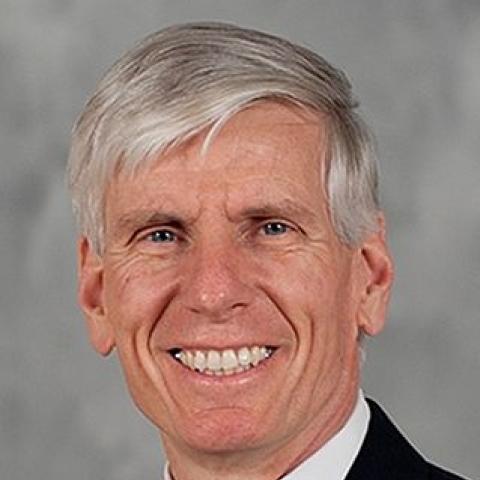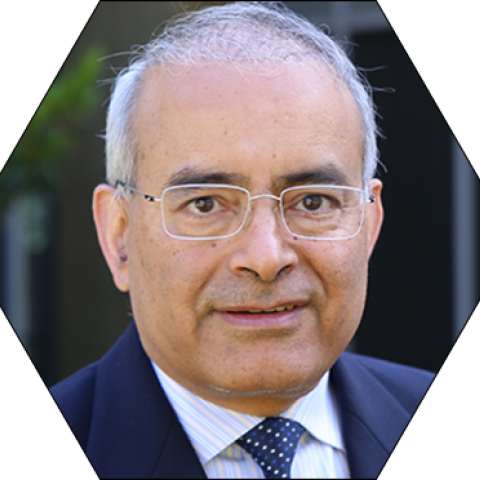
Peter Loutzenhiser

Peter Loutzenhiser's profile picture
peter.loutzenhiser@me.gatech.edu
Professor, Woodruff School of Mechanical Engineering
Interim Director of Graduate Studies, Woodruff School of Mechanical Engineering
Phone
(404) 894-3012
Additional Research

Energy Storage; Gasification; Hydrogen; Solar

IRI/Group and Role
Energy > Research Community
Energy
University, College, and School/Department
Georgia Institute of Technology > College of Engineering
Research Areas
Energy
  • Combustion, Propulsion, and Hypersonics
  • Energy Systems, Grid Resilience, and Cybersecurity

Mark Losego

Mark Losego's profile picture
losego@gatech.edu

Mark D. Losego is a professor in the School of Materials Science and Engineering at Georgia Tech. The Losego research lab focuses on materials processing to develop novel organic-inorganic hybrid materials and interfaces for microelectronics, sustainable energy devices, national security technologies, and advanced textiles. The Losego Lab combines a unique set of solution and vapor phase processing methods to convert organic polymers into organic-inorganic hybrid materials, including developing the science to scale these processes for manufacturing.  Prof. Losego’s work is primarily experimental, and researchers in his lab gain expertise in the vapor phase processing of materials (atomic layer deposition, physical vapor deposition, vapor phase infiltration, etc.), the design and construction of vacuum equipment, interfacial and surface science, and materials and surface characterization. Depending on the project, Losego Lab researchers explore a variety of properties ranging from electrical to electrochemical to optical to thermal to sorptive to catalytic and more.

Professor, MSE Faculty Fellow, and Dean’s Education Innovation Professor
Phone
404.385.3630
Additional Research

Catalysis; Cellulose Nanomaterials; Coatings; Coatings and Barriers; Corrosion & Materials Engineering; Corrosion and Reliability; Energy; Films and Coatings; Microporous Materials; Nanocellulose Applications; Nanomaterials; New Materials; Polymers; Vapor Phase Processing

IRI/Group and Role
Renewable Bioproducts > Affiliated Faculty
Matter and Systems > Affiliated Faculty
Energy
University, College, and School/Department
Georgia Institute of Technology > College of Engineering > School of Materials Science Engineering
Research Areas
Matter and Systems
  • Frontiers in Infrastructure
  • Computing and Communication Technologies
Energy
  • Advanced Manufacturing for Energy
  • Carbon Capture, Utilization and Storage
  • Energy and National Security
  • Water, Wind, and Solar
Renewable Bioproducts
  • Pulp, Paper, Packaging and Tissue
  • Circular Materials

Ryan Lively

Ryan Lively's profile picture
ryan.lively@chbe.gatech.edu

Ryan Lively was born in 1984. He spent approximately 16 years in Gainesville, FL and attended almost every home football game at The Swamp. He enrolled at Georgia Tech in 2002 as an eager Chemical Engineering student and has been a Yellow Jacket at heart ever since. During his studies at Georgia Tech, Ryan worked on research projects as diverse as ab initio quantum mechanical methods to estimate molecular binding energies, fresh Georgia peach preservation, composite spinneret design, dual-layer hollow fiber membrane spinning, and sorbent-loaded fiber spinning. Ryan introduced a rapid temperature swing adsorption (RTSA) approach for post-combustion CO2 capture, which was successfully demonstrated by adapting knowledge developed in membrane science to design unique nanoscale composite adsorbent/heat exchangers. After his Ph.D. (awarded in 2010), he spent almost 3 years as a post-doctoral research engineer at Algenol Biofuels, where he published 25 papers and filed two U.S. patent applications. His work at Algenol focused on developing energy-efficient liquid and vapor separation systems for downstream biofuel purification. 

He is now the Thomas C. DeLoach Professor in the School of Chemical & Biomolecular Engineering at the Georgia Institute of Technology. His current research seeks to revolutionize fluid separation processes critical to the global energy and carbon infrastructure. He has a specific focus on membrane- and adsorbent-based science and technology to address some of the most difficult chemical separations. His group’s research activities range from fundamental material science and discovery to translational engineering applications focusing on making and testing separation devices. 

Ryan has received a variety of awards for his research efforts including the 2020 Allan P. Colburn Award from AIChE, and the 2022 Curtis W. McGraw Award from ASEE. He is currently an Editor for the Journal of Membrane Science and is the Secretary of the North American Membrane Society. He is the Director of the Center for Understanding & Controlling Accelerated and Gradual Evolution of Materials for Energy (UNCAGE-ME), an Energy Frontier Research Center of the US Department of Energy. He has over 160 publications in the field of separations including articles in Science, Nature and other impactful venues.

Professor, School of Chemical and Biomolecular Engineering
Thomas C. DeLoach Jr. Endowed Professorship
Phone
(404) 894-8795
Additional Research

Biofuels; Carbon Capture; Separations Technology; Membranes; Adsorbents;Polymers; Microporous Materials

IRI/Group and Role
Renewable Bioproducts > Affiliated Faculty
Energy > Faculty Council
Energy > Hydrogen Group
Energy > Research Community
Energy
University, College, and School/Department
Georgia Institute of Technology > College of Engineering > School of Chemical and Biomolecular Engineering
Research Areas
Energy
  • Carbon Capture, Utilization and Storage
  • Fuels
  • Advanced Manufacturing for Energy
  • Critical Minerals
  • Supply Chain
Renewable Bioproducts
  • Bioindustrial Manufacturing and Biorefining
  • Pulp, Paper, Packaging and Tissue

Xiao Liu

Xiao Liu's profile picture
xiao.liu@isye.gatech.edu
David M. McKenney Family Associate Professor, School of Industrial Systems Engineering
Office
Groseclose 339
Additional Research

Domain-aware data-driven methodologies for scientific and engineering applications, environment and energy, urban resilience, applied statistics, system informatics and reliability engineering, model interactions between solar energy production and wildfires.

IRI/Group and Role
Energy > Research Community
Energy
University, College, and School/Department
Georgia Institute of Technology > College of Engineering > School of Industrial Systems Engineering
Research Areas
Energy
  • Sustainable Communities
  • Water, Wind, and Solar
  • Energy Systems, Grid Resilience, and Cybersecurity

  • AI Energy Nexus

Meilin Liu

Meilin Liu's profile picture
meilin.liu@mse.gatech.edu

Liu's primary interests lie in fundamental understanding of the effect of structure, defects, and microstructure on transport and electrical properties of surfaces and interfaces. In particular, he is interested in developing new materials for energy storage and conversion, for chemical sensing, and for hydrogen production and separation In addition, he is interested in mathematical modeling of mass and charge transport in solid electrochemical systems and polarization at interfaces.

Liu's current research activities include (1) in-situ characterization of gas-solid interactions using FTIR/Raman spectromicroscopy, impedance spectroscopy, and mass spectrometry; (2) study of transport phenomena and kinetics in ionic and electronic conductors and the effect of imperfections on electrophysical and electrochemical properties; (3) fabrication and characterization of ceramic membranes, thin films, and coatings; mesoporous and nanostructured electrodes and interfaces; and solid-state ionic devices; and (4) development of new materials for high-selectivity gas sensors, for high-energy-density batteries, for low-temperature solid-state fuel cells, and for high temperature PEM fuel cells.

Liu holds 20 U.S. patents and a number of patent applications, co-edited seven proceedings volumes, and published more than 250 papers in reputed journals, book chapter, and conference proceedings. He has also been the co-organizer of 11 international symposia/workshops on materials for energy storage and conversion devices, sensors, and gas separation.

Liu is a fellow of the American Ceramic Society (ACerS) and the Electrochemical Society (ECS). He is the recipient of a Ross Coffin Purdy Award (American Ceramic Society, 2010), an NASA Tech Brief Award (2007), an invited participant, US-Japan Frontiers of Engineering (National Academy of Engineering, 2007); a Crystal Flame Innovation Award in Research (FuelCell South, 2005); an Outstanding Achievement in Research Program Development Award (Georgia Tech, 2003), A Sustained Research Award (Sigma Xi, 2003), a senior Teaching Fellow (Georgia Tech, 2002), a Best Faculty Paper Award (Sigma Xi, 2001), an Outstanding Faculty Research Author Award (Georgia Tech, 1999), an invited participant, Frontiers of Engineering (National Academy of Engineering, 1997), a Best MS Thesis Advisor Award (Sigma Xi, 1996), a National Young Investigator Award (NSF, 1993-98), and a Scholastic Achievement Award (Golden Gate Chapter of ASM, 1986).

Regents' Professor, School of Materials Science and Engineering
Hightower Chair, School of Materials Science and Engineering
Phone
404.894.6114
Office
Love 258
Additional Research

Energy Storage; Energy Conversion; Fuel Cells; Batteries; Thin Films; Hydrogen

IRI/Group and Role
Energy > Hydrogen Group
Energy > Research Community
Energy
University, College, and School/Department
Georgia Institute of Technology > College of Engineering > School of Materials Science Engineering
Research Areas
Energy
  • Energy Storage
  • Energy and National Security
  • Electric Vehicles

Charles Liotta

Charles Liotta's profile picture
charles.liotta@chemistry.gatech.edu
Regents' Professor Emeritus, School of Chemistry & Biochemistry
Phone
(404) 894-4048
Additional Research

Catalysis; Biofuels

IRI/Group and Role
Energy > Research Community
Energy
University, College, and School/Department
Georgia Institute of Technology > College of Sciences > School of Chemistry & Biochemistry
Research Areas
Energy
  • Advanced Manufacturing for Energy

Timothy Charles Lieuwen

Timothy Charles Lieuwen's profile picture
tim.lieuwen@aerospace.gatech.edu

Tim Lieuwen is the executive vice president for Research at the Georgia Institute of Technology. In this role, he oversees the Institute’s $1.4+ billion portfolio of research, economic development, and sponsored activities. This includes leadership of the Georgia Tech Research Institute (GTRI), the Enterprise Innovation Institute, 11 interdisciplinary research institutes (IRIs), and related research administrative support units.

In his 25-plus years at Georgia Tech, Lieuwen earned his master’s and Ph.D. degrees in mechanical engineering (1996 and 1999, respectively) and has held multiple leadership positions. He has been the executive director of the Strategic Energy Institute (SEI) and served as the interim chair of the Daniel Guggenheim School of Aerospace Engineering in 2023.

Lieuwen has received numerous honors and recognition for his work in clean energy systems and policy, national security, and regional economic development. Additionally, he has been awarded the titles of Regents’ Professor and the David S. Lewis, Jr. Chair in AE. He is also a member of the National Academy of Engineering and is a fellow of the American Society of Mechanical Engineers and the American Institute of Aeronautics and Astronautics.

Executive Vice President for Research (EVPR)
Regents' Professor, Guggenheim School of Aerospace Engineering
Phone
(404) 894-8885
Office
Carnegie 020
Additional Research

Acoustics; Fluid Mechanics; Combustion; Signal Processing

IRI/Group and Role
Energy
Energy > Hydrogen Group
Energy > Research Community
Manufacturing
Energy
University, College, and School/Department
Georgia Institute of Technology > College of Engineering > Guggenheim School of Aerospace Engineering
Research Areas
Energy
  • Combustion, Propulsion, and Hypersonics
  • Energy Economics, Policy, and Public Health
  • Energy and National Security

Aaron Levine

Aaron Levine's profile picture
aaron.levine@pubpolicy.gatech.edu

Aaron D. Levine is Associate Dean for Research and Outreach in the Ivan Allen College of Liberal Arts and Professor in the School of Public Policy at Georgia Tech. He also holds an appointment as a Guest Researcher in the Division of Reproductive Health at the Centers for Disease Control and Prevention. He is a member of the leadership team for the NSF Engineering Research Center for Cell Manufacturing Technologies (CMaT), leading ethics and policy research for the center. He seved as Co-Director for CMaT's Engineering Workforce Development activities from 2017 to 2022. His research focuses on the intersection between public policy and bioethics. Much of his work has examined the development of stem cell science, particularly research using human embryonic stem cells, and the translation of novel cell therapies. He also writes extensively on the oversight of contentious areas of medicine, such as assisted reproductive technology. In 2012, he received a NSF CAREER award to examine the impact of ethical controversy on graduate science education and the development of scientific careers.  He serves as Vice-Chair for Bioethics on the International Society for Cell & Genel Therapy’s Committee on the Ethics of Cell and Gene Therapy and recently completed a three-year term as an elected member of the Board of Directors of the American Society for Bioethics and Humanities. He is also a long-time member of the International Society for Stem Cell Research, the Association for Public Policy Analysis and Management, and the American Association for the Advancement of Science.

Aaron has a long-standing interest in science communication and is the author of Cloning: A Beginner's Guide (Oneworld Publications, 2007), an accessible introduction to the science of cloning and embryonic stem cells and the ethical and policy controversies this science inspires. He was an AAAS Leshner Leadership Institute Public Engagement Fellow for 2019-2020. You can follow Aaron on twitter at @aarondlevine.

He completed his Ph.D. in Public Affairs at Princeton University, where his dissertation research examined the impact of public policy on the development of human embryonic stem cell science.  He also holds an M. Phil. from the University of Cambridge, where, as a Churchill Scholar, he studied computational biology at the Sanger Centre and developed algorithms to help analyze the human genome sequence, and a B.S. in Biology from the University of North Carolina at Chapel Hill, where he was a Morehead Scholar.

Professor, School of Public Policy
Associate Dean for Research and Outreach, Ivan Allen College of Liberal Arts
Phone
404-385-3329
Office
DM Smith 216
Additional Research

The impact of ethical controversy on scientific research, with a particular emphasis on emerging biomedical technologies.Recent work has focused on a range of issues related to stem cell policy (including state-level science policy and the rise of unproven stem cell therapies) as well as the oversight of assisted reproduction.

IRI/Group and Role
Bioengineering and Bioscience > Faculty
Energy > Research Community
Matter and Systems > Affiliated Faculty
Energy
Tech AI > ITAB
University, College, and School/Department
Georgia Institute of Technology > Ivan Allen College of Liberal Arts > School of Public Policy
Research Areas
Matter and Systems
  • Human-Centric Technologies
Energy
  • Energy Economics, Policy, and Public Health

Wenke Lee

Wenke Lee's profile picture
wenke@cc.gatech.edu

Wenke Lee, Ph.D., is executive director of the Institute for Information Security & Privacy (IISP) and responsible for continuing Georgia Tech's international leadership in cybersecurity research and education. Additionally, he is the John P. Imlay, Jr. Professor of Computer Science in the College of Computing at Georgia Tech, where he has taught since 2001. Previously, he served as director of the IISP's predecessor -- the Georgia Tech Information Security Center (GTISC) research lab -- from 2012 to 2015. Lee is one of the most prolific and influential security researchers in the world. He has published several dozen, oft-cited research papers at top academic conferences, including the ACM Conference on Computer and Communications Security, USENIX Security, IEEE Security & Privacy ("Oakland"), and the Network & Distributed System Security (NDSS) Symposium. His research expertise includes systems and network security, botnet detection and attribution, malware analysis, virtual machine monitoring, mobile systems security, and detection and mitigation of information manipulation on the Internet. Lee regularly leads large research projects funded by the National Science Foundation (NSF), U.S. Department of Defense, Department of Homeland Security, and private industry. Significant discoveries from his research group have been transferred to industry, and in 2006, doing so enabled Lee to co-found Damballa, Inc., which focused on detection and mitigation of advanced persistent threats. Lee’s awards and honors include the “Internet Defense Prize” awarded by Facebook and USENIX in 2015, an “Outstanding Community Service Award” from the IEEE Technical Committee on Security and Privacy in 2013, a Raytheon Faculty Fellowship in 2005, an NSF Career Award in 2002, as well as best paper awards in the IEEE Symposium on Security and Privacy and the ACM SIGKDD International Conference on Knowledge Discovery and Data Mining. Passionate about quality education, Lee serves on the advisory boards of the Faculty of Engineering at the Chinese University of Hong Kong and the board of trustees at Pace Academy in Atlanta. He received his Ph.D. in Computer Science from Columbia University in 1999.

Regents' Professor, School of Cybersecurity and Privacy and School of Computer Science
John P. Imlay Jr. Chair in Software, College of Computing
Phone
404.385.2879
Additional Research

Data Security & Privacy; Encryption; Internet Infrastructure & Operating Systems; Machine Learning; Cyber Technology

IRI/Group and Role
Energy > Research Community
Energy
University, College, and School/Department
Georgia Institute of Technology > College of Computing > School of Computer Science
Research Areas
Artificial Intelligence
Energy
  • Energy Systems, Grid Resilience, and Cybersecurity

Seung Woo Lee

Seung Woo Lee's profile picture
seung.lee@me.gatech.edu

Seung Woo Lee joined the Woodruff School of Mechanical Engineering at the Georgia Institute of Technology as an assistant professor in January of 2013. Lee received his Ph.D. in chemical engineering at MIT, focusing on designing high-energy and high-power density nanostructured electrodes for electrochemical energy storage devices, and synthesizing catalysts for electrochemical energy conversion of small molecules such as methanol oxidation and O2 reduction. He conducted his postdoctoral research in designing electrodes for lithium rechargeable batteries and catalysts for solar energy storage in the Department of Mechanical Engineering and the Department of Chemistry at MIT.

Professor, Woodruff School of Mechanical Engineering
Director, Energy Storage and Conversion Lab
Phone
404.385.0764
Office
Love 137
Additional Research

Heat Transfer; Micro and Nano Engineering; Energy Conversion; Energy Storage; Batteries; Supercapacitors; Catalysis; Fuel Cells; Self-Assembly; Nanostructured Materials

IRI/Group and Role
Energy > Hydrogen Group
Energy > Research Community
Energy
University, College, and School/Department
Georgia Institute of Technology > College of Engineering > Woodruff School of Mechanical Engineering
Research Areas
Energy
  • Energy Storage
  • Energy Systems, Grid Resilience, and Cybersecurity

Subscribe to Energy