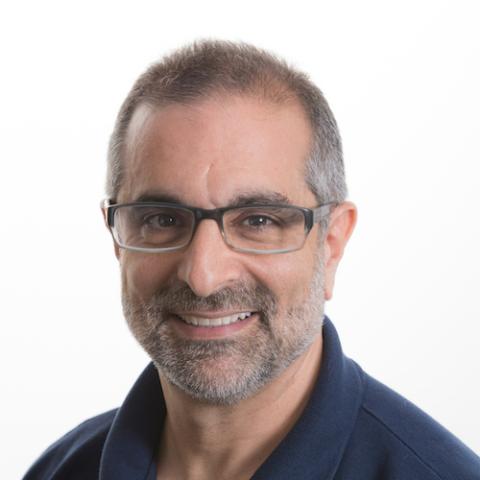
Doug Blough
Justin B. Biddle is an Associate Professor in the School of Public Policy at the Georgia Institute of Technology. His research interests are interdisciplinary in nature, drawing on fields such as philosophy of science, technology, and medicine; ethics of emerging technologies, and science and technology policy. Conceptually, his research explores the relationships between three sets of issues: (1) the role of values in science, technology, and medicine; (2) the epistemic implications of the social organization of research, and (3) ethics and policy. He is currently exploring these relationships in artificial intelligence (AI) and machine learning. He has also worked in the areas of biomedical research and agricultural biotechnology. He received a MA and PhD in History and Philosophy of Science from the University of Notre Dame and was later a Distinguished Fellow at the Notre Dame Institute for Advanced Study. Prior to arriving at Georgia Tech, he was a postdoctoral fellow in the Department of Philosophy at Bielefeld University in Germany.
Academic Specialty: Ethics in Technology
Michael L. Best is Executive Director of the Institute for People and Technology (IPaT) and Professor with the Sam Nunn School of International Affairs and the School of Interactive Computing at Georgia Institute of Technology where he directs the Technologies and International Development Lab. He holds a Ph.D. from MIT and has served as director of Media Lab Asia in India and head of the eDevelopment group at the MIT Media Lab.
Research Fields:
* Information and Communications Technologies for Development
* International Diffusion and Innovation in IT
Geographic Focuses:
* Africa (Sub-Saharan)
* Asia (East)
* Asia (South)
* Latin America and Caribbean
Issues:
* Inequality and Social Justice
* International Development
* Digital and Mixed Media
* Digital Communication
* Human/Machine Interaction
* Internet Studies
ICTD; Computing and Society; Computing and International Affairs
Dhruv Batra is an Associate Professor in the School of Interactive Computing at Georgia Tech. His research interests lie at the intersection of machine learning, computer vision, natural language processing, and AI, with a focus on developing intelligent systems that are able to concisely summarize their beliefs about the world with diverse predictions, integrate information and beliefs across different sub-components or `modules' of AI (vision, language, reasoning, dialog), and interpretable AI systems that provide explanations and justifications for why they believe what they believe. In past, he has also worked on topics such as interactive co-segmentation of large image collections, human body pose estIMaTion, action recognition, depth estIMaTion, and distributed optimization for inference and learning in probabilistic graphical models. He is a recipient of the Office of Naval Research (ONR) Young Investigator Program (YIP) award (2016), the National Science Foundation (NSF) CAREER award (2014), Army Research Office (ARO) Young Investigator Program (YIP) award (2014), Virginia Tech College of Engineering Outstanding New Assistant Professor award (2015), two Google Faculty Research Awards (2013, 2015), Amazon Academic Research award (2016), Carnegie Mellon Dean's Fellowship (2007), and several best paper awards (EMNLP 2017, ICML workshop on Visualization for Deep Learning 2016, ICCV workshop Object Understanding for Interaction 2016) and teaching commendations at Virginia Tech. His research is supported by NSF, ARO, ARL, ONR, DARPA, Amazon, Google, Microsoft, and NVIDIA. Research from his lab has been extensively covered in the media (with varying levels of accuracy) at CNN, BBC, CNBC, Bloomberg Business, The Boston Globe, MIT Technology Review, Newsweek, The Verge, New Scientist, and NPR. From 2013-2016, he was an Assistant Professor in the Bradley Department of Electrical and Computer Engineering at Virginia Tech, where he led the VT Machine Learning & Perception group and was a member of the Virginia Center for Autonomous Systems (VaCAS) and the VT Discovery Analytics Center (DAC). From 2010-2012, he was a Research Assistant Professor at Toyota Technological Institute at Chicago (TTIC), a philanthropically endowed academic computer science institute located on the University of Chicago campus. He received his M.S. and Ph.D. degrees from Carnegie Mellon University in 2007 and 2010 respectively, advised by Tsuhan Chen. In past, he has held visiting positions at the Machine Learning Department at CMU, CSAIL MIT, Microsoft Research, and Facebook AI Research.
Machine Learning; Computer Vision; Artificial Intelligence
Shaowen Bardzell is Chair and Professor at Georgia Institute of Technology's School of Interactive Computing.
Bardzell holds a Ph.D. in Comparative Literature from Indiana University and pursues a humanistic research agenda within the research and practice of Human Computer Interaction (HCI). A common thread throughout her work is the exploration of the contributions of feminism, design, and social science to support technology’s role in social change. Recent research topics include care ethics and feminist utopian perspectives on IT, research through design, women’s health, posthumanist approaches to sustainable design, computational agriculture and food justice, and cultural and creative industries in Asia. Her work is supported by the National Science Foundation, Intel Corporation, and the Mellon Foundation, among others.
She is the co-editor of Critical Theory and Interaction Design (MIT Press, 2018) and co-author of Humanistic HCI (Morgan & Claypool, 2015).
Paul M.A. Baker, Ph.D., is the Senior Director, Research and Strategic Innovation at the Center for Advanced Communications Policy (CACP), and Chief Operating Officer, Center for the Development and Application of Internet of Things Technologies (CDAIT). He is also a Principal Research Scientist with the School of Public Policy. Previously he was the Associate Director of the Center for 21st Century Universities (C21U). Aside from exploring the diffusion innovation and policy in IoT, recent research projects include innovation driven workforce development, mapping the role of intermediaries in innovation networks, usability of voting technologies, implementation of accessible technologies. His work in policy studies include barriers to the adoption of wireless technologies by people with disabilities, teleworking and people with disabilities; social media innovation, online collaboration and virtual communities. He is also involved in international policy research and collaborative policy networks, especially as it relates to issues of technology and usability policy, workforce development and innovation diffusion.
Baker holds a Ph.D. in Public Policy from George Mason University, a Master’s degree in Theological Studies from Emory University, M.P. in Urban Planning from the University of Virginia, and an M.A. in International Commerce and Policy from George Mason University. He has served on a variety of national boards and panels, and as a grant proposal reviewer for U.S. Department of Education, the Academy of Finland, the Israel Science Foundation, and the NTIA, US Department of Commerce. He serves also on editorial boards and as a reviewer for 15 journals. His co-edited (with Jarice Hanson and Jeremy Hunsinger) volume, “The Unconnected: Social Justice, Participation, and Engagement in the Information Society” was published in 2013.
Information Technology; Public Policy; Workforce Development; Disability Policy
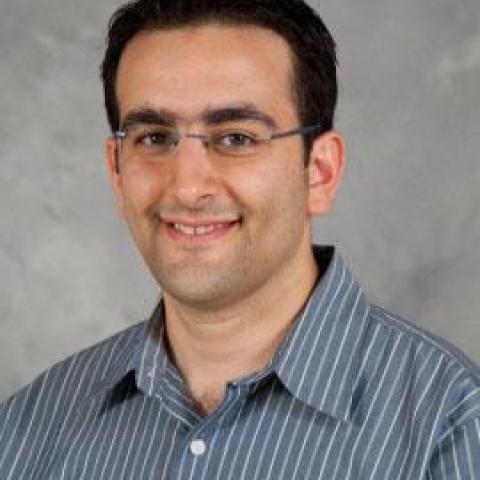
Turgay Ayer is the Virginia C. and Joseph C. Mello Chair and a professor in the H. Milton Stewart School of Industrial and Systems Engineering at Georgia Tech. Ayer also serves as the research director for healthcare analytics and business intelligence in the Center for Health & Humanitarian Systems at Georgia Tech and holds a courtesy appointment at Emory Medical School.
His research focuses on healthcare analytics and socially responsible business analytics with a particular emphasis on practice-focused research. His research papers have been published in top tier management, engineering, and medical journals, and covered by popular media outlets, including the Wall Street Journal, Washington Post, U.S. News, and NPR.
Ayer has received over $2.5 million grant funding and several awards for his work, including an NSF CAREER Award (2015), first place in MSOM Responsible Research in Operations Management (2019), first place in the MSOM Best Practice-Based Research Competition (2017), INFORMS Franz Edelman Laureate Award (2017), and Society for Medical Decision Making Lee Lusted Award (2009).
Ayer serves an associate editor for Operations Research, Management Science, and MSOM, and is a past president of the INFORMS Health Application Society. He received a B.S. in industrial engineering from Sabanci University in Istanbul, Turkey, and his M.S. and Ph.D. degrees in industrial and systems engineering from the University of Wisconsin–Madison.
Socially Responsible Operations; Practice-focused Research; Healthcare Analytics
Arriaga is a Human Computer Interaction (HCI) researcher in the School of Interactive Computing. She uses psychological concepts, theories and methods to address fundamental topics of HCI and Social Computing. Her current research interests are in the area of chronic care management and mental health. She designs mHealth systems that address gaps in chronic care and mental health management. The computational systems she designs: foster engagement, facilitate continuity of care, promote patient self-advocacy, and mediate communication between patient and healthcare providers.
Ronald C. Arkin received the B.S. Degree from the University of Michigan, the M.S. Degree from Stevens Institute of Technology, and a Ph.D. in Computer Science from the University of Massachusetts, Amherst in 1987. He then assumed the position of Assistant Professor in the College of Computing at the Georgia Institute of Technology where he now holds the rank of Regents' Professor and is the Director of the Mobile Robot Laboratory. He also serves as the Associate Dean for Research in the College of Computing at Georgia Tech since October 2008. During 1997-98, Professor Arkin served as STINT visiting Professor at the Centre for Autonomous Systems at the Royal Institute of Technology (KTH) in Stockholm, Sweden. From June-September 2005, Prof. Arkin held a Sabbatical Chair at the Sony Intelligence Dynamics Laboratory in Tokyo, Japan and then served as a member of the Robotics and Artificial Intelligence Group at LAAS/CNRS in Toulouse, France from October 2005-August 2006.
Artificial intelligence; Robotics; Robot ethic; Autonomous agents; Mobile Robots and Unmanned Vehicles; Multi-Agent Robotics; Machine Learning