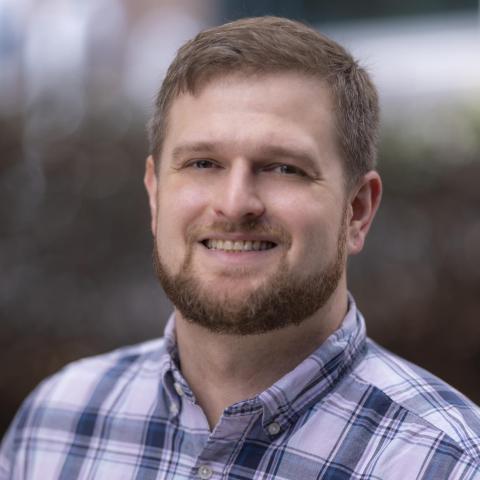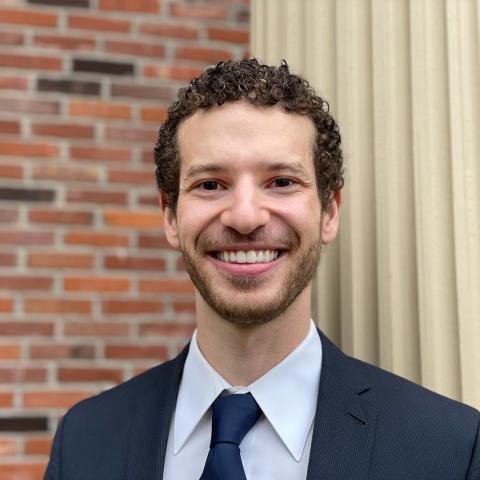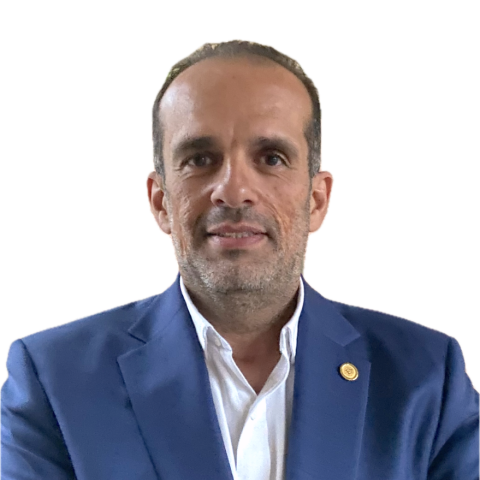
Ghassan AlRegib

Ghassan AlRegib's profile picture
alregib@gatech.edu

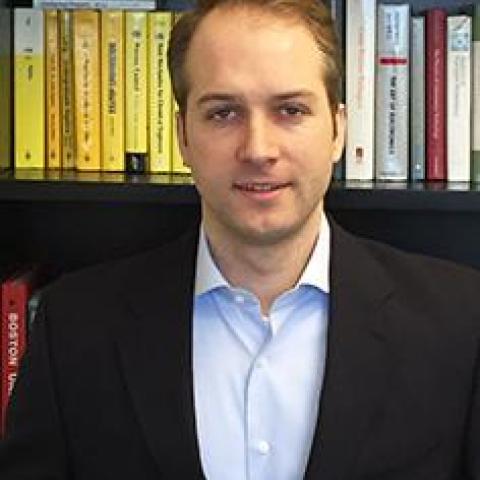
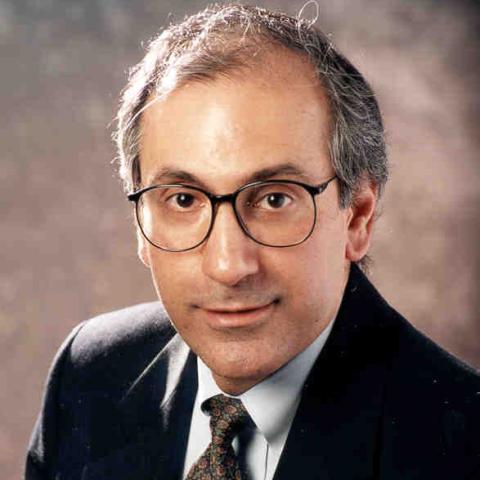
Prof. AlRegib is currently the John and Marilu McCarty Chair Professor in the School of Electrical and Computer Engineering at the Georgia Institute of Technology. His group is the Omni Lab for Intelligent Visual Engineering and Science (OLIVES) at Georgia Tech. In 2012, he was named the Director of Georgia Tech’s Center for Energy and Geo Processing (CeGP). He is the director of the Center for Signal and Information Processing (CSIP). He also served as the Director of Georgia Tech’s Initiatives and Programs in MENA between 2015 and 2018. He has authored and co-authored more than 300 articles in international journals and conference proceedings. He has been issued several U.S. patents and invention disclosures. He is a Fellow of the IEEE.

Prof. AlRegib received the ECE Outstanding Graduate Teaching Award in 2001 and both the CSIP Research and the CSIP Service Awards in 2003. In 2008, he received the ECE Outstanding Junior Faculty Member Award. In 2017, he received the 2017 Denning Faculty Award for Global Engagement. He and his students received the Beat Paper Award in ICIP 2019. He received the 2024 ECE Distinguished Faculty Achievement Award at Georgia Tech. He and his students received the Best Paper Award in ICIP 2019 and the 2023 EURASIP Best Paper Award for Image communication Journal.

Prof. AlRegib participated in a number of activities. He has served as Technical Program co-Chair for ICIP 2020 and ICIP 2024. He served two terms as a member of the IEEE SPS Technical Committees on Multimedia Signal Processing (MMSP) and Image, Video, and Multidimensional Signal Processing (IVMSP), 2015-2017 and 2018-2020. He was a member of the Editorial Boards of both the IEEE Transactions on Image Processing (TIP), 2009-2022, and the Elsevier Journal Signal Processing: Image Communications, 2014-2022. He was a member of the editorial board of the Wireless Networks Journal (WiNET), 2009-2016 and the IEEE Transaction on Circuits and Systems for Video Technology (CSVT), 2014-2016. He was an Area Chair for ICME 2016/17 and the Tutorial Chair for ICIP 2016. He served as the chair of the Special Sessions Program at ICIP’06, the area editor for Columns and Forums in the IEEE Signal Processing Magazine (SPM), 2009–12, the associate editor for IEEE SPM, 2007-09, the Tutorials co-chair in ICIP’09, a guest editor for IEEE J-STSP, 2012, a track chair in ICME’11, the co-chair of the IEEE MMTC Interest Group on 3D Rendering, Processing, and Communications, 2010-12, the chair of the Speech and Video Processing Track at Asilomar 2012, and the Technical Program co-Chair of IEEE GlobalSIP, 2014. He lead a team that organized the IEEE VIP Cup, 2017 and the 2023 IEEEE VIP Cup. He delivered short courses and several tutorials at international events such as BigData, NeurIPS, ICIP, ICME, CVPR, AAAI, and WACV.

In the Omni Lab for Intelligent Visual Engineering and Science (OLIVES), he and his group work on robust and interpretable machine learning algorithms, uncertainty and trust, and human in the loop algorithms. The group studies interventions into AI systems to enhance their trustworthiness. The group has demonstrated their work on a wide range of applications such as Autonomous Systems, Medical Imaging, and Subsurface Imaging. The group is interested in advancing the fundamentals as well as the deployment of such systems in real-world scenarios. His research group is working on projects related to machine learning, image and video processing, image and video understanding, subsurface imaging, perception in visual data processing, healthcare intelligence, and video analytics. The primary applications of the research span from Autonomous Vehicles to Portable AI-based Ophthalmology and Eye Exam and from Microscopic Imaging to Seismic Interpretation. The group was the first to introduce modern machine learning to seismic interpretation.

In 2024, and after more than three years of continuous work, he co-founded Georgia Tech’s AI Makerspace. The AI Makerspace is a resource for the entire campus community to access AI. Its purpose is to democratize access to AI. Together with his team, they are developing tools and services for the AI Makerspace via a VIP Team called AI Makerspace Nexus. In addition, he created two AI classes from scratch with innovative hands-on exercises using the AI Makerspace. One class is the ECE4252/8803 FunML class (Fundamentals of Machine Learning) where students learn the basics of Machine Learning as well as eight weeks of Deep learning both mathematically and using hands-on exercises on real-world data. The second class is a sophomore-level AI Foundations class (AI First) that teaches any student from any college the basics of AI such as data literacy, learning, decision, planning, and ethics using theory and hands-on exercises on the AI Makerspace. Prof. AlRegib wrote two textbooks for both classes.

Prof. AlRegib has provided services and consultation to several firms, companies, and international educational and R&D organizations. He has been a witness expert in a number of patents infringement cases and Inter Partes Review (IRP) cases.

John and Marilu McCarty Chair Professor, School of Electrical and Computer Engineering
Center Director
Phone
404-894-7005
Office
Centergy-One Room 5224
Additional Research

Machine learning, Trustworthy AI, Explainable AI (XAI), Robust Learning Systems, Multimodal Learning, Annotations Diversity in AI Systems

IRI/Group and Role
Bioengineering and Bioscience > Faculty
Data Engineering and Science > Affiliated Faculty
Energy > Research Community
Data Engineering and Science
Bioengineering and Bioscience
Energy
University, College, and School/Department
Georgia Institute of Technology > College of Engineering > School of Electrical and Computer Engineering
Research Areas
Artificial Intelligence
Energy
  • AI Energy Nexus

Kyle Allison

Kyle Allison's profile picture
kyle.r.allison@emory.edu

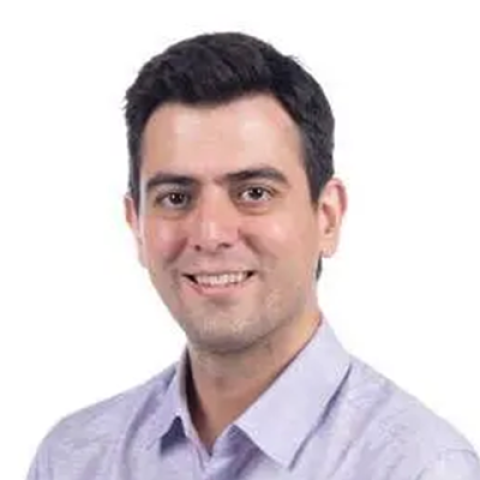
Kyle Allison is a bioengineer and chemical engineer whose research has focused on understanding the behavior of bacteria in order to improve antibiotics. The Allison Lab tracks individual bacteria using microscopy approaches they developed.  Kyle and his lab have made foundational discoveries in the metabolite potentiation of antibiotics, the resuscitation of persistent bacteria, and the multicellularity of E. coli (the best-studied unicellular organism).  Kyle was named to the first “30 under 30” list in Science by Forbes Magazine and received the NIH Director’s Early Independence Award to bypass traditional postdoctoral training. His research has been published in Nature, PNAS, Molecular Systems Biology, Nature Methods, Nature Chemical Biology, and other journals.  Kyle also holds a master’s degree in literature and wrote his thesis on James Joyce’s Finnegans Wake.

Assistant Professor, Department of Medicine/Infectious Disease, Emory University
Phone
404-727-6974
Office
Emory HSRB E146
Additional Research

Antibiotics, Systems Biology, Multicellularity

IRI/Group and Role
Bioengineering and Bioscience > Faculty
Bioengineering and Bioscience
University, College, and School/Department
Georgia Institute of Technology > College of Engineering > Coulter Department of Biomedical Engineering
Emory University

Cyrus Aidun

Cyrus Aidun's profile picture
cyrus.aidun@me.gatech.edu

Dr. Aidun joined the Woodruff School as a Professor in 2003 after completion of a two-year period as program director at the National Science Foundation. He began at Tech in 1988 as an Assistant Professor at the Institute of Paper Science and Technology. Prior, he was a research Scientist at Battelle Research Laboratories, Postdoctoral Associate at Cornell University and Senior Research Consultant at the National Science Foundation's Supercomputer Center at Cornell. 

Dr. Aidun's research is at the intersection between fundamentals of the physics of complex fluids/thermal transport and applications to engineering and biotransport. He has a diverse research portfolio in fluid mechanics, bioengineering, renewable bioproducts and decarbonization of industrial processes. 

A major focus has been to understand the physics of blood cell transport and interaction with glycoproteins (e.g., vWF) with applications to cardiovascular diseases.

Professor, Woodruff School of Mechanical Engineering
Phone
404-894-6645
Office
Love Building, Room 320
Additional Research

Computational analysis of cellular blood flow in the cardiovascular system with applications to platelet margination, thrombus formation, and platelet activation in artificial heart valves. Thermal Systems. Chemical Recovery; Papermaking.

IRI/Group and Role
Bioengineering and Bioscience > Faculty
Renewable Bioproducts > Affiliated Faculty
Energy > Research Community
Bioengineering and Bioscience
Energy
University, College, and School/Department
Georgia Institute of Technology > College of Engineering > Woodruff School of Mechanical Engineering
Research Areas
Energy
  • Energy Systems, Grid Resilience, and Cybersecurity
  • Advanced Manufacturing for Energy
Renewable Bioproducts
  • Pulp, Paper, Packaging and Tissue

Amirali Aghazadeh

Amirali Aghazadeh's profile picture
aaghazadeh3@gatech.edu

Amirali Aghazadeh is an Assistant Professor in the School of Electrical and Computer Engineering and also program faculty of Machine Learning, Bioinformatics, and Bioengineering Ph.D. programs. He has affiliations with the Institute for Data Engineering and Science (IDEAS) and Institute for Bioengineering and Biosciences. Before joining Georgia Tech, Aghazaeh was a postdoc at Stanford and UC Berkeley and completed his Ph.D. at Rice University. His research focuses on developing machine learning and deep learning solutions for protein and small molecular design and engineering.
 

Assistant Professor
Phone
713-257-5758
Office
CODA S1209
IRI/Group and Role
Bioengineering and Bioscience > Faculty
Data Engineering and Science > Faculty
Data Engineering and Science
Bioengineering and Bioscience
Matter and Systems > Affiliated Faculty
Space > Faculty
University, College, and School/Department
Georgia Institute of Technology > College of Engineering > School of Electrical and Computer Engineering
Research Areas
Artificial Intelligence

Vinayak Agarwal

Vinayak Agarwal's profile picture
vagarwal@gatech.edu

Vinny is an Assistant Professor at Georgia Tech with joint appointments at the School of Chemistry and Biochemistry and School of Biological Sciences.

A majority of antibiotics and drugs that we use in the clinic are derived or inspired from small organic molecules called Natural Products that are produced by living organisms such as bacteria and plants. Natural Products are at the forefront of fighting the global epidemic of antibiotic resistant pathogens, and keeping the inventory of clinically applicable pharmaceuticals stocked up. Some Natural Products are also potent human toxins and pollutants, and we need to understand how these toxins are produced to minimize our and the environmental exposure to them.

We as biochemists ask some simple questions- how and why are Natural Products produced in Nature, what we can learn from Natural Product biosynthetic processes, and how we can exploit Nature's synthetic capabilities for interesting applications?

Broadly, we are interested in questions involving (meta)genomics, biochemistry, structural and mechanistic enzymology, mass spectrometry, analytical chemistry, and how natural product chemistry dictates biology.

Assistant Professor
Phone
404-385-3798
Office
Petit Biotechnology Building, Office 3315
Additional Research

A majority of antibiotics and drugs that we use in the clinic are derived or inspired from small organic molecules called Natural Products that are produced by living organisms such as bacteria and plants. Natural Products are at the forefront of fighting the global epidemic of antibiotic resistant pathogens, and keeping the inventory of clinically applicable pharmaceuticals stocked up. Some Natural Products are also potent human toxins and pollutants, and we need to understand how these toxins are produced to minimize our and the environmental exposure to them. We as biochemists ask some simple questions- how and why are Natural Products produced in Nature, what we can learn from Natural Product biosynthetic processes, and how we can exploit Nature's synthetic capabilities for interesting applications? Broadly, we are interested in questions involving (meta)genomics, biochemistry, structural and mechanistic enzymology, mass spectrometry, analytical chemistry, and how natural product chemistry dictates biology.

IRI/Group and Role
Bioengineering and Bioscience > Faculty
Renewable Bioproducts > Affiliated Faculty
Bioengineering and Bioscience
Matter and Systems > Affiliated Faculty
University, College, and School/Department
Georgia Institute of Technology > College of Sciences > School of Chemistry & Biochemistry

Alexander T. Adams

Alexander Adams
aadams322@gatech.edu

Alex Adams’s research focuses on designing, fabricating, and implementing new ubiquitous and wearable sensing systems. In particular, he is interested in how to develop these systems using equity-driven design principles for healthcare. Alex leverages sensing, signal processing, and fabrication techniques to design, deploy, and evaluate novel sensing technologies.

Originally a musician, Alex became fascinated by how he could capture and manipulate sounds through analog hardware and digital signal processing, which led him back to his hometown (Concord, NC). Alex completed his BS at the University of North Carolina at Charlotte in 2014 and his Ph.D. at Cornell University in 2021 (advised by Professor Tanzeem Choudhury). Alex then became the resident Research Scientist for the Precision Behavioral Health Initiative at Cornell Tech (NYC) until the fall of 2022, when he joined the School of Interactive Computing at the Georgia Institute of Technology. Currently, his research focuses on the equity-driven design and the development of multi-modal sensing systems to simultaneously assess mental and physical health to enable a new class of mobile health technologies.

Assistant Professor
Office
237 TSRB
IRI/Group and Role
Bioengineering and Bioscience > Faculty
Robotics > Core Faculty
Bioengineering and Bioscience
People and Technology > Affiliated Faculty
University, College, and School/Department
Georgia Institute of Technology > College of Computing > School of Interactive Computing
Research Areas
Artificial Intelligence

Alex Abramson

Alex Abramson's profile picture
aabramson6@gatech.edu

Alex Abramson is an assistant professor in the School of Chemical and Biomolecular Engineering at Georgia Tech. His research, which focuses on drug delivery and bioelectronic therapeutics, has been featured in news outlets such as The New York Times, NPR, and Wired. Abramson has received several recognitions for scientific innovation, including being named a member of the Forbes 30 Under 30 Science List and the MIT Technology Review Innovators Under 35 List. He is passionate about translating scientific endeavors from bench to bedside. Large pharmaceutical companies have exclusively licensed a portfolio of his patents to bring into clinical trials, and Abramson serves as a scientific advisor overseeing their commercialization. In addition to his scientific endeavors, Abramson plays an active role in his community by leading diversity and inclusion efforts on campus and volunteering as a STEM tutor to local students.

Abramson received a B.S. in chemical and biomolecular engineering from Johns Hopkins University and a Ph.D. in chemical engineering from MIT as an NSF Graduate Research Fellow under the direction of Professors Robert Langer and Giovanni Traverso. He conducted postdoctoral work at Stanford University as an NIH fellow with Professors Zhenan Bao and the late Sanjiv S. Gambhir.

The Abramson Lab develops ingestible, implantable, and wearable robotic therapeutic devices that solve key healthcare problems and provide measurable therapeutic outcomes. Our translationally focused research spans a multitude of areas, including (1) drug delivery devices for optimal drug adherence, (2) soft materials for bioelectronic sensors and therapeutics, and (3) preclinical drug screening technologies.

Assistant Professor, School of Chemical and Biomolecular Engineering
Office
MoSE 4120B
Additional Research
  • Biosensors
IRI/Group and Role
Bioengineering and Bioscience > Faculty
Robotics > Core
Matter and Systems > Affiliated Faculty
Bioengineering and Bioscience
University, College, and School/Department
Georgia Institute of Technology > College of Engineering > School of Chemical and Biomolecular Engineering
Research Areas
Artificial Intelligence
Subscribe to Faculty