Rafael Davalos

Rafael Davalos's profile picture
rafael.davalos@bme.gatech.edu

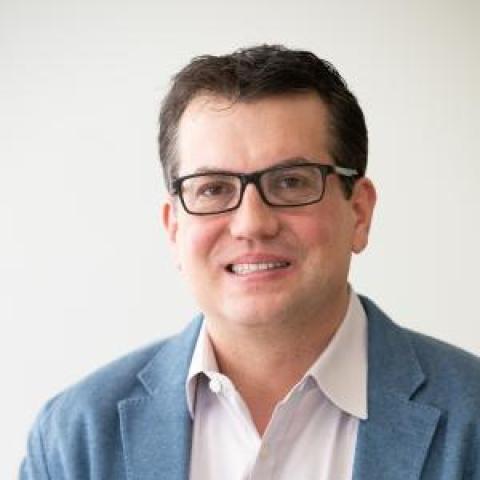
Dr. Rafael Davalos' research interests are in microfluidics for personalized medicine and developing technologies for cancer therapy. He is most recognized for co-inventing Irreversible Electroporation (IRE), a minimally invasive non-thermal surgical technique to treat unresectable tumors near critical structures such as major blood vessels and nerves. The technology has been used to help thousands of patients worldwide with a second-generation version in clinical trials. Davalos has authored 150 peer-reviewed articles and has 47 issued patents (72 h-index, >18,000 citations) and has secured over $37M in research funding with $10M his share. His patents have been licensed to 7 companies. He has been a plenary speaker for several prestigious venues including the International Symposium of the Bioelectrochemistry Society, the World Congress on Electroporation, and the Society of Cryobiology Annual Meeting. 

Margaret P. and John H. Weitnauer Jr. Chaired Professor, ASME, BMES, NAI & AIMBE Fellow
Office
U.A. Whitaker Building, 313 Ferst Drive, Suite 2101
IRI/Group and Role
Bioengineering and Bioscience > Faculty
Bioengineering and Bioscience
University, College, and School/Department
Georgia Institute of Technology > College of Engineering > Coulter Department of Biomedical Engineering

Lakshmi Dasi

Lakshmi Dasi's profile picture
lakshmi.dasi@gatech.edu

Lakshmi Prasad Dasi is an established researcher in the field of prosthetic heart valves, cardiovascular biomechanics, biomaterials, and devices. He is currently a tenure Professor of Biomedical Engineering, at Georgia Institute of Technology while holding the Rozelle Vanda Wesley Endowed Professorship as well as being the Associate Chair for Undergraduate Studies. He has held positions at The Ohio State University, and Colorado State University previously. He is a Fellow of the American College of Cardiology (FACC) as well as Fellow of the American Institute for Medical and Biological Engineering (FAIMBE). 

Dasi earned his Ph.D. from Georgia Institute of Technology in 2004 with a focus in fluid dynamics and turbulence. He trained as a postdoctoral fellow and research engineer under Prof. Ajit Yoganathan’s mentorship at Georgia Tech where he transformed his research focus to heart valves, devices, and cardiovascular biomechanics. In 2009, he established the Cardiovascular Biofluid Mechanics Lab (CBFL) as Assistant Professor at Colorado State University and moved to The Ohio State University in 2015 as his focus became more translational. Since 2020, his research at Georgia Tech focuses on tackling the complexity of: (a) heart valve biomechanics (native and prosthetic); (b) prosthetic heart valve engineering (conventional & trans-catheter); (c) structure-function relationships of the heart in health and disease at the embryonic, pediatric, as well as adult stages; and (d) turbulence and turbulent blood flow.

Rozelle Vanda Wesley Professor
Phone
404.385.1265
Office
TEP 237
IRI/Group and Role
Bioengineering and Bioscience > Faculty
Bioengineering and Bioscience
University, College, and School/Department
Georgia Institute of Technology > College of Engineering > Coulter Department of Biomedical Engineering

Suman Das

Suman Das's profile picture
suman.das@me.gatech.edu
Morris M. Bryan, Jr. Chair and Professor, Woodruff School of Mechanical Engineering
Director, Direct Digital Manufacturing Laboratory
Phone
404.385.6027
Office
MARC 255
Additional Research

3D printing; Additive/Advanced Manufacturing; Biomaterials; Composites; Emerging Technologies; Nanocomposites; Nanomanufacturing; Manufacturing, Mechanics of Materials, Bioengineering, and Micro and Nano Engineering. Advanced manufacturing and materials processing of metallic, polymeric, ceramic, and composite materials for applications in life sciences, propulsion, and energy. Professor Das directs the Direct Digital Manufacturing Laboratory and Research Group at Georgia Tech. His research interests encompass a broad variety of interdisciplinary topics under the overall framework of advanced design, prototyping, direct digital manufacturing, and materials processing particularly to address emerging research issues in life sciences, propulsion, and energy. His ultIMaTe objectives are to investigate the science and design of innovative processing techniques for advanced materials and to invent new manufacturing methods for fabricating devices with unprecedented functionality that can yield dramatic improvements in performance, properties and costs.

IRI/Group and Role
Bioengineering and Bioscience > Faculty
Energy > Research Community
Manufacturing
Bioengineering and Bioscience
Energy
University, College, and School/Department
Georgia Institute of Technology > College of Engineering > Woodruff School of Mechanical Engineering

Scott Danielsen

Scott Danielsen's profile picture
scott.danielsen@mse.gatech.edu

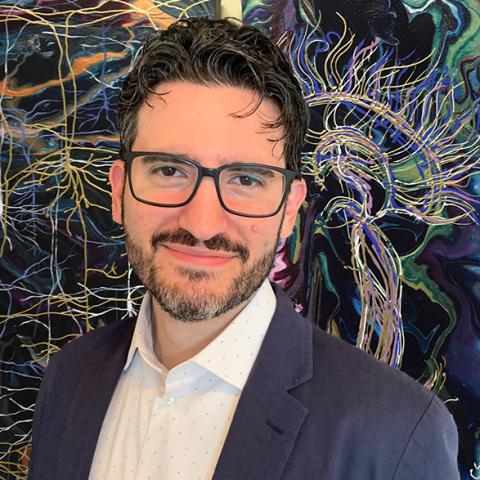
Scott Danielsen is an Assistant Professor in the School of Materials Science and Engineering at the Georgia Institute of Technology. He obtained his Ph.D. in chemical engineering at the University of California, Santa Barbara in 2018 and his B.S.E. in chemical and biomolecular engineering at the University of Pennsylvania in 2014. He then spent five years as a postdoctoral associate at Duke University and as a visiting scholar at the University of North Carolina School of Medicine from 2019-2023. 

Prof. Danielsen’s group uses a combination of theoretical, computational, and experimental methods to reveal structure–property–processing relationships of soft materials. Their current primary research interests are the structure and dynamics of nonideal structured fluids, particularly polymer gels and biological fluids, with a focus on designing new materials and processing conditions for functional materials.

Assistant Professor, School of Materials Science and Engineering
IRI/Group and Role
Bioengineering and Bioscience > Faculty
Bioengineering and Bioscience
Matter and Systems > Affiliated Faculty
Energy > Research Community
Energy > Faculty
Research Areas
Matter and Systems
  • Computing and Communication Technologies
Energy
  • Energy Storage
  • Water, Wind, and Solar
  • Fuels
  • Critical Minerals
Renewable Bioproducts
  • Center for a Renewables-Based Economy from Wood (ReWOOD)
  • Circular Materials

Zachary Danziger

Zachary Danziger's profile picture
zachary.danziger@emory.edu

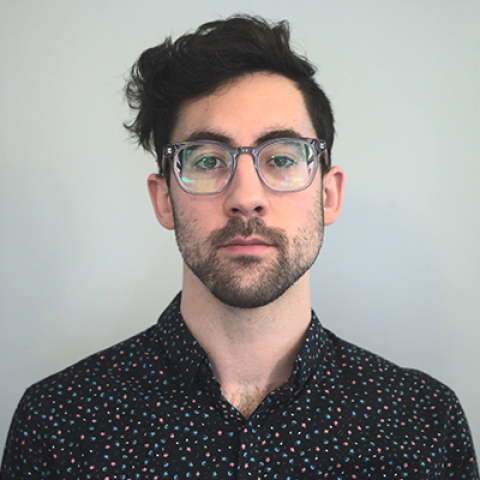
The effortlessness of moving your body belies the lurking complexity driving it. We are trying to understand how the nervous system makes something so complicated as controlling a human body feel so natural. We use human subjects studies, animal experiments, mathematical biology, and artificial intelligence to understand neural control of movement. New theories and insight promise advances in physical therapy, human-machine collaboration, brain-computer interfaces, neural modulation of peripheral reflexes, and more.

Associate Professor Division of Physical Therapy, Department of Rehabilitation Medicine
Associate Professor, W.H. Coulter Department of Biomedical Engineering
Phone
404-712-4801
IRI/Group and Role
Bioengineering and Bioscience > Faculty
Bioengineering and Bioscience
University, College, and School/Department
Emory University
Research Areas
Artificial Intelligence

Aditi Das

Aditi Das's profile picture
aditi.das@chemistry.gatech.edu

Aditi Das did her BSc. (Hons.) Chemistry from St. Stephen's College Delhi, followed by M.S. (Chemistry) from I.I.T (Kanpur). She received her Ph.D. in Chemistry from Princeton University. She did post-doctoral work with Prof. Steve Sligar. She joined University of Illinois, Urbana-Champaign (UIUC) as a tenure track assistant professor in 2012. In 2019, she was promoted to associate professor with tenure. In 2022, she joined School of Chemistry and Biochemistry at Georgia Institute of Technology as an associate professor with tenure. Her research is in the area of enzymology of oxygenases that are involved lipid metabolism and cannabinoid metabolism.

Das is recipient of an American Heart Associate (AHA) career award and has been funded by National Institute of Health (NIH - NIGMS, NIDA and NCCIH), USDA, and National Multiple Sclerosis Society (NMSS). Her research was recognized by several National awards: Young Investigator award From Eicosanoid Research Foundation, Mary Swartz Rose Young Investigator Award and E.L.R. Stokstad award from American Society for Nutrition (ASN) for outstanding research on bioactive compounds for human health. She is also the recipient of Zoetis Research Excellence Award from her college. She was a co-organizer of the International Conference on Cytochrome P450. Recently her laboratory contributed several papers on cannabinoid metabolism by p450s. In recognition of this work, she was awarded El Sohly award from the ACS-Cannabis division for excellence in Cannabis research and is invited to give plenary lecture at ISSX meeting.  Das is also a standing study section member of BBM NIH study section. 

Associate Professor
Phone
609-203-6924
Office
3306 IBB
IRI/Group and Role
Bioengineering and Bioscience > Faculty
Bioengineering and Bioscience
University, College, and School/Department
Georgia Institute of Technology > College of Sciences > School of Chemistry & Biochemistry

Nathan Damen

Nathan Damen's profile picture
nathan.damen@gtri.gatech.edu

Nate Damen is a Research Engineer I with Aerospace, Transportation and Advanced Systems Laboratory of Georgia Tech Research Institute. Damen’s work at ATAS has focused on Mixed Reality applications, robotics, the automation of CAR-T cellular expansions, and bioreactor design. Before joining GTRI, Damen conducted research into the manipulation of textiles with Softwear Automation and the design of deformable parcel manipulation systems with Dorabot. His creative work ATLTVHEAD with the Atlanta Beltline Inc., includes the creation of several wearable electronic systems for remote computing and novel interactions between wearable systems and live user input from those walking the Atlanta Beltline. 

Research Engineer 1
Phone
(678) 215-4891
IRI/Group and Role
Bioengineering and Bioscience > Faculty
Bioengineering and Bioscience
GTRI
Geogia Tech Research Institute
Research Areas
Artificial Intelligence

Sheng Dai

Sheng Dai's profile picture
sheng.dai@ce.gatech.edu

Sheng Dai, Ph.D., P.E., earned his degrees from Tongji University and Georgia Tech. He worked as an ORISE postdoc at the National Energy Technology Laboratory of the U.S. Department of Energy, and returned to Georgia Tech as a faculty member in 2015. He is currently an associate professor in the School of Civil and Environmental Engineering, Ocean Science and Engineering. and holds a courtesy appointment at the School of Earth and Atmospheric Sciences at Georgia Tech.

Dr. Dai's group addresses emerging energy and environment challenges through studying subsurface geomechanics, geomaterials characterization, energy geotechnics, bio-inspired geotechnics, flow in porous media, and granular dynamics. His research has been funded by federal funding agencies (DOE, NSF, NASA, DOT), national labs (INL, NETL), and industry (AECOM, GTI, Leidos).  Dr. Dai has been recognized for his research and teaching, including being a recipient of the NSF CAREER award, the ORISE Fellowship, the Bill Schutz Junior Faculty Teaching Award, and the Class of 1969 Teaching Fellows at Georgia Tech.

He is an associated editor of the Journal of Geophysical Research: Solid Earth and Advances in Geo-Energy Research, an editorial advisor of Geomechanics for Energy and Environment, and serves on the Pressure Core Advisory Board for U.S. Geological Survey, the GOM2 Marine Test Technical Advisory Committee for UT/DOE, the National Gas Hydrate Program for NETL, and the Task Force Leader of TC308 Energy Geotechnics of ISSMGE. 

Assistant Professor, School of Civil and Environmental Engineering
Phone
(404)385-4757
Additional Research

Oil/Gas; Combustion; Electronics; Energy Harvesting; Energy Storage; Thermal Systems

IRI/Group and Role
Bioengineering and Bioscience > Faculty
Energy > Hydrogen Group
Energy > Research Community
Bioengineering and Bioscience
Energy
University, College, and School/Department
Georgia Institute of Technology > College of Engineering
Research Areas
Energy
  • Energy Storage
  • Fuels
  • Carbon Capture, Utilization and Storage
  • Sustainable Communities
  • Critical Minerals

James Dahlman

James Dahlman's profile picture
james.dahlman@bme.gatech.edu

James Dahlman is a bioengineer / molecular engineer whose work lies at the interface of chemistry, nanotechnology, genomics, and gene editing. His lab focuses on targeted drug delivery, in vivo gene editing, Cas9 therapies, siRNA therapies, and developing new technologies to improve biomaterial design. 

The DahlmanLab is known for applying 'big data' technologies to nanomedicine. The lab is pioneering DNA barcoded nanoparticles; using DNA barcodes, >200 nanoparticles can be analyzed simultaneously in vivo. These nanoparticles are studied directly in vivo, and used to deliver targeted therapies like siRNA, mRNA, or Cas9. As a result of this work, James was named 1 of the 35 most innovative people under the age of 35 by MIT Technnology Review in 2018. James has won many national / international awards, and has published in Science, Nature Nanotechnology, Nature Biotechnology, Nature Cell Biology, Cell, Science Translational Medicine, PNAS, JACS, ACS Nano, Nano Letters, and other journals. James has also designed nanoparticles that efficiently deliver RNAs to the lung and heart. These nanoparticles can deliver 5 siRNAs at once in vivo, and are under consideration for clinical development. As a result, the lab has an interest in immunology and vascular biology. 

James supports entirely new research students come up with independently. To this end, DahlmanLab students learn how to (i) generate new ideas, (ii) select the good ones, and (iii) efficiently test whether the good ideas will actually work. 

Dahlman Lab students learn how to design/characterize/administer nanoparticles, how to isolate different cell types in vivo, how to rationally design DNA to record information, Cas9 therapies, and deep sequencing. As a result, the lab is an interdisciplinary group with students that have backgrounds in medicinal chemistry, BME, bioinformatics, biochemistry, and other fields. The lab welcomes students with all types of scientific backgrounds. The lab firmly stands by students, independent of their personal beliefs, preferences, or backgrounds.

Associate Professor
Phone
404-385-5262
Office
UAW 2101
Additional Research
In the Dahlman Lab, we focus on the interface between nanotechology, molecular biology, and genomics. We design drug delivery vehicles that target RNA and other nucleic acids to cells in the body. We have delivered RNAs to endothelial cells, and have treated heart disease, cancer, inflammation, pulmonary hypertension, emphysema, and even vein graft disease. Because we can deliver RNAs to blood vessels at low doses, sometimes we decide to deliver multiple therapeutic RNAs to the same cell at once. These 'multigene therapies' have been used to treat heart disease and cancer. Why is this important? Most diseases are caused by combinations of genes, not a single gene. We also rationally design the nucleic acids we want to deliver. For example, we re-engineered the Cas9 sgRNA to turn on genes, instead of turning them off. This enabled us to easily turn on gene A and turn off gene B in the same cell.
IRI/Group and Role
Bioengineering and Bioscience > Faculty
Bioengineering and Bioscience
University, College, and School/Department
Georgia Institute of Technology > College of Engineering > Coulter Department of Biomedical Engineering

Jennifer Curtis

Jennifer Curtis's profile picture
jcurtis6@gatech.edu

The Curtis lab is primarily focused on the physics of cell-cell and cell-extracellular matrix interactions, in particular within the context of glycobiology and immunobiology. Our newest projects focus on questions of collective and single cell migration in vitro and in vivo; immunophage therapy "an immunoengineering approach - that uses combined defense of immune cells plus viruses (phage) to overcome bacterial infections"; and the study of the molecular biophysics and biomaterials applications of the incredible enzyme, hyaluronan synthase. A few common scientific themes emerge frequently in our projects: biophysics at interfaces, the use of quantitative modeling, collective interactions of cells and/or molecules, cell mechanics, cell motility and adhesion, and in many cases, the role of bulky sugars in facilitating cell integration and rearrangements in tissues.

Professor, School of Physics
Phone
404.894.8839
Office
MoSE G024/G128
Additional Research

Advanced characterization, cell biophysics, soft materials, tissue engineering, cell biophysics, cell mechanics of adhesion, migration and dynamics, immunophysics, immunoengineering, hyaluronan glycobiology, hyaluronan synthase, physics of tissues

IRI/Group and Role
Bioengineering and Bioscience > Faculty
Bioengineering and Bioscience
University, College, and School/Department
Georgia Institute of Technology > College of Sciences
Subscribe to Faculty