Johnna Temenoff

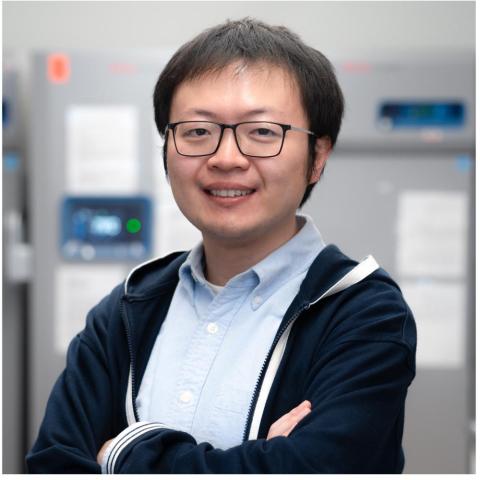
Johnna Temenoff headshot
johnna.temenoff@bme.gatech.edu

Dr. Johnna S. Temenoff is the Carol Ann and David D. Flanagan Professor at the Coulter Department of Biomedical Engineering at Georgia Tech/Emory University. She is also currently the Director of the NSF Engineering Research Center in Cell Manufacturing Technologies (CMaT) and the Director of the Marcus Center for Therapeutic Cell Characterization and Manufacturing (MC3M). Scientifically, Dr. Temenoff is interested in scaling culture of therapeutic cells and tailoring the molecular interactions between glycosaminoglycans and proteins/cells for use in regenerative medicine applications.  Her laboratory focuses primarily on promoting repair after injuries to the tissues of the shoulder, including cartilage, tendon, and muscle.

Dr. Temenoff has been honored with several prestigious awards, such as the NSF CAREER Award, Arthritis Foundation Investigator Award, and Society for Biomaterials (SFB) Clemson Award for Contributions to the Literature, and was named to the College of Fellows of the American Institute for Medical and Biological Engineers (AIMBE), as a Fellow of the Biomedical Engineering Society (BMES), as a Fellow of the International Academy of Medical and Biological Engineering (IAMBE) and as a Fellow of Biomaterials Science and Engineering, International Union of Societies for Biomaterials Science and Engineering (IUSBSE).  She has co-authored a highly successful introductory textbook - Biomaterials: The Intersection of Biology and Materials Science, by J.S. Temenoff and A.G. Mikos (now in a 2nd edition), for which Dr. Temenoff and Dr. Mikos were awarded the American Society for Engineering Education’s Meriam/Wiley Distinguished Author Award for best new engineering textbook. 

Carol Ann and David D. Flanagan Professorship II
Director, NSF Engineering Research Center for CMaT
Marcus Center for Therapeutic Cell Characterization and Manufacturing (MC3M)
Phone
404-385-5026
Office
Petit 2305
IRI/Group and Role
Bioengineering and Bioscience > Faculty
Matter and Systems > Affiliated Faculty
University, College, and School/Department
Georgia Institute of Technology > College of Engineering > Coulter Department of Biomedical Engineering
Research Areas
Matter and Systems
  • Human-Centric Technologies

Vicki Wysocki

Vicki Wysocki
vwysocki3@gatech.edu

Professor Wysocki received her bachelor of science in Chemistry at Western Kentucky University in 1982 and her Ph.D. in Chemistry at Purdue University in 1987.
Wysocki did her postdoc work at the Naval Research Laboratory as a National Research Council fellow Virginia Commonwealth University. She became an Assistant Professor in 1990 and an Associate Professor in 1994.
Wysocki went to the University of Arizona in 1996, was promoted to Professor in 2000, and served as Chair of the Department of Chemistry and Biochemistry.
From 2012 to 2024, Wysocki was an Ohio Eminent Scholar, Director of the Campus Chemical Instrument Center, and Professor in the Department of Chemistry and Biochemistry at the Ohio State University.
On Oct. 1, 2024, she became Professor and Chair of the School of Chemistry and Biochemistry at the Georgia Institute of Technology.
   
   Major awards
   2022 International Mass Spectrometry Foundation Thomson Medal,
   2022 ACS Analytical Division Chemical Instrumentation award,
   2017 ACS Field and Franklin Award,
   2009 ASMS Distinguished Contribution Award

School Chair
Professor
Phone
520-907-0764
Office
Molecular Science and Engineering Building - 2201B
IRI/Group and Role
Bioengineering and Bioscience > Faculty
University, College, and School/Department
Georgia Institute of Technology > College of Sciences > School of Chemistry & Biochemistry
Research Areas
Bioengineering and Bioscience
  • Chemical Biology

Daniel Hass

Assistant Professor Daniel Hass
dthass@emory.edu

Vision is energy-intensive. Mutations that impair a person's ability to generate energy disproportionately affect vision. Common diseases that cause blindness may also be related to a failure of the eye to generate sufficient energy to serve its needs. Our goal is to understand the metabolic function of individual cells in visual tissues, primarily the retina and retinal pigment epithelium. We want to know which cells in the eye carry out particular metabolic processes (glycogen synthesis, nucleotide synthesis, etc.), what causes a cell to be metabolically 'wired' as it is, the extent to which retina generates metabolic intermediates de novo vs. from circulating, and the extent to which neurodegenerative diseases such as age-related macular degeneration and glaucoma are linked to metabolic impairments.

Assistant Professor
Office
Emory Clinic B, Room 5602
IRI/Group and Role
Bioengineering and Bioscience > Faculty
University, College, and School/Department
Emory University
Research Areas
Bioengineering and Bioscience
  • Neuroscience
  • Systems Biology
  • Chemical Biology

Woon Ju Park

Woon Ju Park headshot
woonju@gatech.edu

Woon Ju Park is an Assistant Professor of Psychology at Georgia Tech. She received her PhD in Brain and Cognitive Science from University of Rochester and completed her postdoctoral training from University of Washington. At Georgia Tech, she leads the Cortical Resilience Lab where she studies visual and auditory processing, brain plasticity, and perception in typical and atypical populations. Her work combines behavioral experiments, computational modeling, and multimodal neuroimaging (structural, functional, diffusion, and quantitative MRI) to understand how the human brain adapts to changes in sensory input, particularly in individuals with different sensory experiences (e.g., children with ASD, older adults, and those with early or late-onset visual impairments). Her research has been supported by prestigious awards such as the NIH K99/R00 Pathway to Independence Award. Dr. Park is committed to interdisciplinary approaches and integrating insights from neuroscience, psychology, and engineering to advance both basic science and assistive technologies.  

Assistant Professor
Office
JS Coon, Room 225
IRI/Group and Role
Bioengineering and Bioscience > Faculty
University, College, and School/Department
Georgia Institute of Technology > College of Sciences > School of Psychology
Research Areas
Neuroscience and Neurotechnology

Joscelyn Mejias

Joscelyn Mejias
joscelyn.mejias@bme.gatech.edu

Joscelyn Mejías is an assistant professor in the Wallace H. Coulter Department of Biomedical Engineering at Georgia Tech and Emory University. She received a BS in bioengineering with the Distinction in Research and Creative Works and a BA in asian studies from Rice University; she earned her MS and Ph.D. from the joint Wallace H. Coulter Department of Biomedical Engineering at the Georgia Institute of Technology and Emory University. Mejías has been supported by a number of awards including the GT Presidents Fellowship and Goizueta Foundation Fellowship, NSF-GRFP, and Alfred P. Sloan Foundations Minority Ph.D. Fellowship. She has received the 2023 L’Oréal For Women in Science for her work in Uterine Fibroids and NIA MOSAIC K99 to study age and sex differences in the immune response to biomaterials. Her lab focuses on biomaterials, immune mediated tissue regeneration, and developing in vitro models of fibrosis (uterine fibroids).

Assistant Professor
Office
UAW 3121
IRI/Group and Role
Bioengineering and Bioscience > Faculty
University, College, and School/Department
Georgia Institute of Technology > College of Engineering > Coulter Department of Biomedical Engineering
Research Areas
Bioengineering and Bioscience
  • Biomaterials
  • Regenerative Medicine

J. Lucas Mckay

JM
jmckay2@emory.edu

Dr. J. Lucas Mckay, PhD MSCR, is an Associate Professor of Biomedical Informatics and Neurology at Emory University School of Medicine. He earned his PhD in Electrical and Computer Engineering from Georgia Tech and a Master’s in Clinical Research Methods. He co‑directs the Emory Brain Health Center Motion Analysis Lab and maintains one of the largest full‑body behavioral data repositories for movement disorders. His translational research focuses on balance, gait, falls, and freezing of gait in Parkinson’s disease, bridging engineering, biostatistics, and clinical trials. He serves as a biostatistician on federally funded Parkinson’s and Alzheimer’s disease trials and holds NIH career development awards, with a strong record of interdisciplinary collaboration and peer‑reviewed publications.

Associate Professor
Office
Emory Brain Health Center
Additional Research
  • Bioinformatics
  • Healthcare
  • Other
IRI/Group and Role
Bioengineering and Bioscience > Faculty
Research Areas
Bioengineering and Bioscience

Karthik Menon

Karthik
karthik.menon@me.gatech.edu

Karthik Menon is an Assistant Professor with a joint appointment in the Woodruff School and the Coulter Department of Biomedical Engineering. Menon graduated with a Ph.D. in Mechanical Engineering from Johns Hopkins University in 2021, where his doctoral work focused on the flow physics of fluid-structure interactions and vortex-dominated flows. Before joining Georgia Tech, he was a postdoctoral scholar in the Department of Pediatrics and the Institute for Computational and Mathematical Engineering at Stanford University. At Stanford, he worked on computational methods for accurate patient-specific cardio­vascular blood flow simulations and uncertainty quantification. Menon’s broad research interests include fluid mechanics, computational modeling, and data-driven methods. His research aims to advance interdisciplinary technology in a wide range of healthcare, engineering and energy applications. Fluid dynamics is central to some of the biggest challenges and opportunities in these domains – such as personalized treatments for cardiovascular disease, extracting renewable energy from flowing water and wind, and developing bio-mimetic flying and swimming robots. Menon’s work tackles these challenges by uncovering new physics and combining high-performance computing with data-enabled techniques.

Assistant Professor
Office
Love 115
Additional Research
  • Aerospace, Energy Harvesting, Renewable Energy
  • Bioengineering
  • Diagnostics
  • Healthcare
  • High Performance Computing
  • Machine Learning
  • Molecular, Cellular and Tissue Biomechanics
IRI/Group and Role
Bioengineering and Bioscience > Faculty
Energy > Faculty
University, College, and School/Department
Georgia Institute of Technology
Research Areas
Energy
  • Water, Wind, and Solar
  • Combustion, Propulsion, and Hypersonics

Nick Housley

Housley
nickhousley@gatech.edu

Nick Housley is an Assistant Professor in the School of Biological Sciences at Georgia Tech and a Member of Winship Cancer Institute of Emory University. He earned a BS in Kinesiology from The University of Georgia, a DPT from Georgia State University where he focused on clinical neuroplasticity, a Ph.D. in Applied Physiology from Georgia Institute of Technology and completed his postdoctoral fellowship in Cancer Neurobiology.

Nick started his independent career on the faculty of Georgia Institute of Technology in 2025. The Housley Lab studies how the nervous system, cancer, and its treatment interact in mammalian systems through two overarching themes. First, they perform foundational studies on the role the nervous system plays in the initiation and progression of cancer. Second, they perform multi-scale preclinical studies to define the determinants of neurologic consequences of cancer treatment. In parallel, Housley lead clinical efforts to translate basic science findings to clinical practice.

The Housley lab also develops nanostructures for multimodal applications in solid tumor cancers including drug delivery and cancer detection. A major area of focus involves the use of their nanohydrogel platform to precisely delivery therapeutic payloads to primary and metastatic cancer sites and translate their technology from the laboratory into human clinical studies. My colleagues and I also investigate the interactions of nanostructures and biological environments that enable solid tumor targeting.

Assistant Professor
Phone
404-894-8655
Office
EBB 2147
Additional Research
  • Bioengineering
  • Cancer Biology
  • Diagnostics
  • Drug Design, Development and Delivery
  • Nanomaterials
  • Nanomedicine
  • Neuroscience
IRI/Group and Role
Bioengineering and Bioscience > Faculty
University, College, and School/Department
Georgia Institute of Technology

Greeshma Agasthya

G
greeshma@gatech.edu

Greeshma Agasthya (she/her/hers) is an Assistant Professor in the Nuclear & Radiological Engineering and Medical Physics Program at the George W. Woodruff School of Mechanical Engineering at Georgia Institute of Technology. She leads the Computational Medical Physics Laboratory, and her research interests are: (1) developing multiscale digital twins for personalized radiation dosimetry for imaging, therapy, and theranostics, (2) modeling and simulations to assess novel radiation protocols from cancer diagnosis to cancer treatment, and (3) developing AI frameworks to model patient trajectories for early intervention and treatment in oncology.

Previously, she was a research scientist at Oak Ridge National Laboratory in the Advanced Computing for Health Sciences section. Agasthya received her doctorate in Biomedical Engineering from Duke University and completed her postdoctoral training at Emory University's Winship Cancer Institute. She has experience in medical imaging research, modeling and simulation for radiation dosimetry, and AI and Machine learning for healthcare. Agasthya has developed and used multi-scale modeling and simulations of the human body for virtual clinical trials, radiation dosimetry, and optimization of medical imaging systems for cancer applications. She has worked on artificial intelligence (AI) for cancer surveillance, predicting disease outcomes, and clinical decision support. She has collaborated with experts in medical physics, radiology, cardiology, computer engineering, and statistics to tackle interdisciplinary challenges in medical physics and biomedical engineering. She has worked on imaging modalities including neutron imaging, x-ray radiography, computed tomography (CT), and tomosynthesis systems for cancer applications.

Assistant Professor
Office
Boggs 3-71
Additional Research
  • Bioinformatics
  • Diagnostics
  • Healthcare
  • Machine Learning
  • Nuclear
  • Radiation Therapy
IRI/Group and Role
Bioengineering and Bioscience > Faculty
Data Engineering and Science > Faculty
University, College, and School/Department
Georgia Institute of Technology
Research Areas
Bioengineering and Bioscience
Data Engineering and Science
  • Health and Life Sciences

Alexander Vlahos

AV
vlahosae@gatech.edu

Alexander Vlahos is an Assistant Professor in the Wallace H. Coulter Department of Biomedical Engineering at Georgia Tech and Emory University. Alexander received his B.S. in Biochemistry from McMaster University and his Ph.D. from the University of Toronto under the supervision of Professor Michael Sefton. His Ph.D. work focused on developing an injectable bioartificial pancreas that could be delivered underneath the skin. He then transitioned to mammalian synthetic biology, where he conducted his postdoctoral work as an HFSP long-term fellow at Stanford University with Professor Xiaojing Gao.

His research integrates principles from synthetic biology, protein engineering, and tissue engineering to develop synthetic protein circuits for mammalian cellular engineering. The Vlahos lab synergizes synthetic biology and tissue engineering to create programmable gene and cell therapies for biomedical applications in regenerative medicine, cancer, and autoimmune disease. His lab has three main research themes, including 1) generating protein sensors to sense changes in internal cell states or the external microenvironment, 2) programming engineered cells to model cell-to-cell communication and elucidate the dynamics and expression of key signals that govern fibrosis and immune rejection, and 3) applying synthetic protein circuits to modulate the immune system and improve cell transplantation.


Assistant Professor, Department of Biomedical Engineering
Office
UAW 4103, 313 Ferst Drive, Atlanta, GA, 30332
Additional Research
  • Bioengineering
  • Biomaterials
  • Immunoengineering
  • Regenerative Medicine
IRI/Group and Role
Bioengineering and Bioscience > Faculty
University, College, and School/Department
Georgia Institute of Technology
Emory University > Wallace H. Coulter Department of Biomedical Engineering
Research Areas
Bioengineering and Bioscience
  • Biomaterials