Nicole Kennard

Nicole Kennard
kennard3@gatech.edu

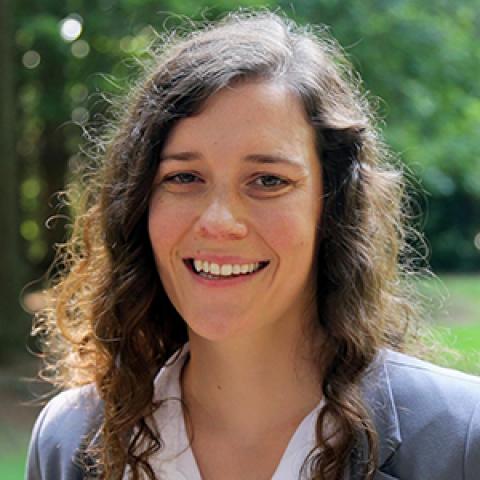
Dr. Nicole Kennard is a Research Scientist II within BBISS and serves as the Assistant Director for Community-Engaged Research. She supports faculty across the university in building meaningful and co-creative research partnerships with local communities to address pressing sustainability and societal challenges. She works closely with the Center for Sustainable Communities Research & Education (SCoRE) to provide trainings for GT researchers to work with communities in research partnerships.

Kennard also leads her own community-engaged research in sustainable food systems. Her work focuses on building resilient, community-focused food systems and uplifting local agriculture, agroecology, and food sovereignty as solutions to the complex, intertwined challenges of food insecurity, climate change, and land degradation. She uses a combination of quantitative methods (lifecycle assessment, mapping, soil health and ecosystem service assessments) and qualitative methods (in-depth interviews) to support this systems-level research. She is currently working with local partners to build a food systems map for the City of Atlanta.

Kennard holds a PhD in Chemistry and Biosciences from the University of Sheffield (Grantham Centre for Sustainable Futures); an MSc in Sustainable Agriculture and Food Security from Newcastle University (U.S. Fulbright Scholar); and a B.S. in Materials Science and Engineering from the Georgia Institute of Technology.

Assistant Director for Community-Engaged Research
Additional Research
  • community-engaged research
  • sustainable food systems
  • local food systems
  • sustainable agriculture
  • urban agriculture
  • agroecology
  • food sovereignty
  • food security
  • food access
IRI/Group and Role
Sustainable Systems > Staff
Sustainable Systems
University, College, and School/Department
Georgia Institute of Technology
Research Areas
Sustainable Systems
  • Global Sustainable Development
Jennifer Kaiser

Jennifer Kaiser
jennifer.kaiser@ce.gatech.edu

In the Kaiser group, we work to improve the understanding of the emissions and atmospheric processes that influence air quality and climate. Our research focuses largely on volatile organic compounds (VOCs), which are reactive organic species that are precursors to ozone and aerosol. Our work is grounded in insights from field, and aimed at understanding atmospheric composition at broad spatial and temporal scales.

Associate Professor, School of Earth and Atmospheric Sciences
Phone
(404) 894-2644
Additional Research

Climate/EnvironmentAtmospheric Chemistry, Aerosols & CloudsRemote SensingAtmospheric composition and chemistryBiogenic and anthropogenic emissionsGlobal chemistry-transport modelingIn-situ and remote sensing

IRI/Group and Role
Sustainable Systems > Fellow
Energy > Faculty Council
Energy > Research Community
Sustainable Systems
Energy
University, College, and School/Department
Georgia Institute of Technology > College of Sciences > School of Earth and Atmospheric Sciences
Research Areas
Sustainable Systems
  • Ecosystem and Environmental Health
Energy
  • Energy Economics, Policy, and Public Health
  • Electric Vehicles
  • Sustainable Communities

Xiaoming Huo

 Xiaoming Huo
xiaoming.huo@isye.gatech.edu

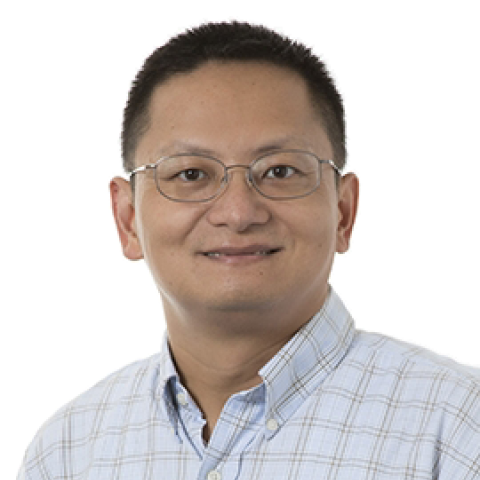
Xiaoming Huo is an A. Russell Chandler III Professor in the H. Milton Stewart School of Industrial and Systems Engineering at Georgia Tech. Dr. Huo's research interests include statistical theory, statistical computing, and issues related to data analytics. He has made numerous contributions on topics such as sparse representation, wavelets, and statistical problems in detectability. His papers appeared in top journals, and some of them are highly cited. He is a senior member of IEEE since May 2004. 

Associate Director for Research, IDEaS
Professor
Executive Director, TRIAD (Transdisciplinary Research Institute for Advancing Data Science)
IRI/Group and Role
Sustainable Systems > Initiative Lead
Data Engineering and Science > Faculty
People and Technology > Affiliated Faculty
Sustainable Systems
Data Engineering and Science
People and Technology
University, College, and School/Department
Georgia Institute of Technology > College of Engineering > School of Industrial Systems Engineering
Research Areas
Artificial Intelligence

Ching-Hua Huang, Ph.D.

Ching-Hua Huang, Ph.D.
ching-hua.huang@ce.gatech.edu

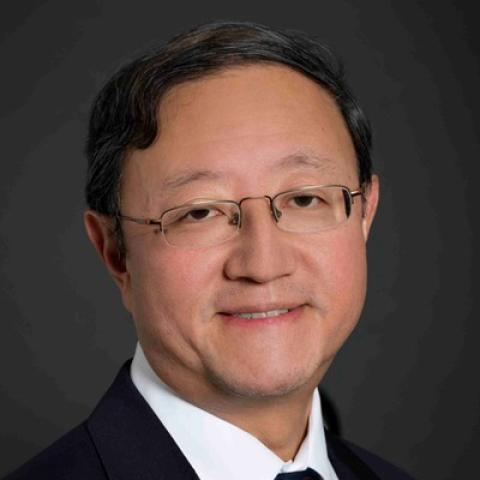
Ching-Hua Huang, Ph.D., is the Turnipseed Family Chair and Professor in the School of Civil and Environmental Engineering at Georgia Institute of Technology. Huang received her Ph.D. and M.S. degrees in environmental engineering from Johns Hopkins University. Huang’s expertise includes environmental chemistry, advanced water/wastewater treatment technology, contaminants of emerging concern, sustainable water reuse, waste remediation and resource recovery. Huang has supervised many research projects sponsored by various agencies, and has published more than 170 peer-reviewed journal papers, book chapters and conference proceeding papers. She is the Associate Editor of the American Chemical Society's Environmental Science & Technology Water and the Editorial Advisory Board member of Environmental Science & Technology. 

Turnipseed Family Chair and Professor, School of Civil and Environmental Engineering
Phone
404.893.7694
Office
School of Civil and Environmental Engineering
IRI/Group and Role
Bioengineering and Bioscience > Faculty
Energy > Faculty
Energy > Research Community
Sustainable Systems
Bioengineering and Bioscience
Energy
University, College, and School/Department
Georgia Institute of Technology > College of Engineering > School of Civil and Environmental Engineering
Research Areas
Sustainable Systems
  • Resource and Materials Use
Energy
  • Critical Minerals
  • Advanced Manufacturing for Energy
  • Water, Wind, and Solar
  • Sustainable Communities
  • Built Environment

Michael Helms

Michael Helms
mhelms3@gatech.edu

Michael Helms is a versatile professional with a backgrounds in cognitive science, design theory, technology consulting, computer programming and financial services. He completed a Ph.D. in Computer Science from Georgia Institute of Technology in 2013, and recently completed NSF's entrepreneurial I-CORPS program as an entrepreneurial lead. Prior to receiving his Ph.D., he worked as a technology consultant building business cases for the development of large data infrastructure projects. In conjunction with with the Center for Biologically Inspired Design he provides design consulting services focused on product innovation by leveraging insight gleaned from 3.8 billion years of evolution. Most recently, Helms began research with the Center for Education (CEISMC), working on modeling school interventions as complex social systems.

Co-Director, Center for Biologically Inspired Design
Senior Research Scientist
IRI/Group and Role
Sustainable Systems > Initiative Lead
Sustainable Systems
University, College, and School/Department
Georgia Institute of Technology > College of Engineering > Woodruff School of Mechanical Engineering
Research Areas
Sustainable Systems
  • Resource and Materials Use

Randall Guensler

Randall Guensler
randall.guensler@ce.gatech.edu
Professor, School of Civil and Environmental Engineering
Phone
(404) 894-0405
Additional Research

Electric Vehicles; Smart Infrastructure

IRI/Group and Role
Energy > Research Community
Sustainable Systems
Energy
University, College, and School/Department
Georgia Institute of Technology > College of Engineering
Research Areas
Sustainable Systems
  • Resource and Materials Use
Energy
  • Energy Economics, Policy, and Public Health
  • Electric Vehicles
  • Built Environment

Ashok Goel

Ashok Goel
ashok.goel@cc.gatech.edu

Ashok Goel is a Professor of Computer Science in the School of Interactive Computing at Georgia Institute of Technology in Atlanta, USA. He obtained his Ph.D. from The Ohio State University. At Georgia Tech, he is also the Director of the Ph.D. Program in Human-Centered Computing, a Co-Director of the Center for Biologically Inspired Design, and a Fellow of Brook Byers Institute for Sustainable Systems. For more than thirty years, Ashok has conducted research into artificial intelligence, cognitive science and human-centered computing, with a focus on computational design, modeling and creativity. His recent work has explored design thinking, analogical thinking and systems thinking in biological inspired design (https://www.youtube.com/watch?v=wiRDQ4hr9i8), and his research is now developing virtual research assistants for modeling biological systems. Ashok teaches a popular course on knowledge-based AI as part of Georgia Tech's program on Online Masters of Science in Computer Science. He has pioneered the development of virtual teaching assistants, such as Jill Watson, for answering questions in online discussion forums (https://www.youtube.com/watch?v=WbCguICyfTA). Chronicle of Higher Education recently called virtual assistants exemplified by Jill Watson as one of the most transformative educational technologies in the digital era. Ashok is the Editor-in-Chief of AAAI's AI Magazine.

Professor; School of Interactive Computing
Director| Ph.D. program in Human-Centered Computing; College of Computing
Co-Director; Center for Biologically Inspired Design
Fellow; Brook Byers Institute for Sustainable Systems
Office
GVU/TSRB
Additional Research

Artificial Intelligence; Cognitive Science; Computational Design; Computational Creativity; Educational Technology; Design Science; Learning Science and Technology; Human-Centered Computing

IRI/Group and Role
Data Engineering and Science > Faculty
People and Technology > Affiliated Faculty
Robotics > Core Faculty
Sustainable Systems
Data Engineering and Science
People and Technology
Tech AI > ITAB
University, College, and School/Department
Georgia Institute of Technology > College of Computing > School of Interactive Computing
Research Areas
Artificial Intelligence

Thomas Fuller

tom.fuller@chbe.gatech.edu

Tom Fuller is Professor of Chemical Engineering at the Georgia Tech. Dr. Fuller received a BS from the University of Utah in Chemical Engineering in 1982. Dr. Fuller then served for five years in the U.S. Navy working as a Nuclear Engineer. In 1992 he obtained a Ph.D. from UC, Berkeley also in Chemical Engineering. 

Subsequently, Dr. Fuller developed advanced lithium batteries while working as a postdoctoral fellow at Lawrence Berkeley National Laboratory. He then moved to United Technologies. He was responsible for technology development, design, assembly, and test of cell stacks for UTC Fuel Cells. 

His research group at Georgia Tech is focused on durability challenges for electrochemical systems. For the last eight years Dr. Fuller has been a Technical Editor for the Journal of the Electrochemical Society. In 2009 Dr. Fuller was named a Fellow of the Electrochemical Society.

Professor, School of Chemical and Biomolecular Engineering
Phone
(404) 894-2898
Additional Research

Electric Vehicles; Energy Storage; Hydrogen; Modeling; Materials Failure and Reliability; Energy Conversion; Energy Storage; Batteries; fuel cells

IRI/Group and Role
Energy > Hydrogen Group
Energy > Research Community
Sustainable Systems
Matter and Systems > Affiliated Faculty
Energy
University, College, and School/Department
Georgia Institute of Technology > College of Engineering
Research Areas
Sustainable Systems
  • Resource and Materials Use
Matter and Systems
  • Built Environment Technologies
Energy
  • Built Environment
  • Energy Storage

Richard Fujimoto

Richard Fujimoto
richard.fuijmoto@cc.gatech.edu

Richard Fujimoto is a Regents’ Professor, Emeritus in the School of Computational Science and Engineering at the Georgia Institute of Technology. He received the Ph.D. degree from the University of California-Berkeley in 1983 in Computer Science and Electrical Engineering. He also received an M.S. degree from the same institution as well as two B.S. degrees from the University of Illinois-Urbana. 

Fujimoto is a pioneer in the parallel and distributed discrete event simulation field. Discrete event simulation is widely used in areas such as telecommunications, transportation, manufacturing, and defense, among others. His work developed fundamental understandings of synchronization algorithms that are needed to ensure the correct execution of discrete event simulation programs on high performance computing (HPC) platforms. His team developed many new algorithms and computational techniques to accelerate the execution of discrete event simulations and developed software realizations that impacted several application domains. For example, his Georgia Tech Time Warp software was deployed by MITRE Corp. to create online fast-time simulations of commercial air traffic to help reduce delays in the U.S. National Airspace. An active researcher in this field since 1985, he authored or co-authored three books and hundreds of technical papers including seven that were cited for “best paper” awards or other recognitions. His research included several projects with Georgia Tech faculty in telecommunications, transportation, sustainability, and materials leading to numerous publications co-authored with faculty across campus.

Regents' Professor Emeritus
Phone
404.894.5615
Office
Coda Building, 1313
Additional Research

discrete-event simulation programs on parallel and distributed computing platforms

IRI/Group and Role
Manufacturing > Affiliated Faculty
Sustainable Systems
Manufacturing
Data Engineering and Science
University, College, and School/Department
Georgia Institute of Technology > College of Computing > School of Computer Science
Research Areas
Artificial Intelligence

Steve French

Steve French
steve.french@coa.gatech.edu

Steven P. French is professor of City and Regional Planning at Georgia Institute of Technology. He joined Georgia Tech in 1992 as the director of the City Planning program and served in that position until August 1999. He was the director of the Center for Geographic Information Systems from 1997 through 2011. He served as associate dean for research for the College of Architecture (now the College of Design) from July 2009 through June 2013 and dean of the College of Design from July 2013-June 2021.

French’s teaching and research activities focus on sustainable urban development, land use planning, GIS applications, and natural hazard risk assessment. In addition to his administrative assignments, Professor French has regularly taught graduate courses in land use, planning, and GIS. He has graduated six Ph.D. students and advised more than 50 Masters students in City and Regional Planning. He has also served on numerous dissertation committees in Architecture, Civil Engineering, and Public Policy.

Over the past twenty-five years, French has been the principal investigator or co-principal investigator on more than seventy research projects. He has participated in a number of National Science Foundation projects dealing with flood and earthquake hazards and was the Social Science Thrust Leader for the Mid-America Earthquake Center, an NSF Engineering Research Center. He has extensive experience in building and managing multidisciplinary teams of social scientists, architects, engineers, and scientists. French is the author or co-author of more than 25 refereed journal articles and four books. He has served on the editorial boards of the Journal of the American Planning Association, Journal of Planning Education and Research, Journal of the Urban and Regional Information Systems Association and Earthquake Spectra.

French holds a Ph.D. in City and Regional Planning from the University of North Carolina at Chapel Hill. Before coming to Georgia Tech, he taught for ten years at California Polytechnic State University-San Luis Obispo. In 1987-88, he served as the visiting professor of resources planning in the Civil Engineering Department at Stanford University. He is a Fellow of the American Institute of Certified Planners and an associate member of the American Institute of Architects.

Professor
John Portman Dean's Chair
Phone
404.894.3880
Office
245 Fourth Street, N.W.
IRI/Group and Role
Manufacturing > Affiliated Faculty
Sustainable Systems
Manufacturing
Data Engineering and Science
University, College, and School/Department
Georgia Institute of Technology > College of Design > School of City and Regional Planning
Research Areas
Sustainable Systems
  • Sustainable Cities and Infrastructure