Claire Berger

Claire Berger's profile picture
cb299@gatech.edu

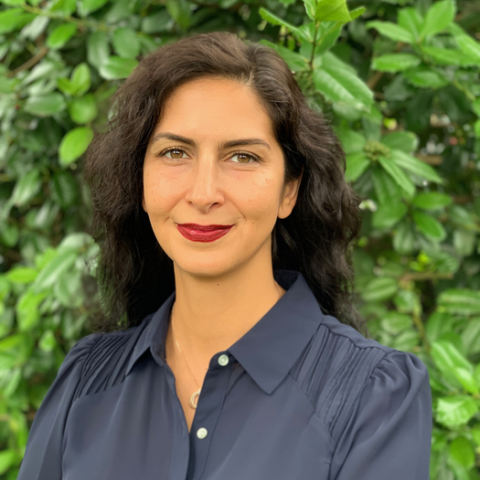
Claire Berger is Director of Research at the French National Center for Scientific Research - Néel Institute working at the Georgia Institute of Technology in W. A. de Heer’s group. She obtained the PhD in Physics from the University of Grenoble, France, with a dissertation on the electronic properties of AlMn quasicrystals. She then moved to a postdoc position at the Centre d’Etudes Atomiques, where she produced and studied amorphous films, and was hired as a researcher at the CNRS ‘s Laboratory for Study of Electronic Properties of Solids (LEPES), in Grenoble. She focused the first part of her carrier on electronic properties of quasicrystalline materials grown and characterized at LEPES. She contributed to the experimental evidence for a metal-insulator transition in these metal- based compounds. 

At Georgia Tech, her current scientific interests are primarily nanoscience and electronic property of graphene-based systems. She co-authored the first article demonstrating the two dimensional properties of graphene and proposing graphene for electronics, and together with Walt de Heer and Phil First she co-authored the first patent for graphene electronics (2003). 

She is co-author of more than 200 publications in international journals, has a citation index of 10,880 and an H index of 41.

Professor of the Practice, School of Physics
Phone
(404) 385-1685
IRI/Group and Role
Energy > Research Community
Energy
University, College, and School/Department
Georgia Institute of Technology > College of Sciences > School of Physics
Research Areas
Energy
  • Advanced Manufacturing for Energy

Willie Belton

Willie Belton's profile picture
willie.belton@econ.gatech.edu

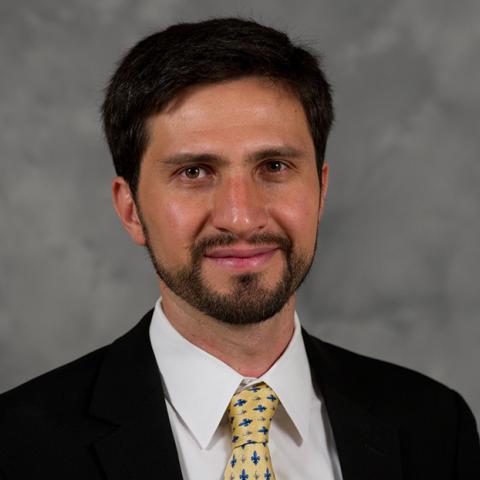
Dr. Belton is an Associate Professor and Director of Undergraduate Programs in the School of Economics. Professor Belton’s initial training and research focus was on issues of monetary policy and how policy design and implementation impacts the cyclical behavior of the macro-economy. Currently, Professor Belton is involved in multidisciplinary analysis which examines the impact of political, cultural, and economic institutions on downstream outcomes of income distribution, business development, and social behavior. This research brings together issues of public policy, international affairs and economics to examine and developed much more broad theories of economic, political, and social development across ethnic groups and nation-states.

Director of Undergraduate Programs, School of Economics
Associate Professor, School of Economics
Phone
(404) 894-4903
Office
Old CE Building, Room 238
IRI/Group and Role
Energy > Research Community
Energy
University, College, and School/Department
Georgia Institute of Technology > Ivan Allen College of Liberal Arts > School of Economics
Research Areas
Energy
  • Energy Economics, Policy, and Public Health

Nazanin Bassiri-Gharb

Nazanin Bassiri-Gharb's profile picture
nazanin.bassirigharb@me.gatech.edu

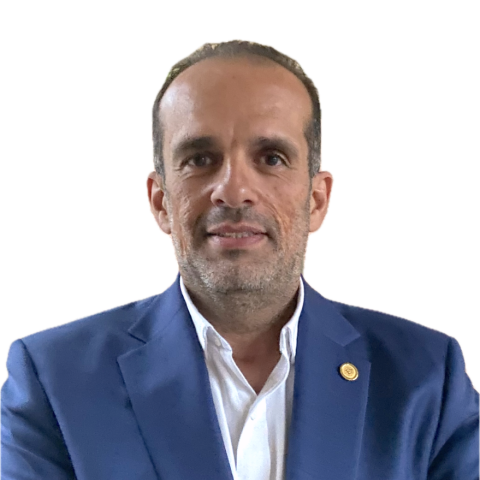
Nazanin Bassiri-Gharb joined Georgia Tech in summer 2007 as an assistant professor at the George W. Woodruff School of Mechanical Engineering. Prior to this, she was a senior engineer in the materials and device R&D group of MEMS Research and Innovation Center at QUALCOMM MEMS Technologies, Inc. Her work included characterization and optimization of optical and electric response of IMOD displays and research on novel materials for improved processing and reliability of IMOD. Bassiri-Gharb's research interests are in smart and energy-related materials (e.g. ferroelectric and multiferroic materials) and their application to nano- and micro-electromechanical systems. Her research projects integrate novel micro and nanofabrication techniques and processes and study of the fundamental science of these materials at the nanoscale, at the interface of physical and electrochemical phenomena.

Harris Saunders, Jr. Chair and Professor, School of Mechanical Engineering
Phone
404.385.0667
Office
Love 315
Additional Research

Ferroelectronic Materials; Functional Materials; In-Situ Characterization; Piezoelectronic Materials; Multiscale Modeling; Organic Electronics

IRI/Group and Role
Data Engineering and Science > Faculty
Data Engineering and Science
Matter and Systems > Affiliated Faculty
Energy > Research Community
University, College, and School/Department
Georgia Institute of Technology > College of Engineering > Woodruff School of Mechanical Engineering

Baabak Ashuri

Baabak Ashuri's profile picture
baabak.ashuri@coa.gatech.edu

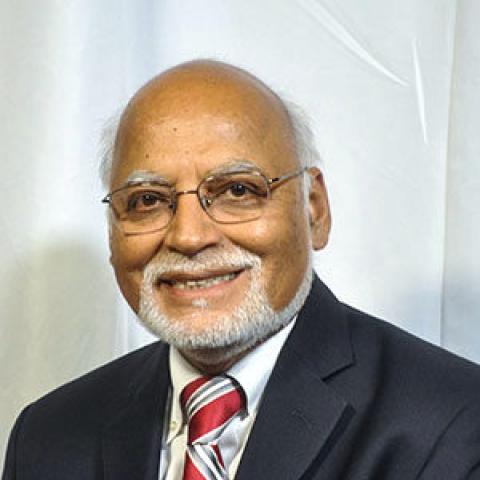
Baabak Ashuri is Executive Director of the Professional Master’s in Occupational Safety and Health (PMOSH), Professor of Civil and Environmental Engineering, Professor of Building Construction, and Fellow of the Brook Byers Institute for Sustainable Systems (BBISS) at Georgia Tech.  Dr. Ashuri’s research has advanced theoretical foundations and applications of data analytics, economic decision analysis, and quantitative methods for infrastructure systems and construction engineering and management, allowing other researchers to use his findings for enhancing the performance of infrastructure operations on several subdomains directly related to pre-construction decisions, e.g., artificial intelligence (AI) and design automation, alternative contracting methods (ACMs), infrastructure finance and public-private partnership (P3), and energy technology investments. Dr. Ashuri has 242 publications in these fields, including 86 refereed journal articles, 103 peer-reviewed conference papers, 50 research reports and guidebooks, 1 co-edited book, and 2 referred book chapters. Dr. Ashuri secured a funding amount of over $17M from the National Science Foundation (NSF), Federal Highway Administration (FHWA), Department of Energy (DOE), Build America Beurre (BAC), Georgia Department of Transportation (Georgia DOT), South Carolina Department of Transportation (SCDOT), Construction Industry Institute (CII), Royal Institution of Chartered Surveyors (RICS), Southeast Transportation Consortium (STC), Louisiana Transportation Research Center (LTRC), Turner Construction, and Perkins + Will, to name a few. Dr. Ashuri received many awards including the American Society of Civil Engineers (ASCE) (Thomas Fitch Rowland paper award), the American Association of State Highway and Transportation Officials (AASHTO) High Value Research “Sweet Sixteen” Award, and the Design-Build Institute of America (DBIA) (Distinguished Leadership – Faculty). Dr. Ashuri has chaired the ASCE Construction Research Council (CRC) and served on the ASCE Construction Institute (CI) Board of Governors. Dr. Ashuri serves as the Southern Region Director of the USDOT Build America Center (BAC), which leads cutting-edge research on the use of innovative financing, funding, and project delivery solutions.

Professor, School of Civil and Environmental Engineering, School of Building Construction
Phone
(404) 385-7608
Additional Research

Building Technologies; System Design & Optimization

IRI/Group and Role
Sustainable Systems > Emeritus Fellows
Energy > Research Community
University, College, and School/Department
Georgia Institute of Technology > College of Design > School of Building Construction
Research Areas
Sustainable Systems
  • Sustainable Cities and Infrastructure
Energy
  • Built Environment
  • Energy Economics, Policy, and Public Health
  • AI Energy Nexus
  • Sustainable Communities
  • Supply Chain
  • Electric Vehicles

Omar Asensio

Omar Asensio's profile picture
asensio@pubpolicy.gatech.edu

Omar I. Asensio is an Associate Professor in the Jimmy and Rosalynn Carter School of Public Policy and the Director of the Data Science & Policy Lab at Georgia Tech. During the 2023-2024 academic year, he was a fellow at the Institute for Business in Global Society at Harvard Business School. Professor Asensio’s research focuses on climate and electrification strategies at the intersection of technology, AI, and sustainability. He employs large-scale data, field experiments, and human-in-the-loop AI systems to address innovation challenges in energy systems, transportation, and human mobility. He contributed to the zero emission vehicles (ZEV) policy guidance for COP26 and the Glasgow Climate Pact.

Prof. Asensio is a member of the U.S. National Academies of Sciences, Engineering, and Medicine (NASEM) New Voices 2021 cohort, which recognizes early- to-mid career leaders for exceptional contributions to science, engineering and medicine. He is a two-time former chair of the Natural Resource, Energy, and Environmental Policy section of APPAM, and is the recipient of the 2023 Faculty Excellence in Research Award from the Ivan Allen College. At Georgia Tech, he is a Brook Byers Institute for Sustainable Systems (BBISS) Fellow and a faculty affiliate of the Institute for Data Engineering & Science (IDEaS), the Machine Learning Center, and the Strategic Energy Institute (SEI).

Professor Asensio has received multiple awards for his research, including the National Science Foundation CAREER Award, the Alliance for Research on Corporate Sustainability (ARCS) Emerging Scholar Award, and the Research Impact on Practice Award (RIPA) from the Academy of Management’s Organizations & the Natural Environment Division (ONE-NBS). His work has been published in leading journals such as Nature Energy, Nature Sustainability, and PNAS. 

Professor Asensio’s research and teaching have been supported by awards from the National Science Foundation, Microsoft, ESRI, the U.S. State Department’s Diplomacy Lab, and the U.S. Department of Energy. His work has informed policy advisory communications for the U.S. National Academy of Sciences, the UK government, the United Nations Economic Commission for Latin America and the Caribbean, and the IndiaAI initiative. His research has been featured in popular press, including Bloomberg, Scientific American, Motor Trend, Fast Company, NPR’s All Things Considered, Yahoo! News, The Huffington Post, and the Washington Post.

Dr. Asensio serves as Associate Editor of Data & Policy journal published by Cambridge University Press. He earned his doctorate in Environmental Science & Engineering with specialties in Economics from UCLA.

Associate Professor, School of Public Policy
Additional Research

Cyber/ Information Technology; Strategic Planning; Building Technologies; Electric Vehicles; Policy/Economics; Public Policy; Energy Efficiency and Conservation

IRI/Group and Role
Sustainable Systems > Fellow
Data Engineering and Science > Affiliated Faculty
Energy > Research Community
University, College, and School/Department
Georgia Institute of Technology > Ivan Allen College of Liberal Arts > School of Public Policy
Research Areas
Sustainable Systems
  • Economics and Business of Sustainability
  • Sustainable Cities and Infrastructure
Energy
  • Energy Economics, Policy, and Public Health
  • AI Energy Nexus
  • Electric Vehicles
  • Sustainable Communities
  • Built Environment

Chloé Arson

Chloé Arson's profile picture
chloe.arson@ce.gatech.edu

Chloé Arson is a professor in the School of Civil and Environmental Engineering (CEE) at Cornell University and an adjunct faculty in the Schools of CEE and Earth and Atmospheric Sciences at the Georgia Institute of Technology (Georgia Tech). She earned her Ph.D. at Ecole Nationale des Ponts et Chaussées (France) in 2009. She was an assistant professor at Texas A&M University from 2009 to 2012. Then, she worked as an assistant professor (2012-2016), associate professor (2016-2022) and professor (2022-2023) in the Georgia Tech School of CEE. Arson joined the faculty at Cornell University in Summer 2023.

Adjunct Professor, School of Civil and Environmental Engineering
Phone
404.385.0143
Additional Research

Numerical modeling, geomaterials, bio-inspired materials

IRI/Group and Role
Energy > Research Community
Energy
University, College, and School/Department
Georgia Institute of Technology > College of Engineering > School of Civil and Environmental Engineering
Research Areas
Energy
  • Energy Systems, Grid Resilience, and Cybersecurity
  • Energy Storage

Manos Antonakakis

Manos Antonakakis's profile picture
manos@gatech.edu

Dr. Manos Antonakakis (PhD’12) is an Associate Professor in the School of Electrical and Computer Engineering (ECE) and an adjunct faculty member in the College of Computing (CoC), at the Georgia Institute of Technology. He is responsible for the Astrolavos Lab, where students conduct research in the areas of Attack Attribution, Network Security and Privacy, Intrusion Detection, and Data Mining. In May 2012, he received his Ph.D. in Computer Science from Georgia Tech.

Before joining the Georgia Tech ECE faculty ranks, Dr. Antonakakis held the Chief Scientist role at Damballa. He currently serves as the co-chair of the Academic Committee for the Messaging Anti-Abuse Working Group (MAAWG). In his tenure at Georgia Tech ECE, Dr. Antonakakis has raised several tens of millions in research funding as Primary Investigator from government agencies and the private sector. He is the author of several U.S. patents and more than 20 academic publications in top academic conferences. He has served as a program committee member for all top tier security conferences.

Associate Professor, School of Electrical and Computer Engineering
Dean's Professorship
Phone
(404) 385-2534
Office
Klaus 3366
Additional Research

Cyber Technology

IRI/Group and Role
Energy > Research Community
Energy
University, College, and School/Department
Georgia Institute of Technology > College of Engineering > School of Electrical and Computer Engineering
Research Areas
Energy
  • Energy Systems, Grid Resilience, and Cybersecurity

Ghassan AlRegib

Ghassan AlRegib's profile picture
alregib@gatech.edu

Prof. AlRegib is currently the John and Marilu McCarty Chair Professor in the School of Electrical and Computer Engineering at the Georgia Institute of Technology. His group is the Omni Lab for Intelligent Visual Engineering and Science (OLIVES) at Georgia Tech. In 2012, he was named the Director of Georgia Tech’s Center for Energy and Geo Processing (CeGP). He is the director of the Center for Signal and Information Processing (CSIP). He also served as the Director of Georgia Tech’s Initiatives and Programs in MENA between 2015 and 2018. He has authored and co-authored more than 300 articles in international journals and conference proceedings. He has been issued several U.S. patents and invention disclosures. He is a Fellow of the IEEE.

Prof. AlRegib received the ECE Outstanding Graduate Teaching Award in 2001 and both the CSIP Research and the CSIP Service Awards in 2003. In 2008, he received the ECE Outstanding Junior Faculty Member Award. In 2017, he received the 2017 Denning Faculty Award for Global Engagement. He and his students received the Beat Paper Award in ICIP 2019. He received the 2024 ECE Distinguished Faculty Achievement Award at Georgia Tech. He and his students received the Best Paper Award in ICIP 2019 and the 2023 EURASIP Best Paper Award for Image communication Journal.

Prof. AlRegib participated in a number of activities. He has served as Technical Program co-Chair for ICIP 2020 and ICIP 2024. He served two terms as a member of the IEEE SPS Technical Committees on Multimedia Signal Processing (MMSP) and Image, Video, and Multidimensional Signal Processing (IVMSP), 2015-2017 and 2018-2020. He was a member of the Editorial Boards of both the IEEE Transactions on Image Processing (TIP), 2009-2022, and the Elsevier Journal Signal Processing: Image Communications, 2014-2022. He was a member of the editorial board of the Wireless Networks Journal (WiNET), 2009-2016 and the IEEE Transaction on Circuits and Systems for Video Technology (CSVT), 2014-2016. He was an Area Chair for ICME 2016/17 and the Tutorial Chair for ICIP 2016. He served as the chair of the Special Sessions Program at ICIP’06, the area editor for Columns and Forums in the IEEE Signal Processing Magazine (SPM), 2009–12, the associate editor for IEEE SPM, 2007-09, the Tutorials co-chair in ICIP’09, a guest editor for IEEE J-STSP, 2012, a track chair in ICME’11, the co-chair of the IEEE MMTC Interest Group on 3D Rendering, Processing, and Communications, 2010-12, the chair of the Speech and Video Processing Track at Asilomar 2012, and the Technical Program co-Chair of IEEE GlobalSIP, 2014. He lead a team that organized the IEEE VIP Cup, 2017 and the 2023 IEEEE VIP Cup. He delivered short courses and several tutorials at international events such as BigData, NeurIPS, ICIP, ICME, CVPR, AAAI, and WACV.

In the Omni Lab for Intelligent Visual Engineering and Science (OLIVES), he and his group work on robust and interpretable machine learning algorithms, uncertainty and trust, and human in the loop algorithms. The group studies interventions into AI systems to enhance their trustworthiness. The group has demonstrated their work on a wide range of applications such as Autonomous Systems, Medical Imaging, and Subsurface Imaging. The group is interested in advancing the fundamentals as well as the deployment of such systems in real-world scenarios. His research group is working on projects related to machine learning, image and video processing, image and video understanding, subsurface imaging, perception in visual data processing, healthcare intelligence, and video analytics. The primary applications of the research span from Autonomous Vehicles to Portable AI-based Ophthalmology and Eye Exam and from Microscopic Imaging to Seismic Interpretation. The group was the first to introduce modern machine learning to seismic interpretation.

In 2024, and after more than three years of continuous work, he co-founded Georgia Tech’s AI Makerspace. The AI Makerspace is a resource for the entire campus community to access AI. Its purpose is to democratize access to AI. Together with his team, they are developing tools and services for the AI Makerspace via a VIP Team called AI Makerspace Nexus. In addition, he created two AI classes from scratch with innovative hands-on exercises using the AI Makerspace. One class is the ECE4252/8803 FunML class (Fundamentals of Machine Learning) where students learn the basics of Machine Learning as well as eight weeks of Deep learning both mathematically and using hands-on exercises on real-world data. The second class is a sophomore-level AI Foundations class (AI First) that teaches any student from any college the basics of AI such as data literacy, learning, decision, planning, and ethics using theory and hands-on exercises on the AI Makerspace. Prof. AlRegib wrote two textbooks for both classes.

Prof. AlRegib has provided services and consultation to several firms, companies, and international educational and R&D organizations. He has been a witness expert in a number of patents infringement cases and Inter Partes Review (IRP) cases.

John and Marilu McCarty Chair Professor, School of Electrical and Computer Engineering
Center Director
Phone
404-894-7005
Office
Centergy-One Room 5224
Additional Research

Machine learning, Trustworthy AI, Explainable AI (XAI), Robust Learning Systems, Multimodal Learning, Annotations Diversity in AI Systems

IRI/Group and Role
Bioengineering and Bioscience > Faculty
Data Engineering and Science > Affiliated Faculty
Energy > Research Community
Data Engineering and Science
Bioengineering and Bioscience
Energy
University, College, and School/Department
Georgia Institute of Technology > College of Engineering > School of Electrical and Computer Engineering
Research Areas
Artificial Intelligence
Energy
  • AI Energy Nexus

Alexander Alexeev

Alexander Alexeev's profile picture
alexander.alexeev@me.gatech.edu

Dr. Alexeev came to Georgia Tech at the beginning of 2008 as an assistant professor. His research background is in the area of fluid mechanics. He uses computer simulations to solve engineering problems in complex fluids, multiphase flows, fluid-structure interactions, and soft materials. As a part of his graduate research at Technion, he investigated resonance oscillations in gases and probed how periodic shock waves excited at resonance can enhance agglomeration of small airborne particles, a process which is important in air pollution control technology. He also investigated wave propagation in vibrated granular materials and its effect on fluidization of inelastic granules. During postdoctoral studies at TU Darmstadt, he examined how microstructures on heated walls can be harnessed to control thermocapillary flows in thin liquid films and to enhance heat transport in the fluid. That could be beneficial in many practical applications, especially in microgravity. At the University of Pittsburgh, he studied the motion of micrometer-sized, compliant particles on patterned substrates to develop efficient means of controlling movement of such particles in microfluidic devices. Such substrates are needed to facilitate various biological assays and tissue engineering studies dealing with individual cells.

Professor, Woodruff School of Mechanical Engineering
Additional Research
  • Computational Fluid Mechanics
IRI/Group and Role
Data Engineering and Science > Affiliated Faculty
Energy > Research Community
Data Engineering and Science
Energy
University, College, and School/Department
Georgia Institute of Technology > College of Engineering > Woodruff School of Mechanical Engineering
Research Areas
Energy
  • Combustion, Propulsion, and Hypersonics

Krishan Ahuja

Krishan Ahuja's profile picture
krishan.ahuja@gtri.gatech.edu

A 2019 inductee to the National Academy of Engineering, Ahuja has more than 35 years of research and development experience in aircraft noise research, acoustics facilities design, flow control, state-of-the-art instrumentation, and advanced signal processing. During his employment of 13 years at Lockheed Georgia Company in various capacities, including the head of the Aeroacoustics Research and acting manager of the Advanced Flight Sciences Department, he was the principal investigator and/or the program manager on several successfully completed projects funded by Lockheed, the U. S. Air Force and NASA. He joined the faculty of Georgia Institute of Technology as a Senior Faculty Research Leader in March 1989. He recently served in the capacity of the director of Georgia Tech Ireland. Ahuja is a former associate editor of the AIAA Journal and also a former Chairman of the AIAA Aeroacoustics Technical Committee. Ahuja has authored or co-authored over 180 technical articles or reports on a range of topics including acoustic shielding, fan noise, active flow control, flow/acoustic interactions, jet noise, cavity noise, automobile noise, sonic boom research, psychoacoustics, high-temperature fiber optics strain gauges, acoustic transducers, active noise control, tilt rotor noise, source separation, acoustic fatigue, duct acoustics, computational aeroacoustics, innovative flow visualization techniques, tornado signatures, rapid charging of batteries and others. The international media, including CNN and Beyond 2000, has covered his work.

Regents' Professor, School of Aerospace Engineering
Phone
404.385.1140
Office
Guggenheim 362
Additional Research

Propulsion; Aerodynamics; Acoustics and Dynamics

IRI/Group and Role
Energy > Research Community
University, College, and School/Department
Georgia Institute of Technology > College of Engineering > Guggenheim School of Aerospace Engineering
Subscribe to Research Community