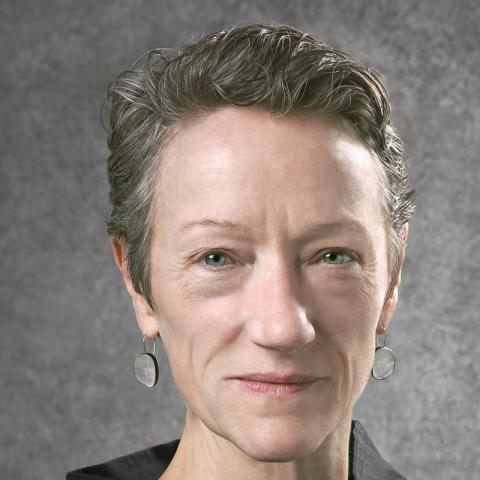
Hermann Fritz
Water; Wind
- Water, Wind, and Solar
- Built Environment
- Sustainable Communities
Water; Wind
David Flaherty, PhD is a Professor in the School of Chemical and Biomolecular Engineering at Georgia Tech since June 2023 (starting Summer 2023, previously at the University of Illinois, Urbana-Champaign). His research focuses on developing the science and application of catalysis in the pursuit of sustainability. In recent years, his group’s contributions have been featured in Science, Nature Catalysis, Journal of the American Chemical Society, ACS Catalysis, Journal of Catalysis and other prestigious journals. Dr. Flaherty has received several recognitions for excellence and innovation in catalysis including the Eastman Foundation Distinguished Lecturer in Catalysis, Department of Energy Early Career Award, and the National Science Foundation CAREER Award. Dr. Flaherty engages frequently with industry to translate the groups scientific achievements from the lab into practice. Through university-industry partnerships, the group has filed multiple patents disclosing synthesis of catalytic materials and development of processes. Beyond his research activities, Dr. Flaherty enjoys teaching topics in chemical engineering in the classroom (kinetics, separations, transport, reaction engineering) and mentoring the next generation of research leaders and educators.
Prof. Flaherty received his B.S. in Chemical Engineering from the University of California, Berkeley and his Ph.D. in Chemical Engineering from the University of Texas at Austin under the direction of Prof. C. Buddie Mullins. He conducted postdoctoral work at the University of California, Berkeley with Prof. Enrique Iglesia.
Michael Filler is a professor and the Traylor Faculty Fellow in the School of Chemical and Biomolecular Engineering at the Georgia Institute of Technology. He earned his undergraduate and graduate degrees from Cornell University and Stanford University, respectively, prior to completing postdoctoral studies at the California Institute of Technology. Filler has been recognized for his research and teaching with the National Science Foundation CAREER Award, Georgia Tech Sigma Xi Young Faculty Award, CETL/BP Junior Faculty Teaching Excellence Award, and AVS Dorothy M. and Earl S. Hoffman Award. Filler also heads Nanovation, a forum to address the big questions, big challenges, and big opportunities of nanotechnology.
Integrated photonics, carbon nanotubes, nanomanufacturing, thermal management, silicon devices
Water; Wind
Fedorov's background is in thermal/fluid sciences, chemical reaction engineering as well as in applied mathematics. His laboratory works at the intersection between mechanical and chemical engineering and solid state physics and analytical chemistry with the focus on portable/ distributed power generation with synergetic CO2 capture; thermal management of high power dissipation devices and electronics cooling; special surfaces and nanostructured interfaces for catalysis, heat and moisture management; and development of novel bioanalytical instrumentation and chemical sensors. Fedorov joined Georgia Tech in 2000 as an assistant professor after finishing his postdoctoral work at Purdue University.
Heat Transfer; power generation; CO2 Capture; Catalysis; fuel cells; "Fedorov's research is at the interface of basic sciences and engineering. His research portfolio is diverse, covering the areas of portable/ distributed power generation with synergetic carbon dioxide management, including hydrogen/CO2 separation/capture and energy storage, novel approaches to nanomanufacturing (see Figure), microdevices (MEMS) and instrumentation for biomedical research, and thermal management of high performance electronics. Fedorov's research includes experimental and theoretical components, as he seeks to develop innovative design solutions for the engineering systems whose optimal operation and enhanced functionality require fundamental understanding of thermal/fluid sciences. Applications of Fedorov's research range from fuel reformation and hydrogen generation for fuel cells to cooling of computer chips, from lab-on-a-chip microarrays for high throughput biomedical analysis to mechanosensing and biochemical imaging of biological membranes on nanoscale. The graduate and undergraduate students working with Fedorov's lab have a unique opportunity to develop skills in a number of disciplines in addition to traditional thermal/fluid sciences because of the highly interdisciplinary nature of their thesis research. Most students take courses and perform experimental and theoretical research in chemical engineering and applied physics. Acquired knowledge and skills are essential to starting and developing a successful career in academia as well as in many industries ranging from automotive, petrochemical and manufacturing to electronics to bioanalytical instrumentation and MEMS."
Nuclear
Erturk began at Georgia Tech in May 2011 as an Assistant Professor, he was promoted to Associate Professor with tenure in 2016 and became a full Professor in 2019. Prior to joining Georgia Tech, he worked as a Research Scientist in the Center for Intelligent Material Systems and Structures at Virginia Tech (2009-2011). His postdoctoral research interests included theory and experiments of smart structures for applications ranging from aeroelastic energy harvesting to bio-inspired actuation. His Ph.D. dissertation (2009) was centered on experimentally validated electromechanical modeling of piezoelectric energy harvesters using analytical and approxIMaTe analytical techniques. Prior to his Ph.D. studies in Engineering Mechanics at Virginia Tech, Erturk completed his M.S. degree (2006) in Mechanical Engineering at METU with a thesis on analytical and semi-analytical modeling of spindle-tool dynamics in machining centers for predicting chatter stability and identifying interface dynamics between the assembly components.
Structural Dynamics; Vibrations; Smart Materials & Structures; Energy Harvesting; Acoustic Metamaterials; Acoustics and Dynamics; Smart materials; Piezoelectronic Materials; Metamaterials; Energy Harvesting
Ben Emerson completed his Ph. D. in Aerospace Engineering from Georgia Tech in August, 2013. Since then, Ben has worked as a Research Engineer at the Ben T. Zinn Combustion Lab at Georgia Tech. Ben’s research portfolio includes projects on combustion instabilities, alternative fuels, and combustion system R&D with a core focus and motivation of cleaner combustion. Ben’s research primarily consists of three core competencies, which are experimental combustion system development, combustor diagnostics, and combustion theory and modeling. Ben’s combustion system development work spans a wide variety of applications, from small lab-scale burners to combustor rigs that test full-scale gas turbine combustor hardware. His combustor diagnostics work encompasses the state of the art optical diagnostic techniques for reacting flow field measurements and imaging, and aims to implement those techniques in both laboratory-scale and large-scale rig tests. Finally, Ben’s combustion theory and modeling work is geared towards analysis of experimental datasets, development of reduced-order engineering tools, and the development of a suite of hydrodynamic stability analysis tools. Together, these core competencies form the pillars of Ben’s research, which facilitates the design of cleaner-burning combustion systems.
Hydrogen Utilization, Hydrogen combustion in gas turbines, combustion instabilities, alternative fuels, cleaner combustion system R&D, experimental combustion system development, combustor diagnostics, and combustion theory and modeling
Alan Erera is a Manhattan Associates/Dabbiere Chair and the Associate Chair for Research in the H. Milton Stewart School of Industrial and Systems Engineering at Georgia Tech. He is also the faculty director for the M.S. in Supply Chain Engineering program, Co-Director for Global Transportation in the Supply Chain & Logistics Institute, and Co-Executive Director of the Georgia Tech Panama Logistics Innovation & Research Center.
His research focuses on transportation and logistics systems planning and control, with an emphasis on planning under uncertainty and real-time operational control. His recent work has addressed dynamic vehicle routing systems for same-day distribution; resilient logistics network design for food supply chains; service network design, linehaul equipment management, and driver scheduling for consolidation freight carriers; robust container fleet management for global shipping companies; and robust and flexible vehicle routing system planning and control for distribution companies. He has written extensively in these subject areas, and has delivered over 100 technical presentations and invited lectures. His research program has been supported by federal agencies (DHS, USDOT, NSF) and major U.S. freight carriers and manufacturing firms.
He received his B.S. Eng. from Princeton University, and his Ph.D. from the University of California, Berkeley.
Hydrogen Storage/Transport; System Design & Optimization
Ellen is Director of the Master of Science in Urban Design degree, an authority on sustainable suburban redevelopment, and a leading urbanist. Author of over 100 articles, she is co-author with June Williamson of the retrofitting suburbia book series documenting successful retrofits of aging big box stores, malls, and office parks into healthier and more sustainable places. Retrofitting Suburbia: Urban Design Solutions for Redesigning Suburbs, (Wiley, 2009, 2011) received a PROSE award as the best architecture and urban planning book of 2009 and has been featured in The New York Times, Time Magazine, Harvard Business Review, NPR, PBS, TED and other prominent venues. Case Studies in Retrofitting Suburbia: Urban Design Strategies for Urgent Challenges (Wiley, 2020) expands on the first book examining how new retrofits are helping communities disrupt automobile dependence, improve public health, support an aging population, leverage social capital for equity, compete for jobs, and add water and energy resilience.
Ellen serves on several national boards and committees, is former Chair of the Board of the Congress for the New Urbanism, lectures widely and conducts community workshops. In both her teaching and research she focuses on helping communities address new challenges that they were never designed for – whether that’s through her unique database of successful suburban retrofits or studio classes on anticipating autonomous vehicles, coping with climate change or suburban blight. She taught at UVA and MIT before joining Georgia Tech as Architecture Program Director from 2000-2009.
City and Regional Planning