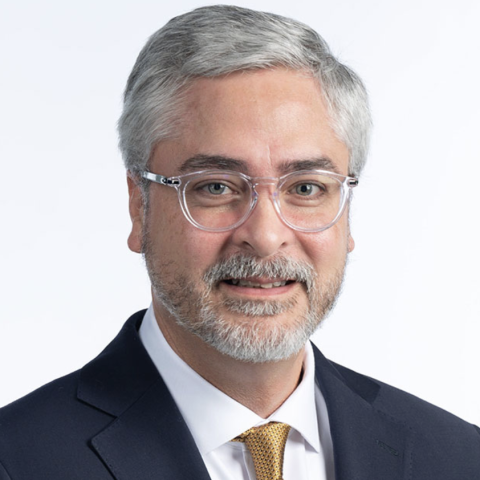
Javier Irizarry
Building Technologies
Electric Vehicles; Smart Infrastructure
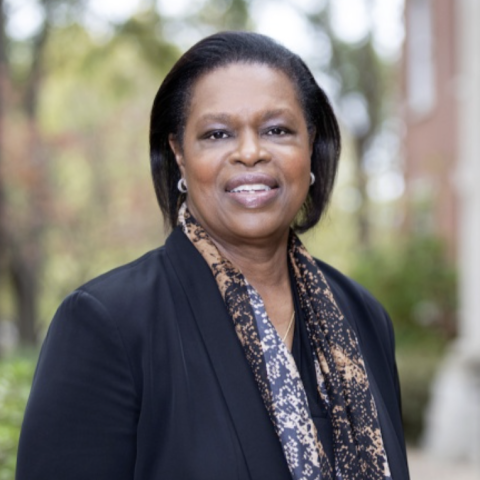
Ching-Hua Huang, Ph.D., is the Turnipseed Family Chair and Professor in the School of Civil and Environmental Engineering at Georgia Institute of Technology. Huang received her Ph.D. and M.S. degrees in environmental engineering from Johns Hopkins University. Huang’s expertise includes environmental chemistry, advanced water/wastewater treatment technology, contaminants of emerging concern, sustainable water reuse, waste remediation and resource recovery. Huang has supervised many research projects sponsored by various agencies, and has published more than 170 peer-reviewed journal papers, book chapters and conference proceeding papers. She is the Associate Editor of the American Chemical Society's Environmental Science & Technology Water and the Editorial Advisory Board member of Environmental Science & Technology.
Dr. Jennifer Hirsch is an applied cultural anthropologist recognized internationally for fostering university and community engagement in sustainability and climate action. At the Georgia Institute of Technology, she is the inaugural Director of the Center for Sustainable Communities Research & Education (SCoRE), creating a culture of collaboration in which students, faculty, and staff engage in long-term relationships with community, government, and industry partners to build sustainable communities.
Dr. Hirsch’s research and teaching interests focus on: 1) equity in the sustainable built environment; 2) grassroots sustainability innovation; and 3) community leadership in energy equity.
Dr. Hirsch is also a co-founder and lead coordinator of RCE Greater Atlanta – a Regional Centre of Expertise on Education for Sustainable Development - officially acknowledged in 2017 by the United Nations University. She is also Adjunct Associate Professor at Georgia Tech’s School of City and Regional Planning. She serves on the faculty of The Asset-Based Community Development Institute hosted by DePaul University and on the Board of Directors of AASHE (Association for the Advancement of Sustainability in Higher Education).
Before coming to Georgia Tech, Dr. Hirsch worked in Chicago as Associate Director of Study Abroad at Northwestern University; as Urban Anthropology Director at The Field Museum of Natural History; and as an independent consultant with clients such as the City of Cleveland, Enterprise Community Partners, the U.S. Green Building Council, The Institute of Cultural Affairs, University of Illinois at Chicago, and Joliet Junior College. Dr. Hirsch received a Bachelor’s degree in American Culture from Northwestern University in Evanston, Illinois and a Ph.D. in Cultural Anthropology from Duke University in Durham, North Carolina.
Sustainability PedagogyEquity in the Sustainable Built EnvironmentGrassroots Sustainability InnovationSustainability in Cross-cultural Perspective
Wind
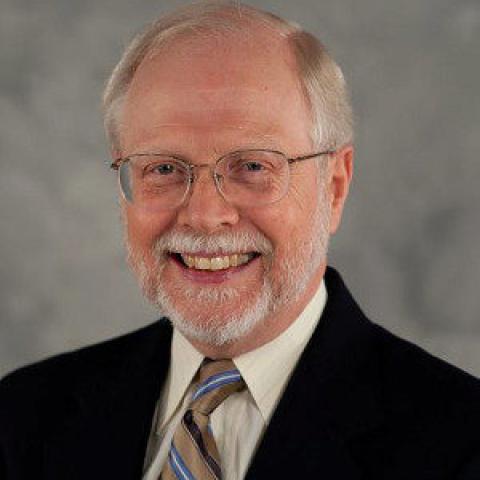
Dennis Hess’s research interests are in thin film science and technology, surface and interface modification and characterization, microelectronics processing and electronic materials. His group focuses on the establishment of fundamental structure-property relationships and their connection to chemical process sequences used in the fabrication of novel films, electronic materials, devices, and nanostructures. Control of the surface properties of materials such as dielectrics, semiconductors, metals, and paper or paper board by film deposition or surface modification allows the design of such surfaces for a variety of applications in microelectronics, packaging, sensors, microfluidics, and separation processes.
Electronics; Thin Films; Surfaces and Interfaces; plasma processing; Papermaking; Coatings & Barriers; Films & Coatings; Biomaterials
Nuclear
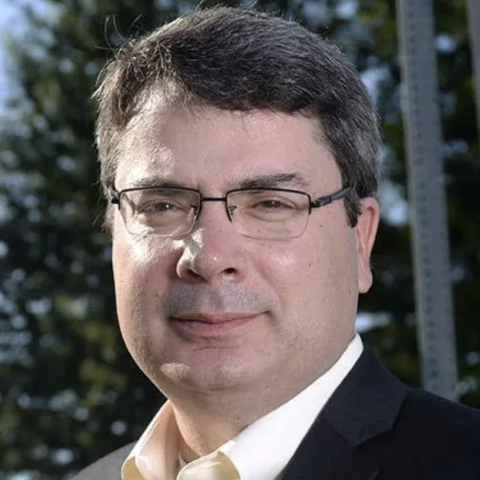
Dr. Felix J. Herrmann is Georgia Research Alliance Eminent Scholar in Energy and a professor at the Georgia Institute of Technology with appointments in the Schools of Earth and Atmospheric Sciences, Computational Science and Engineering, and Electrical and Computer Engineering. Dr. Herrmann will be the 2019 Distinguished Lecturer of the Society of Exploration Geophysicists (SEG).
Dr. Herrmann holds a M.Sc. and Ph.D. in Engineering Physics from the Delft University of Technology. He completed his postdoctoral studies at Stanford University and MIT before becoming a professor at the University of British Columbia's Department of Earth, Ocean, and Atmospheric Sciences. He joined the faculty of the Georgia Institute of Technology in October 2017.
During his career, Dr. Herrmann has worked on the development of the next-generation of industrial acquisition and computational imaging technologies designed to improve the image quality in complex geological areas at vastly reduced costs and environmental impact. Aside from driving innovations, by leveraging recent developments in the mathematical and computational sciences, Dr. Herrmann has extensive experience working with industry. At the University of British Columbia, he was the founder and director of the Seismic Laboratory for Imaging and Modelling (SLIM), which hosted the industry Consortium SINBAD. Under his guidance, SLIM became a world leader in the successful integration of transformative scientific developments, such as compressive sensing, randomized linear algebra, and machine learning, into innovative approaches that tackle the most challenging imaging problems. With his move to the Georgia Institute of Technology, Dr. Herrmann plans to broaden his research program to include other imaging modalities. Dr. Herrmann was a long program participant at UCLA's Institute for Pure and Applied Mathematics in the Fall of 2004 and has been involved in public-private partnerships around the world. He serves on the editorial board of Geophysical Prospecting and on the SEG Research Committee.
Yiyi He is an assistant professor in the School of City and Regional Planning (SCaRP) at the College of Design at Georgia Tech. Her research centers on the interdisciplinary fields of urban planning, GIScience, climate science, and artificial intelligence. She is interested in building a better understanding of the uncertainty and asymmetric impacts of climate-change-induced extreme weather events (e.g., flooding, wildfires, extreme heat) on critical components of the built environment (e.g., lifeline infrastructure networks, vulnerable neighborhoods). She leverages data-driven approaches, such as GIS, network science, hyperspectral remote sensing, machine learning, and spatial statistics to tackle complex challenges in climate change and resilience research and to inform more intelligent planning and policy directives.
Her previous work involves using 3D hydrodynamic flood models to simulate flooding under different climate change scenarios and analyze the impact of both coastal and inland flooding on critical infrastructure networks. She received her bachelor’s degree from Nanjing University and her master’s and Ph.D. degree from UC Berkeley.
GI Science Network ScienceEnvironmental Planning