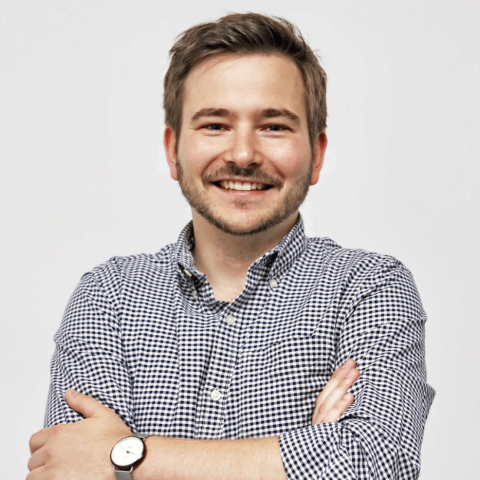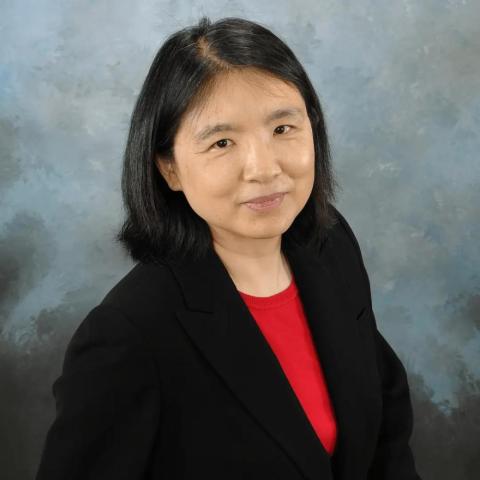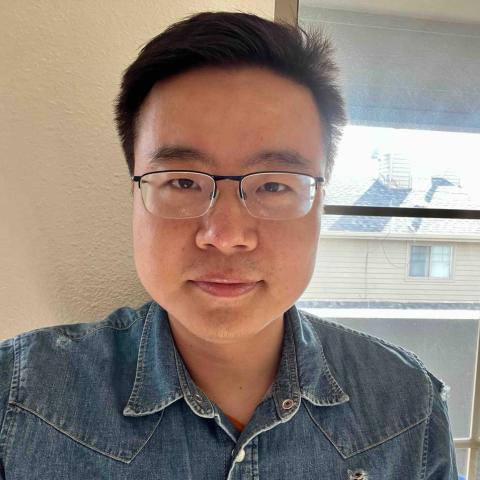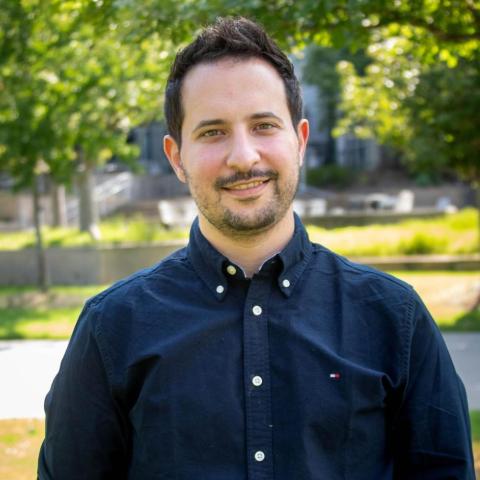
Bachir El Fil

Bachir El Fil's profile pic
bachir.elfil@me.gatech.edu

Bachir El Fil, joined the George W. Woodruff School of Mechanical Engineering as an assistant professor in August 2024.

Education

  • Research Scientist, Mechanical Engineering, Massachusetts Institute of Technology (MIT), 2023
  • Postdoctoral associate, Mechanical Engineering, Massachusetts Institute of Technology (MIT), 2022
  • PhD, Mechanical Engineering, Georgia Institute of Technology, 2021
  • MS, Mechanical Engineering, American University of Beirut (AUB), 2015
  • BS, Mechanical Engineering, American University of Beirut (AUB), 2014

Teaching Interests

Professor El Fil’s teaching interests encompass core mechanical engineering courses at both undergraduate and graduate levels, including fluid mechanics, heat transfer, and thermodynamics. He aims to provide students with a strong theoretical foundation and practical problem-solving skills, emphasizing applications relevant to energy systems and advanced fluid dynamics. His instruction integrates experimental and computational approaches to prepare students for research and industry challenges. He currently teaches Thermodynamics (ME3322) and Energy Systems (ME 4315).

Research Interests

Professor El Fil’s research focuses on the investigation of multiphase flows, heat and mass transfer, and energy conversion processes. His work includes experimental and numerical studies aimed at improving the understanding of complex transport phenomena in thermo-fluidic systems. The research supports advancements in energy systems efficiency and sustainability, involving the development of models and techniques to analyze fluid behavior under various flow and thermal conditions. 

His mission is to tackle global challenges at the nexus of energy and water sustainability, combining the rigor of thermal sciences with the creativity of materials and device engineering. He studies and designs cutting-edge technologies for atmospheric water harvesting, thermochemical energy storage, and next-generation heat and mass exchangers, translating fundamental research into scalable solutions.

1) Bridge fundamentals and applications: Combine advanced thermal sciences, transport phenomena, and materials engineering to design devices that move seamlessly from lab-scale discovery to real-world deployment.

2) Reimagine the water–energy nexus: From atmospheric water harvesting to thermochemical energy storage and high-performance heat exchangers, he develops technologies that turn waste heat, humidity, and scarce resources into reliable, sustainable utilities.

3) Prototype, test, and scale: Build and evaluate full systems, experimentally and via techno-economic analysis, to deliver solutions that are not only scientifically novel, but also manufacturable, affordable, and impactful at scale.

Recent Publications 

  •  I. H. Sahin, B. El Fil “Enhancing Sorption Kinetics Via Intracrystalline Diffusivity Tuning for High-Density Thermochemical Energy Storage”.  AIChE Annual Meeting 2025. Nov 2-6, 2025. Boston, MA. 
  • J. P. Mooney, O. R. Caylan, J. Gao, J. Punch, V. Egan, B. El Fil*, and L. Zhang “In Situ X-ray Microscopy Unraveling the Onset of Salt Creeping at a Single-Crystal Level “Langmuir 2025 41 (27), 17741-17748 DOI: 10.1021/acs.langmuir.5c01460.
  •  C.T. Wilson, C.D. Diaz, J. P. Colque, J.P. Mooney, B. El Fil*, “Solar-driven atmospheric water harvesting in the Atacama Desert through physics-based optimization of a hygroscopic hydrogel device”. Device, Volume 3, Issue 8, 100798 (2025). https://doi.org/10.1016/j.device.2025.100798. 
  •  X. Li#, B. El Fil#*, B. Li, G. Graeber, A.C. Li, Y. Zhong, M. Alshrah, C.T. Wilson, E.Lin. “Design of a Compact Multicyclic High-Performance Atmospheric Water Harvester for Arid Environments”. ACS Energy Letters (2024) 9 (7), 3391-3399. https://doi.org/10.1021/acsenergylett.4c01061. 
  • Y. Zhong, L. Zhang, X. Li, B. El Fil, C. D. Díaz-Marín, A. C. Li, X. Liu, A. LaPotin, E. N. Wang Bridging materials innovations to sorption-based atmospheric water harvesting devices. Nat Rev Mater 9, 681–698 (2024). https://doi.org/10.1038/s41578-024-00665-2.
Assistant Professor, Mechanical Engineering
IRI/Group and Role
Energy > Research Community
University, College, and School/Department
Georgia Institute of Technology
Research Areas
Energy
  • Water, Wind, and Solar

Gaurav Doshi

Portrait of Gaurav Doshi, Assistant Professor at Georgia Tech
gdoshi@gatech.edu

Gaurav Doshi is an Assistant Professor in the School of Economics. His research interests are in energy and environmental economics, empirical industrial organization, and applied econometrics. His work focuses on the impacts of energy policy on market power and emissions from the fossil fuel sector, technology adoption in the renewable sector, and transition to renewable energy in the US.

Gaurav’s current research uses tools and techniques from industrial organization to study how firms respond to policy changes in electricity and energy markets. He currently teaches courses on Machine Learning for Economics. Prior to joining the faculty at Georgia Tech, Gaurav received his Ph.D. in Applied Economics from the University of Wisconsin Madison in 2023.

Assistant Professor, School of Economics
Office
Old CE Building, Room 210
IRI/Group and Role
Energy > Research Community
University, College, and School/Department
Georgia Institute of Technology > Ivan Allen College of Liberal Arts > School of Economics
Research Areas
Energy
  • Energy Economics, Policy, and Public Health
  • Water, Wind, and Solar
  • Built Environment

Gregory Randolph

Gregory Randolph's profile picture
gregory.randolph@design.gatech.edu

Gregory F. Randolph is an Assistant Professor in the School of City and Regional Planning. His research examines how local economies and urbanization patterns are shaped by major 21st-century transitions—technological, energy, and demographic—with a focus on inequality. He is currently writing a book on agrarian-to-urban transformations in India, under contract with Oxford University Press. He is also a research lead for FutureWORKS, a five-year program on the future of work in the Global South funded by the International Development Research Centre (Canada), through which he is examining the impact of decarbonization on spatial inequalities.

In addition to his academic research, Professor Randolph works with both governmental and non-profit institutions in their efforts to create inclusive urban economies. A decade ago, he co-founded the Just Jobs Network, a non-profit institute based in New Delhi that advises governments across the Global South on labor and employment policies. He is a Senior Research Fellow at Kindred Futures, an Atlanta-based organization working to build collective wealth in Black communities in the American South. He has also served as a policy advisor to the Los Angeles City Council and consults with multilateral organizations such as the World Bank on issues of sustainable development.

Professor Randolph's research has been supported by a range of academic institutions and foundations: the International Development Research Centre (Canada), London School of Economics, Asian Development Bank, U.S. Departments of Education and State, USC Lusk Center, Solidarity Center, and German Marshall Fund. He has been awarded the Fulbright-Hays and Fulbright-Nehru research fellowships. His opinion writing has appeared in media outlets such as The Washington Post, The Wall Street Journal, The Hindustan Times, Indian Express, and The Jakarta Post.

Dr. Randolph obtained his PhD in urban planning and development from the University of Southern California and his undergraduate degree from the University of North Carolina at Chapel Hill, where he was a Morehead-Cain Scholar. He speaks Hindi and Bahasa Indonesia.

Assistant Professor, School of City and Regional Planning
Office
Architecture-East Building, 204-N
IRI/Group and Role
Energy > Research Community
University, College, and School/Department
Georgia Institute of Technology > College of Design > School of City and Regional Planning
Research Areas
Energy
  • Sustainable Communities
  • Energy Economics, Policy, and Public Health

Baoyun Ge

Baoyun Ge's profile picture
baoyun.ge@ece.gatech.edu

Dr. Baoyun Ge received his B.E. degree in Electrical Engineering from Southeast University, Nanjing, China, in 2012 and his Ph.D. degree in Electrical and Computer Engineering from the University of Wisconsin-Madison in 2018. He then worked at C-Motive Technologies, Inc., a start-up company pioneering in the commercialization of electrostatic machines. From May 2022 to July 2024, Dr. Ge was with the University of Florida as an assistant professor before joining the Georgia Institute of Technology.

Dr. Ge's previous research thrusts on electrostatic machines established multi-level connections (physics, circuits, and topologies) with magnetostatic machines. He has extensive experience in analytical modeling and high-performance computational models. These experiences and the duality between electrostatic and magnetostatic machines inspired Dr. Ge to work on multiphysics synthesis, which is about overcoming the limitations of conventional intuition-based multiphysics design by leveraging advanced mathematical tools.

Baoyun enjoys spending time with his wife and daughter.

Assistant Professor, School of Electrical and Computer Engineering
Office
VL E378
Additional Research

Electric motors and generators; power electronics; controls; multiphysics synthesis; multiphysics education

IRI/Group and Role
Energy > Research Community
University, College, and School/Department
Georgia Institute of Technology > College of Engineering > School of Electrical and Computer Engineering
Research Areas
Energy
  • Electric Vehicles
  • AI Energy Nexus
  • Water, Wind, and Solar
  • Combustion, Propulsion, and Hypersonics

Haiying Huang

Haiying Huang's profile picture
haiying.huang@ce.gatech.edu

Dr. Huang obtained her Ph.D in Geological Engineering from the University of Minnesota in 1999. She then worked as a senior engineer in Schlumberger Oilfield Services in Sugar Land, TX from 2000 to 2006 before she joined the faculty in Georgia Tech in 2007. Dr. Huang is a recipient of the NSF CAREER in 2011.

Associate Professor, School of Civil and Environmental Engineering
Phone
404.385.0059
Office
Mason 2263
Additional Research

Geomechanics aspects of drilling, rock indentation and cutting., Reservoir stimulation and production, in particular, slurry flow, fluid injection in granular media, hydraulic fracturing

IRI/Group and Role
Energy > Research Community
University, College, and School/Department
Georgia Institute of Technology > College of Engineering > School of Civil and Environmental Engineering
Research Areas
Energy
  • Carbon Capture, Utilization and Storage
  • Energy Storage
  • Critical Minerals

Patrick Kastner

Patrick Kastner's profile picture
pkastner3@gatech.edu

Patrick Kastner is a researcher and educator specializing in environmental performance simulation and decarbonization of buildings and cities, and directs the Sustainable Urban Systems Lab at Georgia Tech. He is an Assistant Professor at the School of Architecture and holds a courtesy appointment with the H. Milton Stewart School of Industrial and Systems Engineering.

His goal is to empower urban decision-makers with software tools that place sustainability at the forefront of the profession. He leads a Vertically Integrated Project titled Surrogate Modeling for Urban Regeneration (SMUR), which attracts a diverse group of students ranging from sophomore to graduate level, representing various engineering disciplines and other related fields across Georgia Tech.

He earned his Ph.D. and M.S. in Systems Science and Engineering from Cornell University in 2022. During his doctoral research, he developed Eddy3D, a microclimate modeling software toolkit for Rhino & Grasshopper, now adopted by leading institutions in both academia and practice. He previously taught at Cornell and UPenn.

Originally from Germany, Kastner holds an M.S. in Sustainable Building Science from TU Munich, and a B.S. in Energy Engineeringfrom FAU Erlangen-Nuremberg. While in Munich, he was fortunate enough to study at the Center for Digital Technology and Management and enjoyed his time leading the operations team at TEDxTUM.

Assistant Professor, School of Architecture
Adjunct Assistant Professor — H. Milton Stewart School of Industrial and Systems Engineering Director of the Sustainable Urban Systems Lab
IRI/Group and Role
Energy > Research Community
University, College, and School/Department
Georgia Institute of Technology > College of Design > School of Architecture
Research Areas
Energy
  • Built Environment
  • Sustainable Communities
  • AI Energy Nexus
  • Energy Economics, Policy, and Public Health

Anju Toor

Anju Toor's profile picture
anju.toor@mse.gatech.edu

Anju Toor is a researcher in nanomaterials for energy systems. She was a Bakar Innovation Fellow at the University of California, Berkeley, and worked on printed on-chip integrated micro batteries. She earned an M.S. in Electrical Engineering and a Ph.D. in Mechanical Engineering at University of California, Berkeley.

Her research focuses on advanced energy materials, printed electronics, energy storage systems, and nanoparticle self-assembly. She has led research on flexible and stretchable batteries for next-generation Augmented/Virtual Reality applications at Meta Reality Labs. She was named EECS Rising Star and selected for The Rising Stars Women in Engineering Workshop in Asia.

As an expert in self-assembly and energy materials, she has published over 20 research publications in the most reputed platforms in the field.

Assistant Professor, School of Materials Science and Engineering
Additional Research

Research Areas: Composites, Fibers, Nanostructures, Polymers

Research Challenges: Electronics and Communications, Energy, Environment

Research Activity: Measurements, Processing, Fabrication, & Manufacturing, Synthesis

IRI/Group and Role
Energy > Research Community
Energy > Faculty
Matter and Systems > Affiliated Faculty
University, College, and School/Department
Georgia Institute of Technology > College of Engineering > School of Materials Science Engineering
Research Areas
Energy
  • Energy Storage
  • Advanced Manufacturing for Energy
  • AI Energy Nexus
Matter and Systems
  • Built Environment Technologies
  • Human-Centric Technologies

Chuanyi Ji

Portrait of Chuanyi Ji
jichuanyi@gatech.edu

Chuanyi Ji received the B.S. (Honors) from Electronics Department Tsinghua University in 1983, the M.S. from Electrical Engineering, University of Pennsylvania in 1986, and the Ph.D. from Electrical Engineering California Institute of Technology in 1992. She joined the faculty at Rensselaer Polytechnic Institute in 1991. She spent a sabbatical year at Bell-Labs Lucent in 1999, and was a visiting faculty at MIT in the fall of 2000. She is an Associate Professor at School of ECE Georgia Institute of Technology, which she joined in 2001. 

Research

  • Large-scale data analytics, modeling and learning algorithms in a networked setting
  • Both real-world application and methodology development, to quantify resilience, decision making and equity for energy networks and communities
  • Work reported as among the pioneering research that learns from heterogeneous data on  operational energy grid, severe weather, and communities (join us)

Distinctions & Awards

  • One of the favorite papers published in Nature Energy in the past five years, selected by the editors at Nature Energy, 2021
  • Early Career Award, RPI 2000
  • NSF Career Award, 1995
  • Ming Li Scholarship, Caltech 1989
  • Honor graduate, Tsinghua University, 1983
Associate Professor, School of Electrical and Computer Engineering
Phone
4048942393
Office
5165 Cent
IRI/Group and Role
Energy > Research Community
University, College, and School/Department
Georgia Institute of Technology > College of Engineering
Research Areas
Energy
  • Energy Systems, Grid Resilience, and Cybersecurity

Bjarne Kreitz

Portrait of Bjarne Kreitz
bkreitz3@gatech.edu

Bjarne Kreitz is an incoming Assistant Professor of Chemical Engineering at Georgia Tech. Kreitz received a B.Sc. and M.Sc. in Chemical Engineering from Clausthal University of Technology (Germany). He obtained his Dr.-Ing. in Chemical Engineering from Clausthal University of Technology under the supervision of Prof. Thomas Turek, working on the microkinetic investigation of the transient methanation with experiments and multiscale modeling. 

Kreitz conducted postdoctoral work at Brown University with Prof. Franklin Goldsmith with a Feodor Lynen Postdoctoral Scholarship from the Alexander von Humboldt Foundation. Before joining Brown, he worked briefly as a postdoc at the Karlsruhe Institute of Technology (Germany) in the group of Prof. Olaf Deutschmann.

Assistant Professor, School of Chemical and Biomolecular Engineering
Additional Research
  • Complex Systems
  • Energy and Sustainability
IRI/Group and Role
Energy > Research Community
Data Engineering and Science > Faculty
University, College, and School/Department
Georgia Institute of Technology > College of Engineering > School of Chemical and Biomolecular Engineering
Research Areas
Energy
  • Fuels
  • Energy and National Security
Data Engineering and Science
  • Machine Learning

Qi Tang

Portrait of Qi Tang
qtang@gatech.edu

Qi Tang comes to Georgia Tech from Los Alamos National Laboratory where he was a staff scientist in the Applied Mathematics and Plasma Physics Group. Before joining LANL in 2018, he was an Eliza Ricketts Foundation Postdoctoral Fellow at Rensselaer Polytechnic Institute. Tang completed his Ph.D. at Michigan State University in 2015. His research interests include: computational plasma physics, fusion simulations, scalable numerical algorithms, multi-physics and multi-scale problems, and scientific machine learning.

Assistant Professor, School of Computational Science and Engineering
IRI/Group and Role
Energy > Research Community
University, College, and School/Department
Georgia Institute of Technology > College of Computing > School of Computational Science and Engineering
Research Areas
Energy
  • Nuclear
  • Energy and National Security
Subscribe to Research Community