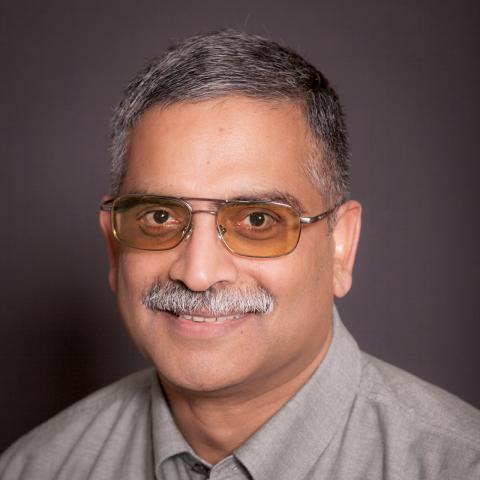
Srinivas Garimella

Srinivas Garimella's profile picture
srinivas.garimella@me.gatech.edu

Dr. Garimella began at Tech in August 2003 as an Associate Professor and Director of the Sustainable Thermal Systems Laboratory. Prior, he was an Associate Professor at Iowa State University, an Assistant and Associate Professor at Western Michigan University, a Research Scientist at Battelle Memorial Institute, and a Senior Engineer at General Motors.

Professor, Woodruff School of Mechanical Engineering
Hightower Chair in Engineering
Phone
(404) 894-7479
Additional Research

Thermal Systems

IRI/Group and Role
Energy > Hydrogen Group
Energy > Research Community
Energy
University, College, and School/Department
Georgia Institute of Technology > College of Engineering
Research Areas
Energy
  • Built Environment
  • Energy Storage
  • Nuclear
  • Sustainable Communities
  • Energy Systems, Grid Resilience, and Cybersecurity

Michael Gamble

Michael Gamble's profile picture
michael.gamble@coa.gatech.edu

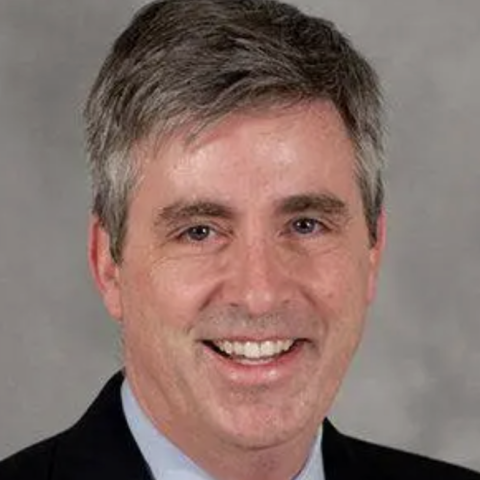
Michael’s love of design at all scales is evident in his teaching, research and practice. 

He is a registered architect, director of the Modern Cities Europe Program, and creative director at Gamble + Gamble Architects in Atlanta. From 2015 to 2022, he directed the Master of Architecture program in the School of Architecture.  His design-driven research operates at a variety of scales, from house to city, with emphasis on innovation, alternative energy, and building technology pursued within the context of a larger concern for the creation of healthy, well-conceived environments. He has received numerous awards for excellence in design and scholarship. www.gg-architects.com 

Michael was the first point of contact for the $30 million Living Building gift, a.k.a. Kendeda Building for Innovative Sustainable Design (KBISD), and actively participated in pre-planning and fund acquisition, design competition and team formation, all the way through building execution, implementation and certification.  He also led a series of interdisciplinary design studios that paralleled the effort, and chaired the Academic and Research Council connected to the project.  He is co-author of the novel organizational structure of the living building workgroups, now tested, and currently  serves as chair of the KBISD advisory council and leads the Living Building Pilot Project Program, comprised of faculty, researchers and students from across campus, now in round three of funding. 

Michael’s research has received grants from The Alcoa Foundation, The Kendeda Foundation, Center for Quality Growth and Regional Development, the National Endowments of the Arts, and received First Prize for Research in an international competition sponsored by the Environmental Design and Research Association. Gamble has published essays on the design of the public realm in Harvard Design Magazine with W. Jude Leblanc. 

Associate Professor, School of Architecture
Director of Graduate Studies; Director, Master of Architecture Program
Phone
(404) 894-4885
Additional Research

Building Technologies

IRI/Group and Role
Energy > Faculty Council
Energy > Research Community
Energy
University, College, and School/Department
Georgia Institute of Technology > College of Design
Research Areas
Energy
  • Built Environment
  • Sustainable Communities
  • Water, Wind, and Solar

Victor Fung

Victor Fung's profile picture
victorfung@gatech.edu

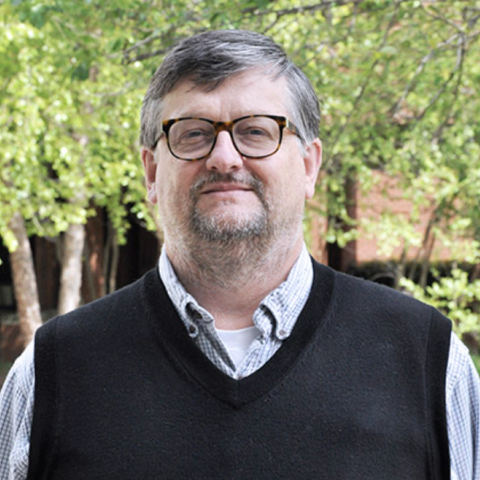
Victor Fung is an Assistant Professor in the School of Computational Science and Engineering. Prior to this position, he was a Wigner Fellow and a member of the Nanomaterials Theory Insitute in the Center for Nanophase Materials Sciences at Oak Ridge National Laboratory. A physical chemist by training, Fung now works at the intersection of scientific artificial intelligence, computing, and materials science/chemistry.

Assistant Professor of Computational Science and Engineering
Office
E1354B | CODA Building, 756 W Peachtree St NW, Atlanta, GA 30308
Additional Research

Quantum chemistrySurrogate models for quantum chemistryData-driven inverse designChemically-informed machine learningHigh-throughput computational simulations

IRI/Group and Role
Data Engineering and Science > Faculty
Energy > Faculty
Matter and Systems > Affiliated Faculty
Data Engineering and Science
Energy
University, College, and School/Department
Georgia Institute of Technology > College of Computing > School of Computational Science and Engineering
Research Areas
Artificial Intelligence

Thomas Fuller

Thomas Fuller's profile picture
tom.fuller@chbe.gatech.edu

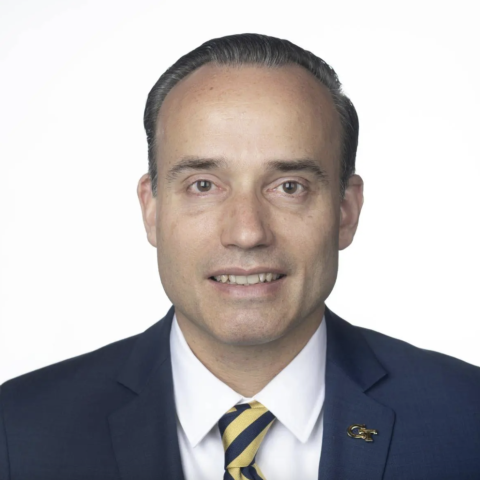
Tom Fuller is Professor of Chemical Engineering at the Georgia Tech. Dr. Fuller received a BS from the University of Utah in Chemical Engineering in 1982. Dr. Fuller then served for five years in the U.S. Navy working as a Nuclear Engineer. In 1992 he obtained a Ph.D. from UC, Berkeley also in Chemical Engineering. 

Subsequently, Dr. Fuller developed advanced lithium batteries while working as a postdoctoral fellow at Lawrence Berkeley National Laboratory. He then moved to United Technologies. He was responsible for technology development, design, assembly, and test of cell stacks for UTC Fuel Cells. 

His research group at Georgia Tech is focused on durability challenges for electrochemical systems. For the last eight years Dr. Fuller has been a Technical Editor for the Journal of the Electrochemical Society. In 2009 Dr. Fuller was named a Fellow of the Electrochemical Society.

Professor, School of Chemical and Biomolecular Engineering
Phone
(404) 894-2898
Additional Research

Electric Vehicles; Energy Storage; Hydrogen; Modeling; Materials Failure and Reliability; Energy Conversion; Energy Storage; Batteries; fuel cells

IRI/Group and Role
Energy > Hydrogen Group
Energy > Research Community
Sustainable Systems
Matter and Systems > Affiliated Faculty
Energy
University, College, and School/Department
Georgia Institute of Technology > College of Engineering
Research Areas
Sustainable Systems
  • Resource and Materials Use
Matter and Systems
  • Built Environment Technologies
Energy
  • Built Environment
  • Energy Storage

J. David Frost

J. David Frost's profile picture
david.frost@ce.gatech.edu

James David Frost is the Elizabeth and Bill Higginbotham Professor of civil engineering. He received B.A.I and B.A. degrees in civil engineering and mathematics, respectively, from Trinity College, Dublin, Ireland in 1980 and M.S. and Ph.D. degrees in civil engineering in 1986 and 1989 from Purdue University. Prior to serving as a member of the faculty at Purdue University and Georgia Tech, he worked in industry in Ireland and Canada on a range of natural resource related projects ranging from tailings impoundments to artificial sand islands in the Arctic for oil exploration. At Georgia Tech, where he has been for almost 20 years, he has served as head of the Geosystems Engineering Group and as founding director of the Georgia Tech Regional Engineering Program and subsequently the Georgia Tech Savannah campus.

Elizabeth and Bill Higginbotham Professor, School of Civil and Environmental Engineering
Group Coordinator, Geosystems Engineering Group
Phone
404.894.2280
Office
Mason 2285
Additional Research

Micro and nanomechanics, geomaterials, composites, sustainable communities

IRI/Group and Role
Energy > Research Community
Energy
University, College, and School/Department
Georgia Institute of Technology > College of Engineering > School of Civil and Environmental Engineering
Research Areas
Energy
  • Sustainable Communities
  • Built Environment

Hermann Fritz

Hermann Fritz's profile picture
fritz@gatech.edu

Biography

Dr. Hermann Fritz is a professor of civil engineering at the Georgia Institute of Technology (Georgia Tech). He is an expert on coastal hazards, such as tsunamis, hurricane storm surge and storm waves, landslides and submarine volcanic eruptions. Dr. Fritz has led or participated in more than a dozen post-disaster reconnaissance campaigns encompassing tsunami, hurricane, landslide, and earthquake events. Tsunami Surveys: 2004 Indian Ocean (Indonesia, Sri Lanka, Maldives, Somalia, Madagascar, Oman, Yemen, Comoros), 2006 Java, 2007 Solomon Islands and Peru, 2009 Samoa, American Samoa, and Tonga, 2010 Solomon Islands, Haiti, Chile, and Mentawai Islands, 2011 Japan, 2012 El Salvador, 2013 Solomon Islands, 2014 and 2015 Chile, 2017 Greenland, 2018 Sulawesi and Krakatau. Hurricane Surveys: 2005 Hurricane Katrina, 2007 Tropical Cyclone Gonu (Oman), 2008 Tropical Cyclone Nargis (Myanmar), 2013 Typhoon Haiyan (Philippines), 2015 Tropical Cyclone Pam (Vanuatu), 2017 Hurricane Nate. Dr. Fritz's research centers on fluid dynamic aspects of natural hazards as well as their mitigation and coastal protection. Dr. Fritz obtained his Doctorate degree (Dr. sc. ETH Zurich) in 2002 from the Swiss Federal Institute of Technology in Zurich (Switzerland).

Research

Dr. Fritz has developed a strong research effort covering experimental (both field and laboratory) and computational methods in fluid dynamics, hydraulics and geophysics. His research focuses on coastal hazards such as tsunamis, hurricanes, landslides, and volcanoes. Dr. Fritz’s work encompasses non-linear and breaking water waves; subaerial and submarine mass flows such as landslides, avalanches, island collapses, and submarine volcanic eruptions; floods, river engineering and morphologic processes; hydraulic and coastal structures such as seawalls, breakwaters, levees and dams along with their failure and breaching mechanisms; hydropower, wave, tidal and ocean current energy. His research is significantly enhancing the hazard prevention, mitigation and protection of coastal and mountainous areas on a truly global scale.

Education

Ph.D. in Civil Engineering (Dr. sc. techn. ETH)

ETH (Swiss Federal Institute of Technology) 2002

M.S. in Civil Engineering (Dipl.-Ing. ETH)

ETH (Swiss Federal Institute of Technology) 1997

Teaching

Professor Fritz’ teaching focuses on civil and environmental engineering at undergraduate and graduate levels, emphasizing dynamics, fluid mechanics, hydraulic engineering, coastal hazards, coastal structures, and experimental methods. His instruction integrates fundamental principles with practical applications to prepare students for research and professional practice. Professor Fritz is committed to fostering student engagement through hands-on learning and critical thinking in courses related to hydraulic and coastal engineering.

Distinctions & Awards

  • Plinius Medal, Natural Hazards Division, European Geosciences Union (EGU), 2014
  • CIOS Honor Roll
  • Excellence in Research Award, CEE, Georgia Tech, 2005
  • Research Excellence Award, Georgia Tech Savannah, 2005
Professor, School of Civil and Environmental Engineering
Phone
(404) 385-1803
Additional Research

Water; Wind

IRI/Group and Role
Energy > Research Community
Energy
University, College, and School/Department
Georgia Institute of Technology > College of Engineering
Research Areas
Energy
  • Water, Wind, and Solar
  • Built Environment
  • Sustainable Communities

Michael Filler

Michael Filler's profile picture
michael.filler@chbe.gatech.edu

Michael Filler is a professor and the Traylor Faculty Fellow in the School of Chemical and Biomolecular Engineering at the Georgia Institute of Technology. He earned his undergraduate and graduate degrees from Cornell University and Stanford University, respectively, prior to completing postdoctoral studies at the California Institute of Technology. Filler has been recognized for his research and teaching with the National Science Foundation CAREER Award, Georgia Tech Sigma Xi Young Faculty Award, CETL/BP Junior Faculty Teaching Excellence Award, and AVS Dorothy M. and Earl S. Hoffman Award. Filler also heads Nanovation, a forum to address the big questions, big challenges, and big opportunities of nanotechnology.

Professor and Traylor Faculty Fellow, School of Chemical and Biomolecular Engineering
Director, The Filler Lab
Phone
404.894.0430
Office
Marcus 2135
Additional Research

Integrated photonics, carbon nanotubes, nanomanufacturing, thermal management, silicon devices

IRI/Group and Role
Energy > Research Community
Matter and Systems > Affiliated Faculty
Matter and Systems > Leadership
Energy
University, College, and School/Department
Georgia Institute of Technology > College of Engineering > School of Chemical and Biomolecular Engineering
Research Areas
Matter and Systems
  • Computing and Communication Technologies
Energy
  • AI Energy Nexus
  • Built Environment
  • Advanced Manufacturing for Energy
  • Energy and National Security
Renewable Bioproducts
  • Pulp, Paper, Packaging and Tissue

Francesco Fedele

Francesco Fedele's profile picture
fedele@gatech.edu
Associate Professor, School of Civil and Environmental Engineering
Additional Research

Water; Wind

IRI/Group and Role
Energy > Research Community
Energy
University, College, and School/Department
Georgia Institute of Technology > College of Engineering
Research Areas
Energy
  • Energy Systems, Grid Resilience, and Cybersecurity

Andrei Fedorov

Andrei Fedorov's profile picture
AGF@gatech.edu

Fedorov's background is in thermal/fluid sciences, chemical reaction engineering as well as in applied mathematics. His laboratory works at the intersection between mechanical and chemical engineering and solid state physics and analytical chemistry with the focus on portable/ distributed power generation with synergetic CO2 capture; thermal management of high power dissipation devices and electronics cooling; special surfaces and nanostructured interfaces for catalysis, heat and moisture management; and development of novel bioanalytical instrumentation and chemical sensors. Fedorov joined Georgia Tech in 2000 as an assistant professor after finishing his postdoctoral work at Purdue University.

Professor and Rae S. and Frank H. Neely Chair, Woodruff School Mechanical Engineering
Associate Chair for Graduate Studies, School Mechanical Engineering
Director, Fedorov Lab
Phone
404.385.1356
Office
Love 307
Additional Research

Heat Transfer; power generation; CO2 Capture; Catalysis; fuel cells; "Fedorov's research is at the interface of basic sciences and engineering. His research portfolio is diverse, covering the areas of portable/ distributed power generation with synergetic carbon dioxide management, including hydrogen/CO2 separation/capture and energy storage, novel approaches to nanomanufacturing (see Figure), microdevices (MEMS) and instrumentation for biomedical research, and thermal management of high performance electronics. Fedorov's research includes experimental and theoretical components, as he seeks to develop innovative design solutions for the engineering systems whose optimal operation and enhanced functionality require fundamental understanding of thermal/fluid sciences. Applications of Fedorov's research range from fuel reformation and hydrogen generation for fuel cells to cooling of computer chips, from lab-on-a-chip microarrays for high throughput biomedical analysis to mechanosensing and biochemical imaging of biological membranes on nanoscale. The graduate and undergraduate students working with Fedorov's lab have a unique opportunity to develop skills in a number of disciplines in addition to traditional thermal/fluid sciences because of the highly interdisciplinary nature of their thesis research. Most students take courses and perform experimental and theoretical research in chemical engineering and applied physics. Acquired knowledge and skills are essential to starting and developing a successful career in academia as well as in many industries ranging from automotive, petrochemical and manufacturing to electronics to bioanalytical instrumentation and MEMS."

IRI/Group and Role
Bioengineering and Bioscience > Faculty
Energy > Hydrogen Group
Energy > Research Community
Bioengineering and Bioscience
Energy
University, College, and School/Department
Georgia Institute of Technology > College of Engineering > Woodruff School of Mechanical Engineering
Research Areas
Energy
  • Energy Storage
  • Nuclear
  • Carbon Capture, Utilization and Storage

Alper Erturk

Alper Erturk's profile picture
alper.erturk@me.gatech.edu

Erturk began at Georgia Tech in May 2011 as an Assistant Professor, he was promoted to Associate Professor with tenure in 2016 and became a full Professor in 2019. Prior to joining Georgia Tech, he worked as a Research Scientist in the Center for Intelligent Material Systems and Structures at Virginia Tech (2009-2011). His postdoctoral research interests included theory and experiments of smart structures for applications ranging from aeroelastic energy harvesting to bio-inspired actuation. His Ph.D. dissertation (2009) was centered on experimentally validated electromechanical modeling of piezoelectric energy harvesters using analytical and approxIMaTe analytical techniques. Prior to his Ph.D. studies in Engineering Mechanics at Virginia Tech, Erturk completed his M.S. degree (2006) in Mechanical Engineering at METU with a thesis on analytical and semi-analytical modeling of spindle-tool dynamics in machining centers for predicting chatter stability and identifying interface dynamics between the assembly components.

Woodruff Professor, Woodruff School of Mechanical Engineering
Phone
404.385.1394
Office
Love 126
Additional Research

Structural Dynamics; Vibrations; Smart Materials & Structures; Energy Harvesting; Acoustic Metamaterials; Acoustics and Dynamics; Smart materials; Piezoelectronic Materials; Metamaterials; Energy Harvesting

IRI/Group and Role
Robotics > Affiliated Faculty
Energy > Research Community
Matter and Systems > Affiliated Faculty
Robotics
Energy
University, College, and School/Department
Georgia Institute of Technology > College of Engineering > Woodruff School of Mechanical Engineering
Research Areas
Artificial Intelligence
Energy
  • Advanced Manufacturing for Energy
Subscribe to Energy