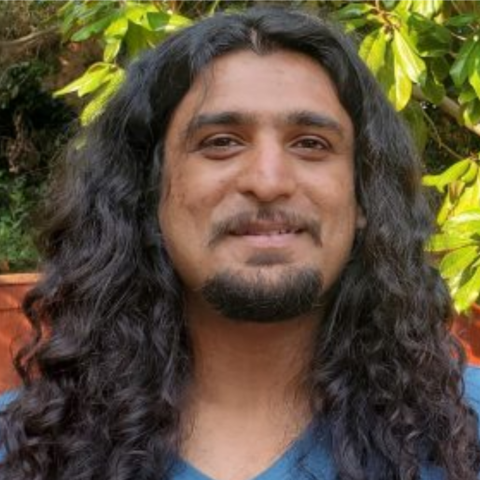
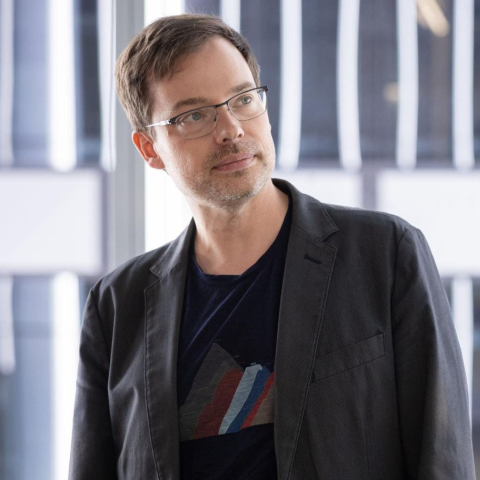
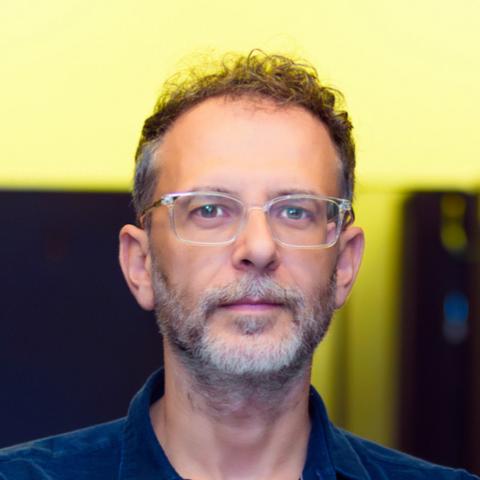
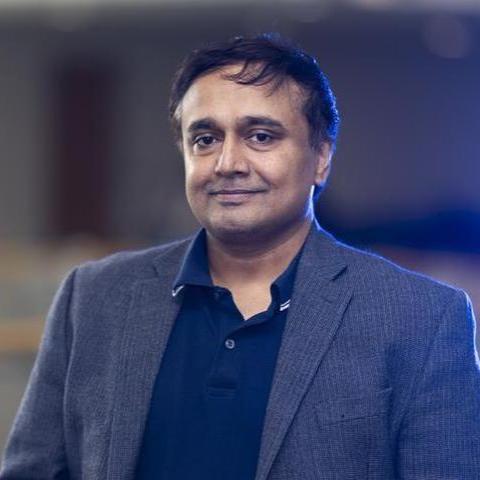
Aishik Ghosh

Aishik Ghosh
AishikGhosh@physics.gatech.edu

The Ghosh group engages in cross-disciplinary collaborations and welcomes students from diverse academic backgrounds. Most projects focus on addressing challenges in fundamental physics and astrophysics using computational and AI/ML tools, making the group a natural fit for students with strong skills or interests in these areas. We develop methods to automate theoretical physics calculations using reinforcement learning and LLM agents, enabling rapid testing of new theories. We also work on simulation, experimental design and high-dimensional statistical inference techniques powered by AI to accelerate scientific discovery. Data analysis problems at the scale of the Large Hadron Collider or multi-messenger astronomy often demand rapid decision-making, and we design efficient AI algorithms that can be deployed on fast hardware to meet these challenges.

Assistant Professor; School of Physics
Office
Howey W506
Additional Research
  • Astrophysics
  • Experiment Design
  • Generative Models
  • High-Dimensional Statistics
  • Neuro-Symbolic AI
  • Particle Physics
IRI/Group and Role
Data Engineering and Science > Faculty
University, College, and School/Department
Georgia Institute of Technology > College of Sciences > School of Physics
Research Areas
Data Engineering and Science
  • Algorithms and Optimization

Greeshma Agasthya

G
greeshma@gatech.edu

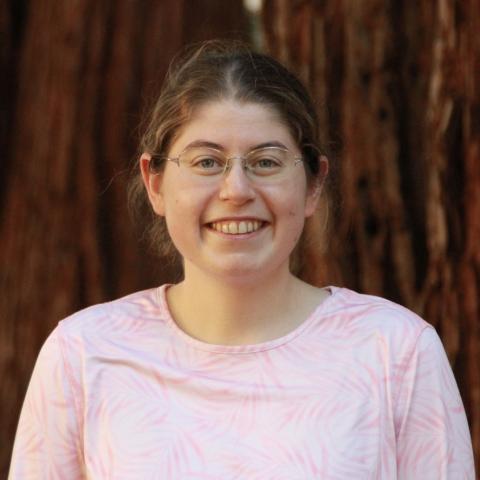
Greeshma Agasthya (she/her/hers) is an Assistant Professor in the Nuclear & Radiological Engineering and Medical Physics Program at the George W. Woodruff School of Mechanical Engineering at Georgia Institute of Technology. She leads the Computational Medical Physics Laboratory, and her research interests are: (1) developing multiscale digital twins for personalized radiation dosimetry for imaging, therapy, and theranostics, (2) modeling and simulations to assess novel radiation protocols from cancer diagnosis to cancer treatment, and (3) developing AI frameworks to model patient trajectories for early intervention and treatment in oncology.

Previously, she was a research scientist at Oak Ridge National Laboratory in the Advanced Computing for Health Sciences section. Agasthya received her doctorate in Biomedical Engineering from Duke University and completed her postdoctoral training at Emory University's Winship Cancer Institute. She has experience in medical imaging research, modeling and simulation for radiation dosimetry, and AI and Machine learning for healthcare. Agasthya has developed and used multi-scale modeling and simulations of the human body for virtual clinical trials, radiation dosimetry, and optimization of medical imaging systems for cancer applications. She has worked on artificial intelligence (AI) for cancer surveillance, predicting disease outcomes, and clinical decision support. She has collaborated with experts in medical physics, radiology, cardiology, computer engineering, and statistics to tackle interdisciplinary challenges in medical physics and biomedical engineering. She has worked on imaging modalities including neutron imaging, x-ray radiography, computed tomography (CT), and tomosynthesis systems for cancer applications.

Assistant Professor
Office
Boggs 3-71
Additional Research
  • Bioinformatics
  • Diagnostics
  • Healthcare
  • Machine Learning
  • Nuclear
  • Radiation Therapy
IRI/Group and Role
Bioengineering and Bioscience > Faculty
Data Engineering and Science > Faculty
University, College, and School/Department
Georgia Institute of Technology
Research Areas
Bioengineering and Bioscience
Data Engineering and Science
  • Health and Life Sciences

Bjarne Kreitz

Portrait of Bjarne Kreitz
bkreitz3@gatech.edu

Bjarne Kreitz is an incoming Assistant Professor of Chemical Engineering at Georgia Tech. Kreitz received a B.Sc. and M.Sc. in Chemical Engineering from Clausthal University of Technology (Germany). He obtained his Dr.-Ing. in Chemical Engineering from Clausthal University of Technology under the supervision of Prof. Thomas Turek, working on the microkinetic investigation of the transient methanation with experiments and multiscale modeling. 

Kreitz conducted postdoctoral work at Brown University with Prof. Franklin Goldsmith with a Feodor Lynen Postdoctoral Scholarship from the Alexander von Humboldt Foundation. Before joining Brown, he worked briefly as a postdoc at the Karlsruhe Institute of Technology (Germany) in the group of Prof. Olaf Deutschmann.

Assistant Professor, School of Chemical and Biomolecular Engineering
Additional Research
  • Complex Systems
  • Energy and Sustainability
IRI/Group and Role
Energy > Research Community
Data Engineering and Science > Faculty
University, College, and School/Department
Georgia Institute of Technology > College of Engineering > School of Chemical and Biomolecular Engineering
Research Areas
Energy
  • Fuels
  • Energy and National Security
Data Engineering and Science
  • Machine Learning

Julia Yang

Portrait of Julia Yang
jhyang@gatech.edu

Julia Yang, Ph.D. is an Assistant Professor in the School of Chemical and Biomolecular Engineering at Georgia Tech. Her research has enabled fundamental understanding of battery materials by advancing computational approaches to resolve transport in disordered electrodes and explain reactivity in organic electrolytes. She is a co-author on more than 14 publications and four patents, a recipient of the Harvard University Center for the Environment Fellowship (2022-2024), and a NextProf Nexus alum (2023). She is deeply committed to educating the next generation of diverse minds by prioritizing equity, inclusivity, and belonging, starting from within the classroom and beyond. 

Prof. Yang received her B.S. in Materials Science and Engineering, with an additional major in Physics, from Carnegie Mellon University and her Ph.D. in Materials Science and Engineering from U.C. Berkeley as an NDSEG Fellow under the guidance of Prof. Gerbrand Ceder. During her graduate studies, she was an AI Resident with X, the Moonshot Factory. She led postdoctoral work at Harvard University as an Environmental Fellow working with Prof. Boris Kozinsky and collaborating with Prof. Ah-Hyung Alissa Park. 

Assistant Professor, School of Chemical and Biomolecular Engineering
Office
Bunger-Henry 303
Additional Research
  • Computational Chemistry
  • Organic Electronics
IRI/Group and Role
Energy > Research Community
Data Engineering and Science > Faculty
University, College, and School/Department
Georgia Institute of Technology > College of Engineering > School of Chemical and Biomolecular Engineering
Research Areas
Energy
  • Energy Storage
  • AI Energy Nexus
  • Critical Minerals
  • Electric Vehicles
Data Engineering and Science
  • Energy Infrastructure
  • Machine Learning

Saumya Jain

Saumya Jain
sjain738@gatech.edu

Saumya Jain is an Assistant Professor in the School of Biological Sciences. He received a B.Tech and an M.Tech in Biochemical Engineering and Biotechnology from the Indian Institute of Technology, Delhi and a Ph.D. in Molecular and Cellular Biology from the University of Arizona. He conducted postdoctoral work at the University of California, Los Angeles as a Helen Hay Whitney Fellow in the lab of Dr. Larry Zipursky. His research focuses on the regulation of gene expression in developing nervous systems across space and time.

Animal brains consist of a vast number of neurons (~100 billion in humans, ~100 million in mice), and thousands of neuron-types. These neurons generated at different times and locations in the developing brain come together in precise ways to form specific connections (~100 trillion connections in the human brain). Even subtle defects in wiring are associated with conditions such as autism, schizophrenia and epilepsy. How does biology ensure the assembly of such a complex structure? A key piece of this puzzle is ensuring that the right set of genes are expressed at the right time and in the right place. The Jain lab is trying to address the following questions: 1) How are the timing and cell-type specificity of gene expression controlled in developing neurons to ensure proper circuit formation? 2) How are these mechanisms perturbed in neurodevelopmental disorders? To address these questions, the lab applies single-cell genomics, genetics and molecular biology approaches in the developing mouse and fruit fly visual systems.

Assistant Professor
Phone
4043858531
Office
EBB 3015
Additional Research
  • Bioinformatics
  • Computational Genomics
  • Neuroscience


IRI/Group and Role
Bioengineering and Bioscience
Data Engineering and Science > Faculty
University, College, and School/Department
Georgia Institute of Technology > College of Sciences > School of Biological Sciences
Research Areas
Data Engineering and Science
  • Health and Life Sciences
  • Machine Learning

Alan Ritter

Associate Professor Alan Ritter
alan.ritter@cc.gatech.edu

Alan Ritter is an associate professor in the School of Interactive Computing at Georgia Tech. His research interests include natural language processing, information extraction, and machine learning. He completed his Ph.D. at the University of Washington and was a postdoctoral fellow in the Machine Learning Department at Carnegie Mellon.  His research aims to solve challenging technical problems that can help machines learn to read vast quantities of text with minimal supervision.  His work has been featured in the press including WIRED, TNW and VentureBeat.  Alan is the recipient of an NSF CAREER, an Amazon Research Award, a Sony Faculty Innovation Award, and several paper awards presented at the Annual Meeting of the Association for Computational Linguistics.

Associate Professor
Office
CODA 1157B
Additional Research
  • AI
  • Large Language Models
  • Natural Language Processing
IRI/Group and Role
Data Engineering and Science > Faculty
University, College, and School/Department
Georgia Institute of Technology > College of Computing > School of Interactive Computing
Research Areas
Data Engineering and Science
  • Algorithms and Optimization
  • Machine Learning

Alberto Dainotti

Associate Professor Alberto Dainotti
dainotti@gatech.edu

Alberto Dainotti is an Associate Professor in the School of Computer Science at the College of Computing at Georgia Tech where is the Director of the Internet Intelligence Lab. His research is at the intersection of Internet measurement, data science and cybersecurity. He is interested in understanding when and how Internet infrastructure can fail and proposing remedies. To this end, he develops methods and builds near-real-time streaming data analytics systems (IODA, BGPStream, GRIP) that combine diverse data to monitor and improve Internet infrastructure security and reliability. He is also interested in understanding political motivations and implications of Internet cybersecurity events and phenomena. Before joining Georgia Tech, he was an Associate Research Scientist and Principal Investigator at CAIDA, the Center for Applied Internet Data Analysis at the San Diego Supercomputer Center, University of California San Diego. He received my Ph.D. in Computer Engineering and Systems at University of Napoli "Federico II", Italy, in 2008.

Associate Professor
Phone
Office
Klaus Advanced Computing Building, #3336
Additional Research
  • Data Analytics
  • Internet Data Science
  • Internet & Democracy
  • Networking, Systems, Security
  • Network Measurements


IRI/Group and Role
Data Engineering and Science > Faculty
University, College, and School/Department
Georgia Institute of Technology > College of Computing > School of Computer Science
Research Areas
Data Engineering and Science
  • High Performance Computing

Vijay Ganesh

Vijay Ganesh, Professor of Computer Science
vganesh@gatech.edu

Dr. Vijay Ganesh is a professor of computer science at the Georgia Institute of Technology. Prior to joining Georgia Tech in 2023, Vijay was a professor at the University of Waterloo in Canada from 2012 to 2023 and a research scientist at the Massachusetts Institute of Technology from 2007 to 2012. Vijay completed his PhD in computer science from Stanford University in 2007. Vijay's primary area of research is the theory and practice of SAT/SMT solvers, and their application in AI, software engineering, security, mathematics, and physics. In this context he has led the development of many SAT/SMT solvers, most notably, STP, Z3str4, AlphaZ3, MapleSAT, and MathCheck. He has also proved several decidability and complexity results in the context of first-order theories. More recently he has started working on topics at the intersection of learning and reasoning, especially the use of machine learning for efficient solvers, and the use of solvers aimed at making AI more trustworthy, secure, and robust. For his research, Vijay has won over 30 awards, honors, and medals to-date, including an ACM Impact Paper Award at ISSTA 2019, ACM Test of Time Award at CCS 2016, and a Ten-Year Most Influential Paper citation at DATE 2008.

Professor
Office
Klaus Advanced Computing Building, Room 2320
Additional Research
  • AI for Scientific and Mathematical Discovery
  • Automated Reasoning - SAT/SMT Solvers and Provers
  • NeuroSymbolic AI via Reasoning and Learning
  • Secure and Trustworthy AI and Machine Learning
IRI/Group and Role
Data Engineering and Science > Faculty
Tech AI > Faculty
University, College, and School/Department
Georgia Institute of Technology > College of Computing > School of Computer Science
Research Areas
Data Engineering and Science
  • Machine Learning
  • Algorithms and Optimization

Micah Ziegler

Micah Ziegler
micah.ziegler@gatech.edu

Dr. Micah S. Ziegler is an assistant professor in the School of Chemical and Biomolecular Engineering and the School of Public Policy.

Dr. Ziegler evaluates sustainable energy and chemical technologies, their impact, and their potential. His research helps to shape robust strategies to accelerate the improvement and deployment of technologies that can enable a global transition to sustainable and equitable energy systems. His approach relies on collecting and curating large empirical datasets from multiple sources and building data-informed models. His work informs research and development, public policy, and financial investment.

Dr. Ziegler conducted postdoctoral research at the Institute for Data, Systems, and Society at the Massachusetts Institute of Technology. At MIT, he evaluated established and emerging energy technologies, particularly energy storage. To determine how to accelerate the improvement of energy storage technologies, he examined how rapidly and why they have changed over time. He also studied how energy storage could be used to integrate solar and wind resources into a reliable energy system.

Dr. Ziegler earned a Ph.D. in Chemistry from the University of California, Berkeley and a B.S. in Chemistry, summa cum laude, from Yale University. In graduate school, he primarily investigated dicopper complexes in order to facilitate the use of earth-abundant, first-row transition metals in small molecule transformations and catalysis. Before graduate school, he worked in the Climate and Energy Program at the World Resources Institute (WRI). At WRI, he explored how to improve mutual trust and confidence among parties developing international climate change policy and researched carbon dioxide capture and storage, electricity transmission, and international energy technology policy. Dr. Ziegler was also a Luce Scholar assigned to the Business Environment Council in Hong Kong, where he helped advise businesses on measuring and managing their environmental sustainability.

Dr. Ziegler is a member of AIChE and ACS, and serves on the steering committee of Macro-Energy Systems. His research findings have been highlighted in media, including The New York Times, Nature, The Economist, National Geographic, BBC Newshour, NPR’s Marketplace, and ABC News.

Assistant Professor, School of Chemical and Biomolecular Engineering, School of Public Policy
SEI Lead: Energy Storage
Phone
404.894.5991
Office
ES&T 2228
Additional Research
  • Energy
  • Materials and Nanotechnology
  • Sustainable Engineering
IRI/Group and Role
Data Engineering and Science > Faculty
Energy > Research Community
Data Engineering and Science
Sustainable Systems > Fellow
Energy > Initiative Leads
University, College, and School/Department
Georgia Institute of Technology > College of Engineering > School of Chemical and Biomolecular Engineering
Research Areas
Sustainable Systems
  • Resource and Materials Use
Energy
  • Energy Systems, Grid Resilience, and Cybersecurity
  • Energy Storage
  • Critical Minerals
  • Fuels
  • Carbon Capture, Utilization and Storage
  • Energy Economics, Policy, and Public Health

Juba Ziani

Juba Ziani
jziani3@gatech.edu

Juba Ziani is an Assistant Professor in the H. Milton Stewart School of Industrial and Systems Engineering. Prior to this, Juba was a Warren Center Postdoctoral Fellow at the University of Pennsylvania, hosted by Sampath Kannan, Michael Kearns, Aaron Roth, and Rakesh Vohra. Juba completed his Phd at Caltech in the Computing and Mathematical Sciences department, where he was advised by Katrina Ligett and Adam Wierman.

Juba studies the optimization, game theoretic, economic, ethical, and societal challenges that arise from transactions and interactions involving data. In particular, his research focuses on the design of markets for data, on data privacy with a focus on "differential privacy", on fairness in machine learning and decision-making, and on strategic considerations in machine learning.

Assistant Professor
Office
Room 343 | Groseclose | 765 Ferst Dr NW | Atlanta, GA
Additional Research

Game Theory Mechanism Design Markets for Data Differential Privacy Ethics in Machine Learning Online Learning

IRI/Group and Role
Data Engineering and Science > Faculty
Data Engineering and Science
University, College, and School/Department
Georgia Institute of Technology > College of Engineering > School of Industrial Systems Engineering
Research Areas
Artificial Intelligence