Yingyan (Celine) Lin

Yingyan (Celine) Lin's profile picture
celine.lin@gatech.edu

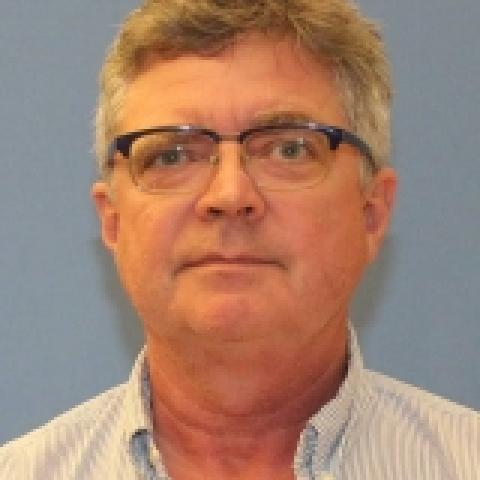
Yingyan (Celine) Lin is currently an Associate Professor in the School of Computer Science at the Georgia Institute of Technology. She leads the Efficient and Intelligent Computing (EIC) Lab, which focuses on developing efficient machine learning systems via cross-layer innovations from algorithm to architecture down to chip design, aiming to promote green AI and enable ubiquitous machine learning powered intelligence. She received a Ph.D. degree in Electrical and Computer Engineering from the University of Illinois at Urbana-Champaign in 2017. 

Prof. Lin is a Facebook Research Award (2020), NSF CAREER Award (2021), IBM Faculty Award (2021), and Meta Faculty Research Award (2022) recipient, and received the ACM SIGDA Outstanding Young Faculty Award in 2022. She was selected as a Rising Star in EECS by the 2017 Academic Career Workshop for Women at Stanford University. She received the Best Student Paper Award at the 2016 IEEE International Workshop on Signal Processing Systems (SiPS 2016), and the 2016 Robert T. Chien Memorial Award for Excellence in Research at UIUC. Prof. Lin is currently the lead PI of multiple multi-university projects, such as RTML and 3DML, and her group has been funded by NSF, NIH, DARPA, SRC, ONR, Qualcomm, Intel, HP, IBM, and Meta. Her group’s research won first place in both the University Demonstration at DAC 2022 and the ACM/IEEE TinyML Design Contest at ICCAD 2022, and was selected as an IEEE Micro Top Pick of 2023

Associate Professor
Additional Research
  • AI Systems
  • Energy-efficient AI/ML Algorithms
  • Green AI
  • Machine Learning
  • Trustworthy AI for Physics
IRI/Group and Role
Data Engineering and Science > Faculty
Data Engineering and Science
University, College, and School/Department
Georgia Institute of Technology > College of Computing
Research Areas
Artificial Intelligence

Pan Li

Pan Li's profile picture
panli@gatech.edu

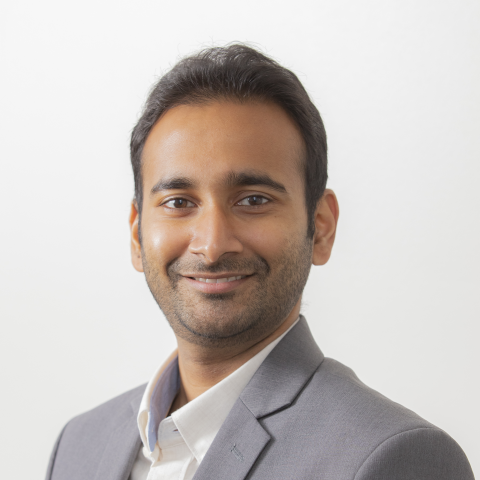
Pan Li joined Georgia Tech in 2023 Spring. Before that, Pan Li worked at the Purdue Computer Science Department as an assistant professor from the 2020 fall to the 2023 Spring. Before joining Purdue, Pan worked as a postdoc at Stanford Computer Science Department from 2019 to 2020. Pan did his Ph.D. in Electrical and Computer Engineering at the University of Illinois Urbana-Champaign. Pan Li has got the NSF CAREER award, the Best Paper award from the Learning on Graph Conference, Sony Faculty Innovation Award, JPMorgan Faculty Award.

Assistant Professor
Office
CODA Number S1219
Additional Research
  • Artificial Intelligence
  • Large-Scale Graphs
  • Machine Learning
  • Trustworthy AI for Physics
IRI/Group and Role
Data Engineering and Science > Faculty
Data Engineering and Science
University, College, and School/Department
Georgia Institute of Technology > College of Engineering > School of Electrical and Computer Engineering
Research Areas
Artificial Intelligence
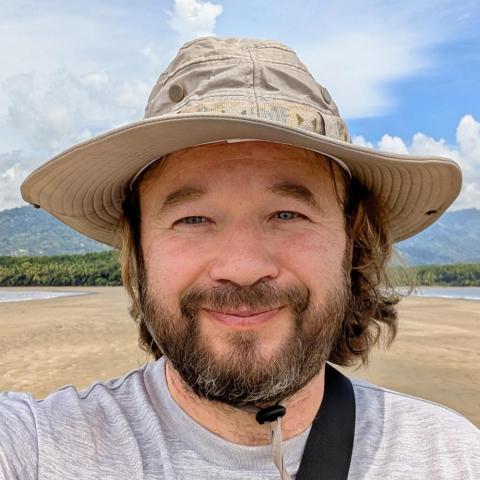
Anton Leykin

Anton Leykin's profile picture
leykin@math.gatech.edu

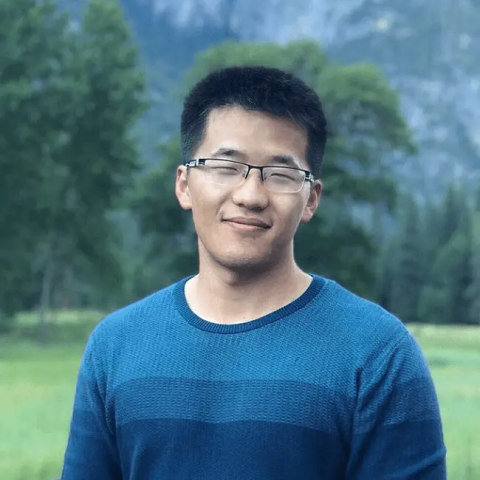
Anton Leykin conducts research in nonlinear algebra with an emphasis on algorithm design and applications. His recent work centers on computer algebra, spanning topics from computer-assisted proofs to hybrid symbolic–numerical computation to parallel computing. He is also interested in applying methods from algebra and geometry to problems in science and engineering, with applications in areas such as computer vision and astrodynamics.

Professor; School of Mathematics
Office
Skiles 109
IRI/Group and Role
Data Engineering and Science > Faculty
Data Engineering and Science
University, College, and School/Department
Georgia Institute of Technology > College of Sciences > School of Mathematics

Kendra Lewis-Strickland

Kendra Lewis-Strickland's profile picture
klewis-strickland@gatech.edu

Dr. Lewis-Strickland is a program planning and implementation professional with over 8 years of experience directing programs that build leadership, professional, and skills capacity for students, alumni, and community members. Currently, she is the Program Coordinator for the South Big Data Hub in the Institute for Data Engineering and Sciences. In addition, she manages the operations of initiatives that support broadening participation in data science through community consortium building. She earned her Doctorate of Education in Organizational Leadership, emphasizing Higher Education Leadership from Grand Canyon University. Her dissertation empowered black women to share their leadership resilience experiences to inspire and support aspiring black women leaders. In addition, Dr. Lewis-Strickland is a member of numerous professional organizations such as the International Leadership Association and the Network for Change and Continuous Innovation.

Program Coordinator
IRI/Group and Role
Data Engineering and Science > Staff
Data Engineering and Science
University, College, and School/Department
Georgia Institute of Technology

Christopher Le Dantec

 Christopher Le Dantec's profile picture
ledantec@gatech.edu

Chris Le Dantec is currently a Professor of the Practice and Director of Digital Civic Initiatives in the Khoury College of Computer Science and the College of Arts, Media and Design at Northeastern University. 

He is also an Associate Professor at the Georgia Institute of Technology, jointly appointed in the School of Interactive Computing and the School of Literature, Media, and Communication. He teaches in the Human-Centered Computing, HCI, and Digital Media programs.

Associate Professor
IRI/Group and Role
Data Engineering and Science > Research Community
Data Engineering and Science
University, College, and School/Department
Georgia Institute of Technology

Michael Lacey

Michael Lacey's profile picture
lacey@math.gatech.edu

Michael Thoreau Lacey is an American mathematician. Lacey received his Ph.D. from the University of Illinois at Urbana-Champaign in 1987, under the direction of Walter Philipp. His thesis was in the area of probability in Banach spaces, and solved a problem related to the law of the iterated logarithm for empirical characteristic functions. In the intervening years, his work has touched on the areas of probability, ergodic theory, and harmonic analysis. 

His first postdoctoral positions were at the Louisiana State University, and the University of North Carolina at Chapel Hill. While at UNC, Lacey and Walter Philipp gave their proof of the almost sure central limit theorem. 

He held a position at Indiana University from 1989 to 1996. While there, he received a National Science Foundation Postdoctoral Fellowship, and during the tenure of this fellowship he began a study of the bilinear Hilbert transform. This transform was at the time the subject of a conjecture by Alberto Calderón that Lacey and Christoph Thiele solved in 1996, for which they were awarded the Salem Prize. Since 1996, he has been a Professor of Mathematics at the Georgia Institute of Technology. In 2004, he received a Guggenheim Fellowship for joint work with Xiaochun Li. In 2012 he became a fellow of the American Mathematical Society.

Professor
IRI/Group and Role
Data Engineering and Science > Research Community
Data Engineering and Science
University, College, and School/Department
Georgia Institute of Technology

Srijan Kumar

 Srijan Kumar's profile picture
srijan@gatech.edu

Prof. Srijan Kumar is an Assistant Professor in the School of Computational Science and Engineering, College of Computing, Georgia Institute of Technology. His research develops data science solutions to address the high-stakes challenges on the web and in the society. He has pioneered the development of user models and network science tools to enhance the well-being and safety of people. Applications of his research widely span e-commerce, social media, finance, health, web, and cybersecurity. His methods to predict malicious users and false information have been widely adopted in practice (being used in production at Flipkart and Wikipedia) and taught at graduate level courses worldwide. He has received several awards including the ACM SIGKDD Doctoral Dissertation Award runner-up 2018, Larry S. Davis Doctoral Dissertation Award 2018, and best paper awards from WWW and ICDM. His research has been the subject of a documentary and covered in popular press, including CNN, The Wall Street Journal, Wired, and New York Magazine. He completed his postdoctoral training at Stanford University, received a Ph.D. in Computer Science from University of Maryland, College Park, and B.Tech. from Indian Institute of Technology, Kharagpur.

Assistant Professor
Additional Research

Online malicious actors and dangerous content threaten public health, democracy, science, and society. To combat these threats, I build technological solutions, including accurate and robust models for early identification, prediction and attibution, as well as social mitigation solutions, such as empowering people to counter online harms. I have conducted the largest study of malicious sockpuppetry across nine platforms, ban evasion/recidivism on online platforms, and some of the earliest works on online misinformation. I am the one of the first to investigate of the reliability of web safety models used in practice, including Facebook's TIES and Twitter's Birdwatch. My work is one of the first to study whole-of-society solutions to mitigate online misinformation.

IRI/Group and Role
Data Engineering and Science > Affiliated Faculty
Data Engineering and Science
University, College, and School/Department
Georgia Institute of Technology
Research Areas
Artificial Intelligence

Giri Krishnan

Placeholder for headshot
giri@gatech.edu

Dr Krishnan is research professor in the Georgia Tech’s Interdisciplinary Research Institute, Institute for Data Engineering and Science, School of Computational Science and Engineering, College of Computing. He is an associate director of the Center for AI in Science and Engineering. His current interest is in developing AI methods for computational science problems across many domains. He is a computational neuroscientist by training, with past work spanning across a wide range of computational modeling and AI methods. His group's current focus is on generative methods for computational workflow, neural approaches for accelerating compute intensive problems and applying interpretable methods to scientific AI for advancing scientific understanding.

Prior to joining Georgia Tech, he was research scientist at UC San Diego and his research involved developing large-scale modeling of the brain to study sleep, memory and learning. In addition, he has contributed towards neuro-inspired AI and neuro-symbolic approaches. He is broadly interested in the emergence of intelligent behavior from neural computations in the brain and AI systems. 

Dr Krishnan has more than 50 publications and his research has been supported by multiple grants from NIH and NSF. He is passionate about open-science and reproducible science and strongly believes that progress in science requires reproducibility.

Associate Director, Center for Artificial Intelligence in Science and Engineering (ARTISAN)
Principal Research Scientist
Phone
404.894.2132
Office
CODA Building
Additional Research

AI : Deep learning, Neuro-symbolic ApproachesGeosciences.Molecular DynamicsNeuroscience : Theoretical and computational modeling

IRI/Group and Role
Data Engineering and Science > Faculty
Data Engineering and Science > Leadership
Data Engineering and Science
University, College, and School/Department
Georgia Institute of Technology > College of Computing > School of Computational Science and Engineering
Research Areas
Artificial Intelligence

Julia Kubanek

Julia Kubanek's profile picture
julia.kubanek@biosci.gatech.edu

Julia Kubanek serves as Georgia Tech’s Vice President for Interdisciplinary Research and is a professor in the School of Biological Sciences and the School of Chemistry and Biochemistry. In this role, she oversees and supports interdisciplinary activities at Georgia Tech including the Interdisciplinary Research Institutes (IRIs); the Pediatric Technology Center (PTC), the Novelis Innovation Hub; the Center for Advanced Brain Imaging (CABI); and the Global Center for Medical Innovation (GCMI). She also partners across the institute on developing and advancing new research initiatives based on student and faculty interests, expertise, and societal need.

Kubanek has held several previous leadership roles at Georgia Tech, including Associate Dean for Research in the College of Sciences and Associate Chair in the School of Biological Sciences. She joined the faculty at Georgia Tech in 2001. Her areas of research interest include chemical signaling among organisms (especially in aquatic systems), natural products chemistry, metabolomics, chemical biology, and drug discovery. She has authored approximately 100 research articles on marine plankton and coral reef chemical ecology, and on the discovery, mechanism of action, and biosynthesis of marine natural products. She was awarded the NSF CAREER Award in 2002, the Presidential Early Career Award for Scientists and Engineers (PECASE) in 2004, and was elected Fellow of the American Association for the Advancement of Science (AAAS) in 2012. In 2016, she served as chair of the Gordon Research Conference in Marine Natural Products; since 2016, she has chaired the Scientific Advisory Board of the Max Planck Institute for Chemical Ecology. Kubanek received her B.Sc. in Chemistry from Queen’s University, Canada, in 1991 and her Ph.D. in at the University of British Columbia in 1998, and performed postdoctoral research at the University of California – San Diego and the University of North Carolina at Wilmington.

Professor
Vice President of Interdisciplinary Research
Phone
404-894-8424
Office
ES&T 2242
Additional Research

All organisms use chemicals to assess their environment and to communicate with others. Chemical cues for defense, mating, habitat selection, and food tracking are crucial, widespread, and structurally and functionally diverse. Yet our knowledge of chemical signaling is patchy, especially in marine environments. In our research we ask, "How do marine organisms use chemicals to solve critical problems of competition, disease, predation, and reproduction?" Our group uses an integrated approach to understand how chemical cues function in ecological interactions, working from molecular to community levels. We also use ecological insights to guide discovery of novel pharmaceuticals and molecular probes. In collaboration with other scientists, our most significant scientific achievements to date are: 1) characterizing the unusual molecular structures of antimicrobial defenses that protect algae from pathogens and which show promise to treat human disease; 2) understanding that competition among single-celled algae (phytoplankton) is mediated by a complex interplay of chemical cues that affect harmful algal bloom dynamics; 3) unraveling the molecular modes of action of antimalarial natural products towards developing new treatments for drug-resistant infectious disease; 4) discovering that progesterone signaling and quorum sensing are key pathways in the alternating sexual and asexual reproductive strategy of microscopic invertebrate rotifers - animals whose evolutionary history was previously thought to preclude either cooperative behavior (quorum sensing) typically associated with bacteria and hormonal regulation via progesterone typically seen in vertebrates; 5) identifying a novel aversivechemoreception pathway in predatory fish thatresults inrapid recognition and rejectionofchemically defended foods, thereby protecting these foods (prey) from predators. Ongoing projects include: 1) Waterborne chemical cues in the marine plankton: a systems biology approach (including metabolomics); 2) Exploration, conservation, and development of marine biodiversity in Fiji and the Solomon Islands (including drug discovery, mechanisms of action, and chemical ecology); 3) The role of sensory environment and predator chemical signal properties in determining non-consumptive effect strength in cascading interactions on oyster reefs; 4) Regulation of red tide toxicity by chemical cues from marine zooplankton; 5) Chemoreception of prey chemical defenses on tropical coral reefs.

IRI/Group and Role
Bioengineering and Bioscience > Faculty
Data Engineering and Science > Faculty
Data Engineering and Science
Space > Faculty
University, College, and School/Department
Georgia Institute of Technology > College of Sciences > School of Biological Sciences

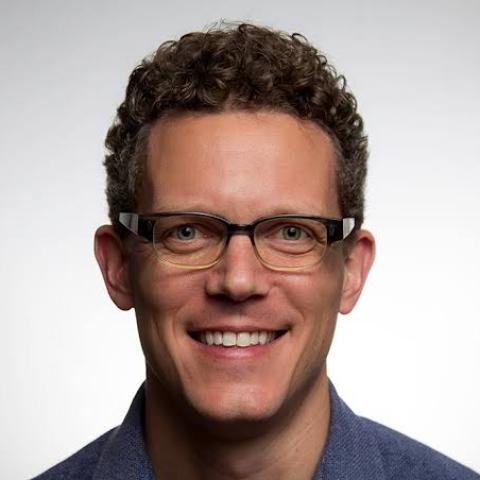
Tushar Krishna

Tushar Krishna's profile picture
tushar@ece.gatech.edu

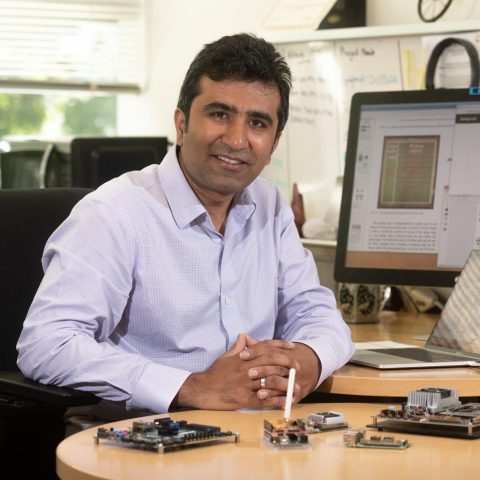
Tushar Krishna is an Associate Professor in the School of Electrical and Computer Engineering at Georgia Tech. He also holds the ON Semiconductor Junior Professorship. He has a Ph.D. in Electrical Engineering and Computer Science from MIT (2014), a M.S.E in Electrical Engineering from Princeton University (2009), and a B.Tech in Electrical Engineering from the Indian Institute of Technology (IIT) Delhi (2007). Before joining Georgia Tech in 2015, Krishna spent a year as a researcher at the VSSAD group at Intel, Massachusetts.

Krishna’s research spans computer architecture, interconnection networks, networks-on-chip (NoC) and deep learning accelerators – with a focus on optimizing data movement in modern computing systems. Three of his papers have been selected for IEEE Micro’s Top Picks from Computer Architecture, one more received an honorable mention, and three have won best paper awards. He received the National Science Foundation (NSF) CRII award in 2018, a Google Faculty Award in 2019, and a Facebook Faculty Award in 2019 and 2020.

ON Semiconductor Junior Professor, School of Electrical and Computer Engineering
Phone
404.894.9483
Office
Klaus 2318
Additional Research

Networks-on-Chip (NoC)Interconnection NetworksReconfigurable Computing and FPGAsHeterogeneous ArchitecturesDeep Learning Accelerators

IRI/Group and Role
Data Engineering and Science > Faculty
Matter and Systems > Affiliated Faculty
Data Engineering and Science
University, College, and School/Department
Georgia Institute of Technology > College of Engineering > School of Electrical and Computer Engineering
Research Areas
Artificial Intelligence
Subscribe to Data Engineering and Science