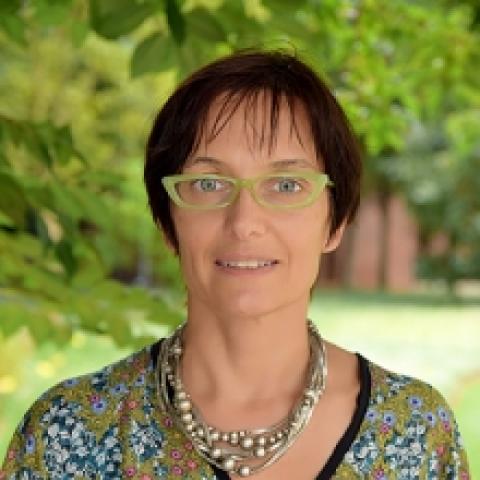
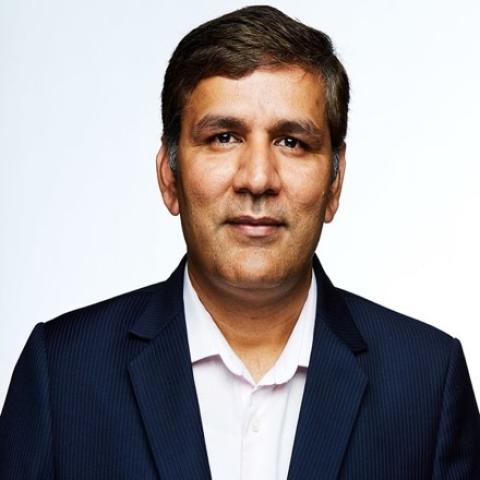
Daniel Campbell
Neuromodulation of peripheral nerve activity real-time control methods applied to electrophysiology measurements Autonomic modulation of visceral organs. Our laboratory combines engineering and neuroscience to tackle real-world problems. We utilize techniques including intracellular and extracellular electrophysiology, computational modeling, and real-time computing.
Since the fall of 2000, Robert has taught several courses in the College of Management at the Bachelors, Masters and Executive Masters levels. Quantitative course experience includes Analytic Tools (statistics, regression analysis and simulation) and Management Science (linear programming, network models, decision analysis, queuing models, project scheduling and simulation). Experience teaching qualitative (case-based) courses include Operations Management, Service Operations Management and Management of Technology. He has won several student-elected teaching awards including College of Management Undergraduate Professor of the Year (2001, 2004 and 2007), MBA Elective Professor or the Year (Service Operations – 2003), MBA Core Professor of the Year (Analytic Tools – 2008) and Evening MBA Elective Professor or the Year (Management of Technology – 2011).
Prior teaching experience includes four years at the Georgia State University Robinson College of Business where he taught MBA-level courses in Operations Management, Project Management, Operations Strategy, Global Operations Management and Applications of Simulation in Management.
Current research interests include empirical research in Service industries, outsourcing in both manufacturing and service industries, and applications of evidence based management techniques. He is a co-author of two published papers and a case study and has several working papers in various stages of completion. He has made 22 technical presentations at academic conferences since 1994.
Educational background includes a BS in Engineering Science from the University of Tennessee – Knoxville, an MBA from Lynchburg College (Virginia) and he has completed three of four parts of a PhD in Operations Management from Georgia Tech College of Management (ABD-All but Dissertation).
Eight years of professional experience prior to academics includes jet engine structural design engineer at Pratt & Whitney Aircraft (West Palm Beach, FL) and as a product engineer and then an engineering manager at Babcock & Wilcox – Naval Nuclear Fuel Division (Lynchburg, VA).
Pam Buffington is the executive director of Foundational Infrastructure & Technology within the Office of Information Technology (OIT). Pam has extensive experience at Georgia Tech and has worked in a variety of roles and responsibilities since 1995, enabling innovative uses of information technologies in both research and academic/instructional capacities. Most recently, she served as director of Research Cyberinfrastructure & Computing – guiding the work of the Partnership for an Advanced Computing Environment – or PACE. PACE is a collaboration between Georgia Tech faculty and OIT with a focus on high performance computing infrastructure with technical support services. Prior to her time leading PACE, Pam led OIT’s Digital Learning Team as associate director of Academic Technologies and steered external relations activities for Center for 21st Century Universities, or C21U.
Pam is also a published researcher who most recently co-authored Semi-Automatic Hybrid Software Deployment Workflow in a Research Computing Center. An official “Double Jacket,” Pam earned both her undergraduate (BS’95) and Master of Business Administration (MBA ’23) degrees from Georgia Tech.
Sam Brown's lab studies the multi-scale dynamics of infectious disease. Their goal is to improve the treatment and control of infectious diseases through a multi-scale understanding of microbial interactions. Their approach is highly interdisciplinary, combining theory and experiment, evolution, ecology and molecular microbiology in order to understand and control the multi-scale dynamics of bacteria pathogens.
Dr. Annalisa Bracco is a professor at Georgia Tech with extensive background in computational fluid dynamics and physical oceanography. Her research interests include coastal ocean circulation, with focus on meso- and submesoscale processes, ocean predictability and inverse dynamics, impacts of physical forcing on ecosystems, and climate model validation. Her group has been involved in field collections during the Deepwater Horizon spill (July/Aug. 2010) and was back in the Gulf in the summer of 2011.
Dr. Borodovsky and his group develop machine learning algorithms for computational analysis of biological sequences: DNA, RNA and proteins. Our primary focus is on prediction of protein-coding genes and regulatory sites in genomic DNA. Probabilistic models play an important role in the algorithm framework, given the probabilistic nature of biological sequence evolution.
Development and applicaton of new machine learning and pattern recognition methods in bioinformatics and biological systems. Development and applicaton of new machine learning and pattern recognition methods in bioinformatics and biological systems. Chromatin; Epigenetics; Bioinformatics
Dr. Bhasin's laboratory has developed strategies for analysis of transcriptome, epigenome, and proteomics data to perform multi-scale modeling of interaction among different cells molecular level and to identify novel biomarkers. He and his team are currently focusing on developing novel single-cell omics approaches to understand disease heterogeneity and the impact of treatments at single-cell resolution. He is involved in developing approaches for the analysis of multi-dimensional single-cell data by developing innovative approaches for single-cell sparsity, batch correction, annotation, and integration. Using these approaches, his group is working toward understanding: 1. Understanding heterogeneity and relapse mechanisms in pediatric hematological malignancies 2. Understanding heterogeneity and progression in multiple myeloma. 3. Development of molecular diagnostics platforms for cancer diagnosis and prognosis 4. Identification of biomarkers for early detection of pancreatic cancer, glioblastoma, and colon cancer 5. Artificial intelligence-based histopathology and radiology cancer image analysis approaches 6. Single-cell Atlas for Pediatric Cancers Additionally, our group is also developing Biomarkers associated with impaired healing of Diabetic Foot Ulcers using single-cell profiling and deep learning-driven wound image analysis. We are working collaboratively to develop innovative genomics and clinical data-driven drug repurposing approaches.
Raheem Beyah, Ph.D., is associate chair for Strategic Initiatives and Innovation, and the Motorola Foundation Professor in the School of Electrical & Computer Engineering at the Georgia Institute of Technology. His research is at the intersection of the networking and security fields. He leads the Georgia Tech Communications Assurance and Performance Group (CAP), which develops algorithms that enable a more secure network infrastructure with computer systems that are more accountable and less vulnerable to attacks. Through experimentation, simulation, and theoretical analysis, CAP provides solutions to current network security problems and to long-range challenges as current networks and threats evolve. Dr. Beyah has served as guest editor and associate editor of several journals in the areas of network security, wireless networks, and network traffic characterization and performance. He received the National Science Foundation CAREER award in 2009 and was selected for DARPA's Computer Science Study Panel in 2010. He is a member of NSBE, ASEE, and is a senior member of IEEE and ACM. Beyah is a native of Atlanta, Georgia. He received his Bachelor of Science in Electrical Engineering from North Carolina A&T State University in 1998. He received his Master's and Ph.D. in Electrical and Computer Engineering from Georgia Tech in 1999 and 2003, respectively. Prior to returning to Georgia Tech, Dr. Beyah was a faculty member in the Department of Computer Science at Georgia State University, a research faculty member with the Georgia Tech Communications Systems Center (CSC), and a consultant in Andersen Consulting's (now Accenture) Network Solutions Group.
Mobile & Wireless Communications; Network Science