Jianhua Xiong

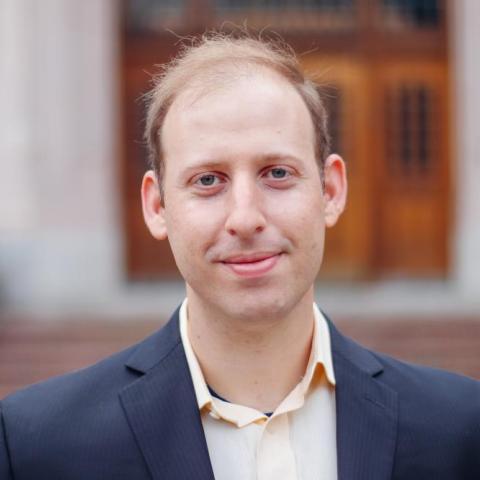
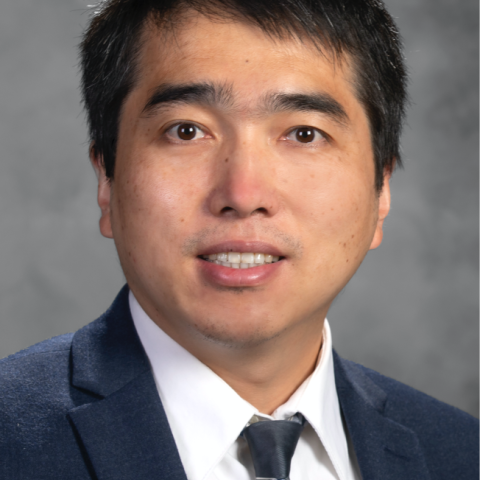
headshot of Jianhua Xiong
jianhua.xiong@emory.edu

Dr. Jianhua Xiong is an Assistant Professor of Urology at Emory University School of Medicine. The laboratory investigates the metabolic regulation of cell fate and function, with a focus on urological disorders and cancer. Research explores how fatty acids influence cell behavior in T cells, endothelial cells, and cancer cells. A multidisciplinary approach integrates cell and molecular biology, biochemistry, super-resolution imaging, transcriptomics, proteomics, metabolomics, histology, tissue studies, and mouse models to understand cellular mechanisms and identify potential therapeutic strategies.

Assistant Professor
Additional Research

Biochemicals

Bioinformatics

Biotechnology

Cancer Immunotherapy

Health & Life Sciences

IRI/Group and Role
Bioengineering and Bioscience > Faculty
University, College, and School/Department
Emory University
Research Areas
Bioengineering and Bioscience
  • Cancer Biology
  • Drug Design, Development and Delivery
  • Molecular, Cellular, and Tissue Biomechanics
  • Regenerative Medicine
  • Systems Biology

Daniel Hass

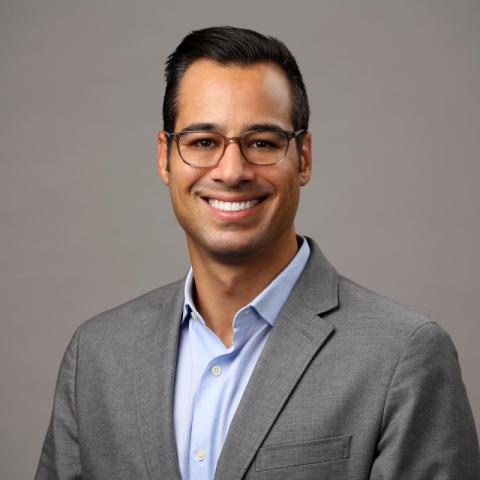
Assistant Professor Daniel Hass
dthass@emory.edu

Vision is energy-intensive. Mutations that impair a person's ability to generate energy disproportionately affect vision. Common diseases that cause blindness may also be related to a failure of the eye to generate sufficient energy to serve its needs. Our goal is to understand the metabolic function of individual cells in visual tissues, primarily the retina and retinal pigment epithelium. We want to know which cells in the eye carry out particular metabolic processes (glycogen synthesis, nucleotide synthesis, etc.), what causes a cell to be metabolically 'wired' as it is, the extent to which retina generates metabolic intermediates de novo vs. from circulating, and the extent to which neurodegenerative diseases such as age-related macular degeneration and glaucoma are linked to metabolic impairments.

Assistant Professor
Office
Emory Clinic B, Room 5602
IRI/Group and Role
Bioengineering and Bioscience > Faculty
University, College, and School/Department
Emory University
Research Areas
Bioengineering and Bioscience
  • Neuroscience
  • Systems Biology
  • Chemical Biology

Jacob Berchuck

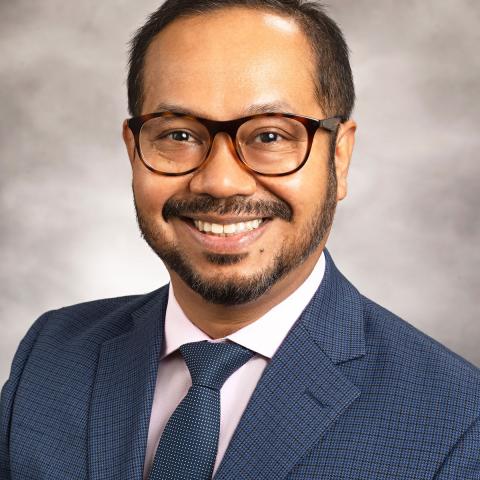
Jacob Berchuck's profile picture
jberchuck@emory.edu

Dr. Jacob Berchuck is a Medical Oncologist at the Winship Cancer Institute and Assistant Professor in the Department of Hematology and Medical Oncology at Emory University School of Medicine. Prior to joining Emory, Dr. Berchuck was an Assistant Professor of Medicine at Harvard Medical School and a Medical Oncologist at the Dana-Farber Cancer Institute. In addition to caring for patients, Dr. Berchuck leads a translational research lab focused on utilizing "liquid biopsy" tools that enable multi-omic profiling of tumor-derived cell-free DNA circulating in the bloodstream to pioneer advances that transform how we manage and treat individuals living with cancer. The core research objectives of the Berchuck Lab include include developing biomarkers to guide treatment decisions, working towards a future where a simple blood draw can enable real-time insights to choose the right treatment for the right patient at the right time, and studying mechanisms of therapeutic resistance. Dr. Berchuck’s research has been published in several high-impact journals, including Nature Medicine, Cancer Cell, Annals of Oncology, JAMA Oncology, Clinical Cancer Research, and others.

Assistant Professor of Hematology and Medical Oncology
Additional Research

Cancer Biology, Diagnostics

IRI/Group and Role
Bioengineering and Bioscience > Faculty
University, College, and School/Department
Emory University
Research Areas
Bioengineering and Bioscience

Anupam Patgiri

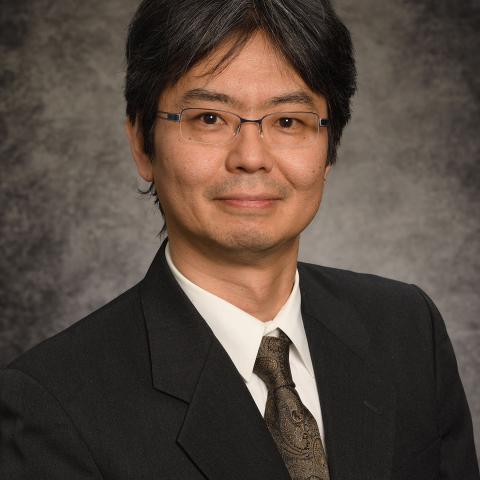
Anupam Patgiri's profile picture
anupam.patgiri@emory.edu

Anupam received his bachelor’s degree from Gauhati University (India) and a master’s degree in chemistry from the Indian Institute of Technology Guwahati (India). He then moved to New York City to pursue a Ph.D. in chemical biology in Prof. Bobby Arora’s lab at NYU. In the Arora lab, Anupam developed chemical inhibitors of therapeutically relevant protein-protein interactions. His thesis project resulted in the discovery of the first direct inhibitor of oncoprotein Ras. Anupam then spent a short stint as a postdoctoral fellow in Prof. Tarun Kapoor’s lab at the Rockefeller University before moving to Prof. Vamsi Mootha’s lab at Harvard Medical School. In the Mootha lab, Anupam engineered an enzyme called “LOXCAT” as a potential therapy for mitochondrial disease. In his independent lab at Emory University, Anupam is developing strategies to restore mitochondrial and metabolic homeostasis in disease as potential therapies. 

Education

Postdoctoral Fellow Harvard Medical School 

Postdoctoral Fellow Rockefeller University 

Ph.D. New York University 

MSc Indian Institute of Technology Guwahati, India

BSc Gauhati University, India  

Awards and Honors

Keystone Symposia Future of Science Fund Scholarship (2020)

Tosteson & Fund Medical Discovery Fellowship (2017)

Helen Hay Whitney Postdoctoral Fellowship (2013-16)

Margaret and Herman Sokol Scholarship at NYU (2010-2011)

GATE fellowship, Govt. of India (2006)

Junior Research Fellowship, Govt. of India (2005)

Summer Research Fellowship, Indian Academy of Sciences (2004)

Assistant Professor
IRI/Group and Role
Bioengineering and Bioscience > Faculty
Bioengineering and Bioscience
University, College, and School/Department
Emory University

Shoichiro Ono, Ph.D.

Shoichiro Ono, Ph.D. 's profile picture
sono@emory.edu

The Shoichiro's lab primary research interest is the mechanisms that regulate dynamic rearrangement of the actin cytoskeleton during various cellular events including development, cell movement, cytokinesis, and human diseases. We have been studying this problem using the nematode Caenorhabditis elegans as a model system. C. elegans has been used to study many aspects of development, because of its relative simplicity in the body patterning, and application of genetics, molecular biology, biochemistry, and cell biology. We are especially interested in the functions of the actin depolymerizing factor (ADF)/cofilin family of actin-binding proteins, which are required for enhancement of actin filament dynamics. We found that two ADF/cofilin proteins that are generated from the unc-60 gene have different actin-regulating activities. Mutation and expression analyses demonstrated that one of the two ADF/cofilin isoforms (UNC-60B) was specifically required for organized assembly of actin filaments in muscle. ADF/cofilin promotes depolymerization and severing of actin filaments, but tropomyosin inhibits this effect by stabilizing filaments. The other ADF/cofilin isoform (UNC-60A) is highly expressed in early embryos and regulates cytokinesis and embryonic patterning. In addition, we found that actin-interacting protein 1 (AIP1) is a new regulator of muscle actin filaments. AIP1 (UNC-78) specifically interacts with ADF/cofilin-bound actin filaments and enhances filament depolymerization. We also found that the gene product of sup-12 (an RBM24 homolog) regulates alternative splicing of the unc-60 gene and is required for generation of the unc-60B mRNA. We are currently studying functions of these proteins and other regulators of actin dynamics in several developmental aspects in C. elegans.

Associate Professor of Pathology and Laboratory Medicine
Associate Professor of Cell Biology
Phone
404.727.3916
Office
615 Michael Street, Whitehead Biomedical Research Building Room 105N, Atlanta, GA 30322
IRI/Group and Role
Bioengineering and Bioscience > Faculty
Bioengineering and Bioscience
University, College, and School/Department
Emory University

Anthony Law

Anthony Law's profile picture
anthony.law@emory.edu

Anthony B. Law, MD, PhD, is an assistant professor in the Department of Otolaryngology at Emory University School of Medicine. A board certified head and neck surgeon, Dr. Law's clinical interest include the diagnosis and treatment of diseases and pathology of the upper aerodigestive tract, particularly laryngeal cancer. He treats disorders involving voice, airway, and swallowing using a wide array of techniques ranging from open surgery, endoscopic minimally invasive surgery, and laser surgery.

Dr. Law earned his MD and also his PhD in biophysics and biochemistry from the University of North Carolina in Chapel Hill, NC. He completed his residency in otolaryngology/head & neck surgery and his fellowship in laryngology at University of Washington in Seattle, WA.

Dr. Law's primary research interests lay in modeling of complex biology and clinical systems. He has broad experience in mathematical modeling and computational models. Historically, he has used machine learning to predict rates and locations of metastasis in head and neck squamous cell carcinoma. His current focus is in applying machine learning to characterize and categorize pathology of the larynx.

Assistant Professor, Department of Otolaryngology, Head and Neck Surgery
Phone
(404) 778-0278
IRI/Group and Role
Bioengineering and Bioscience > Faculty
Bioengineering and Bioscience
University, College, and School/Department
Emory University

Adam Klein

Adam Klein's profile picture
aklein4@emory.edu

Adam M. Klein, MD, FACS, is Willard and Lillian Hackerman Professor in Voice in the Department of Otolaryngology at Emory University School of Medicine. Dr. Klein serves as Director of the Emory Voice Center and as Chief of the Division of Laryngology. Board certified with the American Board of Otolaryngology, Dr. Klein's clinical specialties include general otolaryngology, laryngeal disorders and the professional voice. 

Dr. Klein is a member of the Cancer Prevention and Control Research Program at Winship Cancer Institute. He is a Fellow of The American College of Surgeons and American Laryngological Association. He holds professional memberships with American Academy of Otolaryngology-Head and Neck Surgery, American Broncho-Esophagological Association, and Georgia Society for Otolaryngology.

Director, Emory Voice Center
Chief, Division of Laryngology
Willard and Lillian Hackerman Professor in Voice
Department of Otolaryngology - HNS
Phone
404-686-6774
Office
Emory University School of Medicine
Additional Research
Medical and Surgical Device Design, Development and Delivery
IRI/Group and Role
Bioengineering and Bioscience > Faculty
Bioengineering and Bioscience
University, College, and School/Department
Emory University

Steven Goudy

Steven Goudy's profile picture
steven.goudy@emory.edu

Steven L. Goudy, MD, MBA, professor of otolaryngology, director of pediatric otolaryngology at Emory University School of Medicine, founding director of the ACGME-accredited pediatric otolaryngology fellowship at Emory, and medical director of otolaryngology at Childrens Healthcare of Atlanta, is dedicated to providing top-level surgical care to the children of Georgia. 

His clinical practice focuses on maxillary development, Pierre Robin sequence, vascular malformations, and velopharyngeal insufficiency. Working closely with colleagues at the Centers for Disease Control and Prevention, Georgia Institute of Technology, and other local and state entities, Dr. Goudy and his team have developed novel and innovative solutions for care delivery that have brought value to families and improved treatment for patients. 

Dr. Goudys research is focused on defining the biologic processes that guide facial formation for the development of better approaches to regenerating damaged and deficient facial bone and improving wound healing after surgery or injury. Current research projects include an NIH-funded studies to develop immunological approaches to improving oral cavity wound healing, leveraging the oral microbiome to improve oral wound healing and a project to devise cranial facial bone regeneration techniques for pediatric bone replacement procedures. 

Dr. Goudy is dedicated to international service, particularly in the areas of surgical education and delivering surgical care to children with limited access to healthcare. He has traveled globally and performed mission work for more than 20 years in such countries as Guatemala and the Philippines, providing free surgical care to patients with cleft lip and cleft palate and engaging in medical education activities.

Associate Professor
Director, Division of Pediatric Otolaryngology Children's Healthcare of Atlanta
CEO, BeeClear LLC
Additional Research
Dr. Goudy’s lab focuses on craniofacial bone regeneration and the basic biologic mechanisms that control facial bone and soft tissue regeneration. He currently collaborates with investigators at Georgia Institute of Technology and is supported by the National Institutes of Health (NIH) and Children’s Research Trust.
IRI/Group and Role
Bioengineering and Bioscience > Faculty
Bioengineering and Bioscience
University, College, and School/Department
Emory University

Zachary Danziger

Zachary Danziger's profile picture
zachary.danziger@emory.edu

The effortlessness of moving your body belies the lurking complexity driving it. We are trying to understand how the nervous system makes something so complicated as controlling a human body feel so natural. We use human subjects studies, animal experiments, mathematical biology, and artificial intelligence to understand neural control of movement. New theories and insight promise advances in physical therapy, human-machine collaboration, brain-computer interfaces, neural modulation of peripheral reflexes, and more.

Associate Professor Division of Physical Therapy, Department of Rehabilitation Medicine
Associate Professor, W.H. Coulter Department of Biomedical Engineering
Phone
404-712-4801
IRI/Group and Role
Bioengineering and Bioscience > Faculty
Bioengineering and Bioscience
University, College, and School/Department
Emory University
Research Areas
Artificial Intelligence
Subscribe to Emory University