Scott Bair
Dr. Arvanitis joined Georgia Institute of Technology as a joint Assistant Professor at the George W. Woodruff School of Mechanical Engineering and the Wallace H. Coulter Department of Biomedical Engineering in August 2016. Before joining Georgia Institute of Technology he was Instructor (Research Faculty) at Harvard Medical Scholl and Brigham and Women’s Hospital. Dr. Arvanitis has also worked as a research fellow in the Biomedical Ultrasonics, Biotherapy and Biopharmaceuticals Laboratory at the Institute of Biomedical Engineering at the University of Oxford.
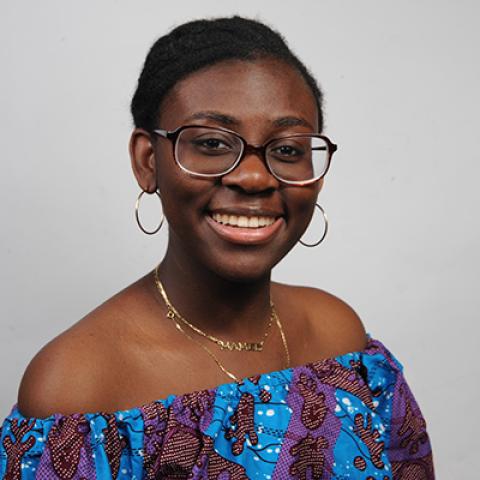
Bettina Arkhurst is a Ph.D. student in the George W. Woodruff School of Mechanical Engineering at Georgia Tech. Her research lies at the intersection of energy, design and equity. She is seeking to create frameworks for mechanical engineers to apply as they design energy technologies for all communities. Bettina has participated in research projects spanning disciplines such as parasitology, neuroscience and thermal metrology. As an undergraduate, Bettina found her passions for community-building, mental health, engineering and equity. Today, she leads her department’s graduate student mental health committee and is a member of the department’s diversity and inclusion council. Bettina is also a National Science Foundation Graduate Research Fellow and Alfred P. Sloan Scholar. She holds a bachelor’s degree in mechanical engineering from MIT.
Antoniou started with the Woodruff School in Fall 2008. Prior, she worked as a postdoctoral research associate at the Center for Integrated Nanotechnlogies (CINT) at Los Alamos National Laboratory.
Materials failure and reliability, fracture and fatigue, stress corrosion, and nanostructured materials
Dr. Alexeev came to Georgia Tech at the beginning of 2008 as an assistant professor. His research background is in the area of fluid mechanics. He uses computer simulations to solve engineering problems in complex fluids, multiphase flows, fluid-structure interactions, and soft materials. As a part of his graduate research at Technion, he investigated resonance oscillations in gases and probed how periodic shock waves excited at resonance can enhance agglomeration of small airborne particles, a process which is important in air pollution control technology. He also investigated wave propagation in vibrated granular materials and its effect on fluidization of inelastic granules. During postdoctoral studies at TU Darmstadt, he examined how microstructures on heated walls can be harnessed to control thermocapillary flows in thin liquid films and to enhance heat transport in the fluid. That could be beneficial in many practical applications, especially in microgravity. At the University of Pittsburgh, he studied the motion of micrometer-sized, compliant particles on patterned substrates to develop efficient means of controlling movement of such particles in microfluidic devices. Such substrates are needed to facilitate various biological assays and tissue engineering studies dealing with individual cells.
Dr. Aidun joined the Woodruff School as a Professor in 2003 after completion of a two-year period as program director at the National Science Foundation. He began at Tech in 1988 as an Assistant Professor at the Institute of Paper Science and Technology. Prior, he was a research Scientist at Battelle Research Laboratories, Postdoctoral Associate at Cornell University and Senior Research Consultant at the National Science Foundation's Supercomputer Center at Cornell.
Dr. Aidun's research is at the intersection between fundamentals of the physics of complex fluids/thermal transport and applications to engineering and biotransport. He has a diverse research portfolio in fluid mechanics, bioengineering, renewable bioproducts and decarbonization of industrial processes.
A major focus has been to understand the physics of blood cell transport and interaction with glycoproteins (e.g., vWF) with applications to cardiovascular diseases.
Computational analysis of cellular blood flow in the cardiovascular system with applications to platelet margination, thrombus formation, and platelet activation in artificial heart valves. Thermal Systems. Chemical Recovery; Papermaking.