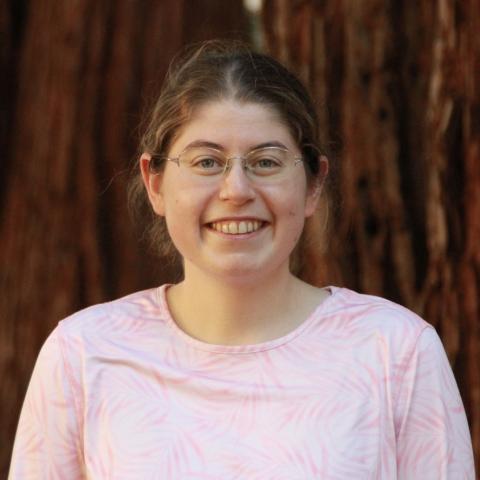
Sara Fridovich-Keil
Algorithms & Optimizations
Healthcare
Computational Imaging
- Machine Learning
Algorithms & Optimizations
Healthcare
Computational Imaging
Dr. Miranda is a Sr. Research Scientist at the Center for Cyber Operations Enquiry and Unconventional Sensing (COEUS) and an adjunct Professor for the ECE department. Both his research and teaching are focused on cybersecurity and technology risk management.
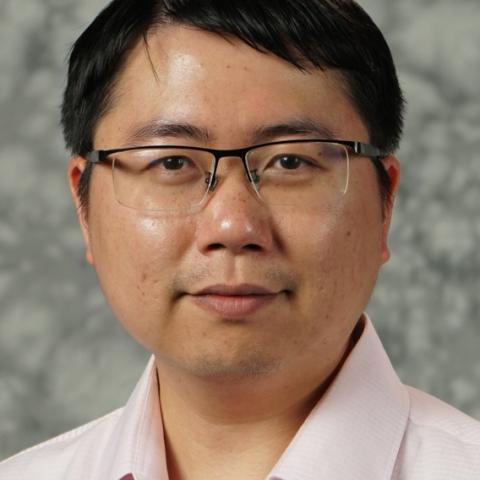
Dr. Baoyun Ge received his B.E. degree in Electrical Engineering from Southeast University, Nanjing, China, in 2012 and his Ph.D. degree in Electrical and Computer Engineering from the University of Wisconsin-Madison in 2018. He then worked at C-Motive Technologies, Inc., a start-up company pioneering in the commercialization of electrostatic machines. From May 2022 to July 2024, Dr. Ge was with the University of Florida as an assistant professor before joining the Georgia Institute of Technology.
Dr. Ge's previous research thrusts on electrostatic machines established multi-level connections (physics, circuits, and topologies) with magnetostatic machines. He has extensive experience in analytical modeling and high-performance computational models. These experiences and the duality between electrostatic and magnetostatic machines inspired Dr. Ge to work on multiphysics synthesis, which is about overcoming the limitations of conventional intuition-based multiphysics design by leveraging advanced mathematical tools.
Baoyun enjoys spending time with his wife and daughter.
Electric motors and generators; power electronics; controls; multiphysics synthesis; multiphysics education
Sean Wilson is a Senior Research Engineer serving as the Collaborative Autonomy Branch Chief for the Aerospace, Transportation & Advanced Systems Laboratory at the Georgia Tech Research Institute (GTRI). Additionally, he serves as the Director of the Robotarium Lab (https://www.robotarium.gatech.edu/) at Georgia Tech, which enables people around the world to deploy robotic algorithms onto robotic hardware free of charge.
He received M.S. and Ph.D. degrees in mechanical engineering from Arizona State University in 2017 and a B.A. degree in physics and mathematics from the State University of New York at Geneseo in 2012. He previously served as a postdoctoral fellow at the Georgia Institute of Technology.
Dr. Wilson’s research interests include remotely-accessible robotic hardware, collaborative autonomy, as well as the control of multi-agent and swarm robotic systems.
Prof. Matthew Flavin is an assistant professor in the School of Electrical and Computer Engineering at the Georgia Institute of Technology where he leads the Flavin Neuromachines Lab. Before joining the faculty at Georgia Tech, he was a postdoctoral researcher at Northwestern University. He received his M.S. and Ph.D. degrees in Electrical Engineering in 2017 and 2021 from the Massachusetts Institute of Technology (MIT), and he received his B.S. in Electrical Engineering in 2015 from the University of Illinois at Urbana-Champaign (UIUC). He received the NIH Ruth L. Kirschstein Institutional National Research Service Award (T32) and the Draper Laboratory Fellowship. The vision for his independent research program is to develop powerful peripheral neural interfaces and mechatronic wearables that leverage advanced sensors and intelligent systems to address important and unresolved challenges in patient care.
Shimeng Yu is a professor of electrical and computer engineering at the Georgia Institute of Technology. He received the B.S. degree in microelectronics from Peking University in 2009, and the M.S. degree and Ph.D. degree in electrical engineering from Stanford University in 2011 and 2013, respectively. From 2013 to 2018, he was an assistant professor at Arizona State University.
Yu’s research interests are semiconductor devices and integrated circuits for energy-efficient computing systems. His expertise is on the emerging non-volatile memories (e.g., RRAM, ferroelectrics) for applications such as AI hardware, in-memory computing, 3D integration, etc.
Among Yu’s honors, he was a recipient of NSF Faculty Early CAREER Award in 2016, IEEE Electron Devices Society (EDS) Early Career Award in 2017, ACM Special Interests Group on Design Automation (SIGDA) Outstanding New Faculty Award in 2018, Semiconductor Research Corporation (SRC) Young Faculty Award in 2019, ACM/IEEE Design Automation Conference (DAC) Under-40 Innovators Award in 2020, IEEE Circuits and Systems Society (CASS) Distinguished Lecturer for 2021-2022, and IEEE EDS Distinguished Lecturer for 2022-2023, etc.
Yu is active in professional services. He served or is serving technical program committee for IEEE International Electron Devices Meeting (IEDM), IEEE Symposium on VLSI Technology and Circuits, ACM/IEEE Design Automation Conference (DAC), ACM/IEEE Design, Automation & Test in Europe (DATE), ACM/IEEE International Conference on Computer-Aided-Design (ICCAD), etc. He is an editor of IEEE Electron Device Letters and a senior member of the IEEE.
Nanoelectronic DevicesNon-volatile MemoriesIntegrated Circuit DesignElectronic Design Automation (EDA)Deep Learning AcceleratorHardware Security
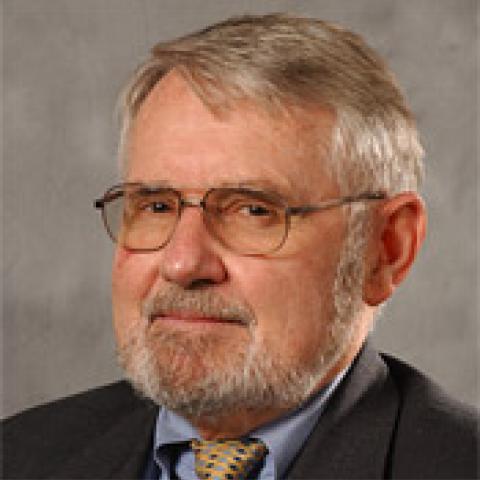
Professor Yezzi was born in Gainsville, Florida and grew up in Minneapolis, Minnesota. He obtained both his Bachelor's degree and his Ph.D. in the Department of Electrical Engineering at the University of Minnesota with minors in mathematics and music. After completing his Ph.D., he continued his research as a post-Doctoral Research Associate at the Laboratory for Information and Decision Systems at Massachusetts Institute of Technology in Boston, MA. His research interests fall broadly within the fields of image processing and computer vision. In particular he is interested in curve and surface evolution theory and partial differential equation techniques as they apply to topics within these fields (such as segmentation, image smoothing and enhancement, optical flow, stereo disparity, shape from shading, object recognition, and visual tracking). Much of Dr. Yezzi's work is particularly tailored to problems in medical imaging, including cardiac ultrasound, MRI, and CT. He joined the Georgia Tech faculty in the fall of 1999 where he has taught courses in DSP and is working to develop advanced courses in computer vision and medical image processing. Professor Yezzi consults with industry in the areas of visual inspection and medical imaging. His hobbies include classical guitar, opera, and martial arts.
Computer Vision; Image Processing; Shape Optimization; Geometric PDE's
Michael (Mick) West joined ECE from the Georgia Tech Research Institute (GTRI) in 2022. He received his Ph.D. in electrical engineering from the University of Hawaii (UH) in 2006 and has over 28 years of professional experience with over 40 refereed journals and conference papers.
West specializes in the development unmanned systems in extreme environments (under-ice, planetary, deep ocean, polar). He has been an invited speaker for United States Congressional leaders and their staff and top military personnel in the development of roadmaps for advancing current robotics research. He has served as PI on several Unmanned Systems programs developing novel enabling technologies including advanced control and power systems on underwater, ground, air and space platforms. West developed the first-of-its-kind under-ice vehicle, Icefin, in order to gather information about the changing polar ice and provide insight into areas of climate science, as well as biology and planetary science. The vehicle has been deployed over five seasons through the Ross Ice Shelf in Antarctica and provided never before seen images and scientific data of the Antarctic seafloor.
Collaborative Robotics