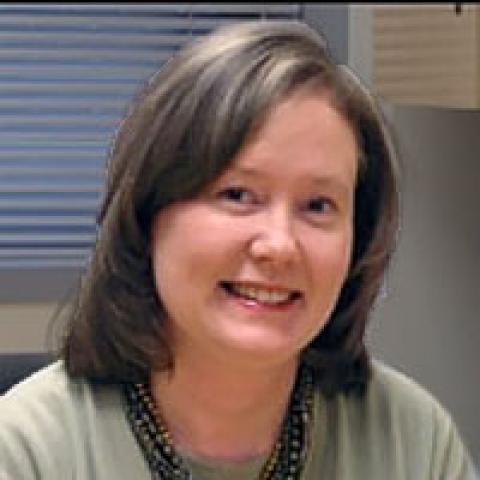
Rose Brito

Rose Brito's profile picture
Assistant to the Executive Director
Office
Petit Biotechnology Building, Office 1104
IRI/Group and Role
Bioengineering and Bioscience > Staff
Bioengineering and Bioscience
University, College, and School/Department
Georgia Institute of Technology > College of Engineering > Coulter Department of Biomedical Engineering

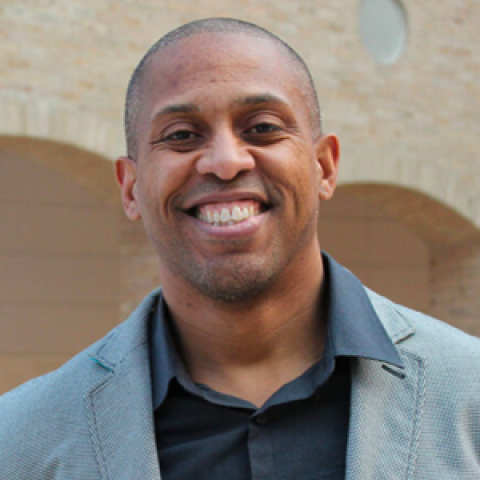
Edward Botchwey

Edward Botchwey's profile picture
edward.botchwey@bme.gatech.edu

Edward Botchwey received a B.S. in mathematics from the University of Maryland at College Park in 1993 and both M.E. and Ph.D. degrees in materials science engineering and bioengineering from the University of Pennsylvania in 1998 and 2002 respectively. He was recruited to the faculty at Georgia Tech in 2012 from his previous position at the University of Virginia. His current position is associate professor in the Wallace H. Coulter Department of Biomedical Engineering at Georgia Tech and Emory University. Botchwey is former Ph.D. fellow of the National GEM Consortium, a former postdoctoral fellow of the UNCF-Merk Science Initiative, and a recipient of the Presidential Early Career Awards for Scientists and Engineers from the National Institutes of Health. 

Botchwey’s research focuses on the delivery of naturally occurring small molecules and synthetic derivatives for applications in tissue engineering and regenerative medicine. He is particularly interested in how transient control of immune response using bioactive lipids can be exploited to control trafficking of stem cells, enhance tissue vascularization, and resolve inflammation. Botchwey serves on the Board of Directors of the Biomedical Engineering Society (BMES) and serves as the secretary to the Biomedical Engineering Decade committee.

Botchwey, his wife Nisha Botchwey (also a GT faculty member) and three children reside in east Atlanta in the Lake Claire neighborhood. Botchwey is also an avid cyclist and enjoys reading YA fantasy, behavioral neuroscience and Christian theology books in his personal time.

Professor, Wallace H. Coulter Department of Biomedical Engineering
Phone
404.385.5058
Additional Research

Biomaterials, cellular materials, in situ characterization, tissue engineering, tissue engineering and biomaterials, microvascular growth and remodeling, stem cell engineering.

IRI/Group and Role
Bioengineering and Bioscience > Faculty
Bioengineering and Bioscience
University, College, and School/Department
Georgia Institute of Technology > College of Engineering > Coulter Department of Biomedical Engineering

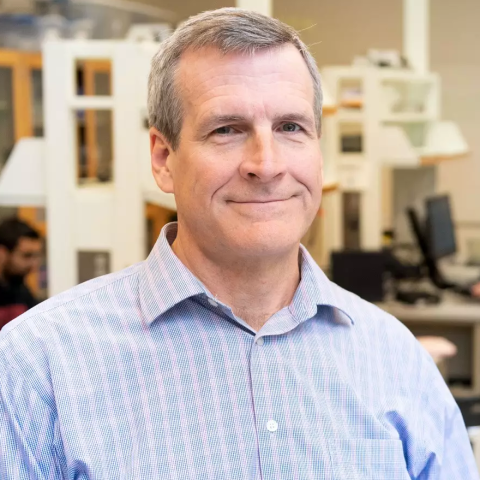
Mark Borodovsky

Mark Borodovsky's profile picture
borodovsky@gatech.edu

Dr. Borodovsky and his group develop machine learning algorithms for computational analysis of biological sequences: DNA, RNA and proteins. Our primary focus is on prediction of protein-coding genes and regulatory sites in genomic DNA. Probabilistic models play an important role in the algorithm framework, given the probabilistic nature of biological sequence evolution.

Regents' Professor
Director, Center for Bioinformatics and Computational Genomics
Senior Advisor in Bioinformatics, Division of High Consequence Pathogens and Pathology, Centers for Disease Control and Prevention in Atlanta
Phone
404-894-8432
Office
EBB 2105
Additional Research

Development and applicaton of new machine learning and pattern recognition methods in bioinformatics and biological systems. Development and applicaton of new machine learning and pattern recognition methods in bioinformatics and biological systems. Chromatin; Epigenetics; Bioinformatics

IRI/Group and Role
Bioengineering and Bioscience > Faculty
Data Engineering and Science > Affiliated Faculty
Data Engineering and Science
Bioengineering and Bioscience
University, College, and School/Department
Georgia Institute of Technology > College of Engineering > Coulter Department of Biomedical Engineering
Research Areas
Artificial Intelligence

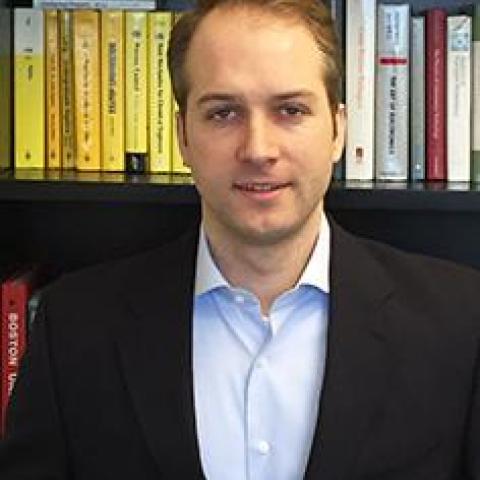
Manoj Bhasin

Manoj Bhasin's profile picture
manoj.bhasin@bme.gatech.edu

Dr. Bhasin's laboratory has developed strategies for analysis of transcriptome, epigenome, and proteomics data to perform multi-scale modeling of interaction among different cells molecular level and to identify novel biomarkers. He and his team are currently focusing on developing novel single-cell omics approaches to understand disease heterogeneity and the impact of treatments at single-cell resolution. He is involved in developing approaches for the analysis of multi-dimensional single-cell data by developing innovative approaches for single-cell sparsity, batch correction, annotation, and integration. Using these approaches, his group is working toward understanding: 1. Understanding heterogeneity and relapse mechanisms in pediatric hematological malignancies 2. Understanding heterogeneity and progression in multiple myeloma. 3. Development of molecular diagnostics platforms for cancer diagnosis and prognosis 4. Identification of biomarkers for early detection of pancreatic cancer, glioblastoma, and colon cancer 5. Artificial intelligence-based histopathology and radiology cancer image analysis approaches 6. Single-cell Atlas for Pediatric Cancers Additionally, our group is also developing Biomarkers associated with impaired healing of Diabetic Foot Ulcers using single-cell profiling and deep learning-driven wound image analysis. We are working collaboratively to develop innovative genomics and clinical data-driven drug repurposing approaches.

Associate Professor
Office
101 Woodruff Circle, 4th Floor East
Additional Research
Approaches for the analysis of multi-dimensional single-cell data
IRI/Group and Role
Data Engineering and Science > Faculty
Data Engineering and Science
University, College, and School/Department
Georgia Institute of Technology > College of Engineering > Coulter Department of Biomedical Engineering

Paul Benkeser

Paul Benkeser's profile picture
pbenkeser@gatech.edu

Paul Benkeser is a professor and senior associate chair in the Wallace H. Coulter Department of Biomedical Engineering at Georgia Tech and Emory University. A member of the Georgia Tech faculty since 1985, he was one of the founding faculty of the Coulter Department in 1998 and served as its first associate chair for undergraduate studies.    

His early research interests were in therapeutic and diagnostic applications of ultrasound. After joining the Coulter Department he redirected his energies toward enhancing undergraduate biomedical engineering  education, with particular interests in integrating problem-driven learning and global experiential learning opportunities in the curriculum. His research and education endeavors have been funded by grants from NIH, NSF, the Department of Veterans Affairs, and the Whitaker Foundation.    

Dr. Benkeser has been active in engineering accreditation activities for ABET since 2002, serving in a number of capacities including program evaluator, EAC Commissioner, and member of its board of delegates. He is a member of the American Institute for Medical and Biological Engineering, Biomedical Engineering Society, and American Society for Engineering Education, and a senior member of the Institute of Electrical and Electronics Engineers.    

He received his BS from Purdue University and MS and PhD from the University of Illinois at Urbana-Champaign, all in electrical engineering.


Professor
Senior Associate Chair
Phone
404-894-2912
Office
UAW 2125
Additional Research
Ultrasonic bioengineering, biomedical signal and image processing, and biomedical engineering education.
IRI/Group and Role
Bioengineering and Bioscience > Faculty
Bioengineering and Bioscience
University, College, and School/Department
Georgia Institute of Technology > College of Engineering > Coulter Department of Biomedical Engineering

Julia Babensee

Julia Babensee's profile picture
julia.babensee@bme.gatech.edu

Julia Babensee is an Associate Professor in the Walter H. Coulter Department of Biomedical Engineering at Georgia Tech and Emory University. Dr. Babensee is affiliated with the Petit Institute for Bioengineering and Bioscience and the Georgia Tech/Emory Center for the Engineering of Living Tissue. 

Dr. Babensee is a member of the Cell and Molecular Biology Research Program at Winship Cancer Institute. She is also a permanent member of the NIH Bioengineering, Technology and Surgical Sciences study section. She is actively involved in several professional societies with service including SFB Member-at-Large (2008-2009) and Program Chair for the 2012 Annual Meeting of the Biomedical Engineering Society in Atlanta, Georgia. 

Her research program is in the area of engineering of inflammatory and immune responses focused on understanding host responses to combination products. Her research interests also include: Biomaterial interactions with dendritic cells, tissue engineering for rheumatoid arthritis, and biomaterial-applied immunology.

Babensee received her Ph.D. from University of Toronto in Toronto, Canada. She completed her postdoctoral fellowship at Rice University and Baylor College of Medicine.

Associate Professor
Phone
404-385-0130
Office
Petit Biotechnology Building, Office 1315
Additional Research
Host responses to combination products, biomaterial interactions with dendritic cells, tissue engineering for rheumatoid arthritis, targeted DNA vaccine delivery, and biomaterial-applied immunology.
IRI/Group and Role
Bioengineering and Bioscience > Faculty
Bioengineering and Bioscience
University, College, and School/Department
Georgia Institute of Technology > College of Engineering > Coulter Department of Biomedical Engineering

Kyle Allison

Kyle Allison's profile picture
kyle.r.allison@emory.edu

Kyle Allison is a bioengineer and chemical engineer whose research has focused on understanding the behavior of bacteria in order to improve antibiotics. The Allison Lab tracks individual bacteria using microscopy approaches they developed.  Kyle and his lab have made foundational discoveries in the metabolite potentiation of antibiotics, the resuscitation of persistent bacteria, and the multicellularity of E. coli (the best-studied unicellular organism).  Kyle was named to the first “30 under 30” list in Science by Forbes Magazine and received the NIH Director’s Early Independence Award to bypass traditional postdoctoral training. His research has been published in Nature, PNAS, Molecular Systems Biology, Nature Methods, Nature Chemical Biology, and other journals.  Kyle also holds a master’s degree in literature and wrote his thesis on James Joyce’s Finnegans Wake.

Assistant Professor, Department of Medicine/Infectious Disease, Emory University
Phone
404-727-6974
Office
Emory HSRB E146
Additional Research

Antibiotics, Systems Biology, Multicellularity

IRI/Group and Role
Bioengineering and Bioscience > Faculty
Bioengineering and Bioscience
University, College, and School/Department
Georgia Institute of Technology > College of Engineering > Coulter Department of Biomedical Engineering
Emory University
Subscribe to Coulter Department of Biomedical Engineering