Dalton Lin

 Dalton Lin's profile picture
dalton.lin@inta.gatech.edu

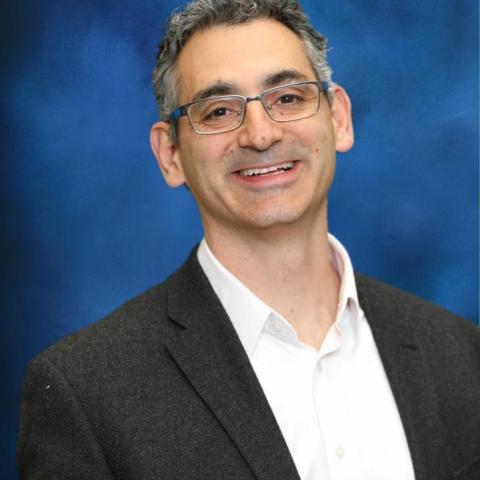
Dalton Lin is a political scientist specializing in theories of international relations and foreign policy. His research interests focus on theorizing the bargaining between major and lesser countries in international politics, with an area focus on China and East Asia. He is a research associate with the China Research Center and founder of the Taiwan Security Issues. Before joining Georgia Tech, he was a Postdoctoral Research Fellow with the Princeton-Harvard China and the World Program at the Woodrow Wilson School of Public and International Affairs, Princeton University. He received his Ph.D. in political science from the University of Wisconsin-Madison.

Education:

  • Ph.D. University of Wisconsin-Madison

Awards and Distinctions:

  • Faculty Excellence in Research Award for Ivan Allen College of Liberal Arts, Georgia Institute of Technology, 2024-2025
  • Chiang Ching-kuo Foundation for International Scholarly Exchange, Scholar Grants, 2024-2025
  • Student Recognition of Excellence in Teaching: Class of 1934 CIOS Honor Roll, Georgia Institute of Technology, Fall 2021
  • Student Recognition of Excellence in Teaching: Class of 1934 CIOS Honor Roll, Georgia Institute of Technology, Spring 2021
  • Student Recognition of Excellence in Teaching: Class of 1934 CIOS Honor Roll, Georgia Institute of Technology, Fall 2020
  • Chiang Ching-kuo Foundation for International Scholarly Exchange, Dissertation Fellowships, 2011-2012
  • Government Scholarship for Study Abroad, Ministry of Education, Taiwan, 2011
  • Fulbright Fellow, U.S. Department of State, 2005-2007
Associate Professor, Sam Nunn School of International Affairs
Phone
404-894-5601
Office
Habersham 219
Additional Research
  • China
  • East Asia Security
  • Foreign Policy
  • International Relations
IRI/Group and Role
Space > Faculty
University, College, and School/Department
Georgia Institute of Technology > Ivan Allen College of Liberal Arts > Sam Nunn School of International Affairs
Research Areas
Space

Jon R. Lindsay

Photo of Jon R. Lindsay
jlindsay30@gatech.edu

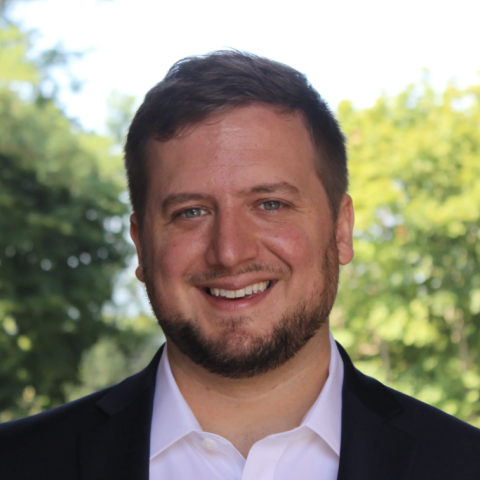
Jon Lindsay is an Associate Professor at the School of Cybersecurity and Privacy and the Sam Nunn School of International Affairs at the Georgia Institute of Technology (Georgia Tech). His research explores the role of emerging technology in global security. He is the author of Age of Deception: Cybersecurity as Secret Statecraft (Cornell, 2025) and of  Information Technology and Military Power (Cornell, 2020), the co-author with Erik Gartzke of Elements of Deterrence: Strategy, Technology, and Complexity in Global Politics (Oxford, 2024), and editor of Cross-Domain Deterrence: Strategy in an Era of Complexity (Oxford, 2019) and of China and Cybersecurity: Espionage, Strategy, and Politics in the Digital Domain (Oxford, 2015). His latest book project is "The Odyssey of AI: The Wrath of Technology and the Return of Humanity." He holds a Ph.D. in political science from the Massachusetts Institute of Technology and an M.S. in computer science and B.S. in symbolic systems from Stanford University. He has also served in the U.S. Navy with operational assignments in Europe, Latin America, and the Middle East.

Associate Professor, Sam Nunn School of International Affairs, School of Cybersecurity and Privacy
Additional Research

International Security, Cyber Conflict, Strategic Studies

University, College, and School/Department
Georgia Institute of Technology > Ivan Allen College of Liberal Arts > Sam Nunn School of International Affairs

Lincoln Hines

Lincoln Hines's profile picture
lincoln.hines@gatech.edu

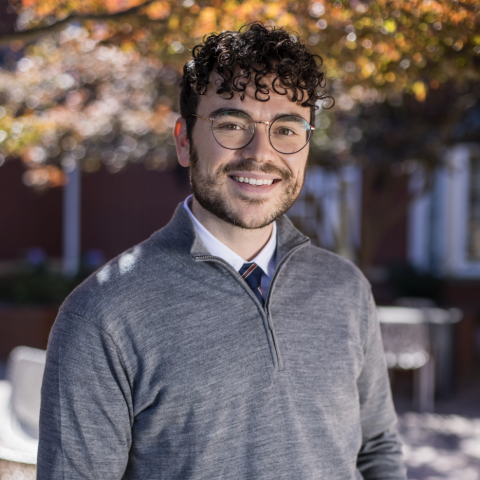
Lincoln Hines is an Assistant Professor in the Sam Nunn School of International Affairs at the Georgia Institute of Technology. He is also a faculty affiliate at the Nunn School’s Center for Space Policy and International Relations, a 2025-2026 Wilson China Fellow at the Wilson Center, and a Public Intellectuals Program Fellow with the National Committee on U.S.-China Relations. Previously, he was an Assistant Professor for the West Space Seminar at the U.S. Air War College. 

His research focuses on Chinese foreign policy and security, the politics of outer space, public opinion, and issues of status and nationalism in world politics. Previously, he was a security fellow with the Truman National Security Project, a Guggenheim predoctoral fellow at the National Air and Space Museum, a visiting researcher at Peking University’s School of International Studies, and a Nonresident WSD-Handa Fellow at the Pacific Forum.

His research has been published in Research & Politics, Space Policy, and New Space. He has also written in The Washington Quarterly, War on the Rocks, The Washington Post, Asia Policy, World Politics Review, The Conversation, the Modern War Institute, East Asia Forum, the Diplomat, the Carter Center’s U.S.-China Perception Monitor, and the Strategic Studies Institute of the U.S. Army War College. He has been interviewed by MIT Technology Review, BBC Newsnight, Bloomberg, CBC, The Economist, NPR, The Wire China, The Wall Street Journal, Al-Jazeera, Agence-France-Presse, Euronews, Business Insider, Wired, Australian Defence Magazine, Financial Times, the South China Morning Post, Nikkei Asia, and The Diplomat Magazine. 

He received a PhD in Government from Cornell University, an MA in International Relations from the American University School of International Service, and a BA in Foreign Affairs and East Asian Studies from the University of Virginia.

Assistant Professor, Sam Nunn School of International Affairs
Additional Research
  • China
  • International Security
  • National Narratives
  • Space
  • Status
  • International Security Policy
  • Science, Technology, and International Policy
IRI/Group and Role
Space
University, College, and School/Department
Georgia Institute of Technology > Ivan Allen College of Liberal Arts > Sam Nunn School of International Affairs

Lawrence Rubin

Lawrence Rubin's profile picture
lawrence.rubin@inta.gatech.edu

Lawrence Rubin is co-director of the Georgia Tech DC Program and an associate professor in the Sam Nunn School of International Affairs as well as an associate fellow at the International Institute for Strategic Studies. His research interests include Middle East politics and international security with a specific focus on intra-regional relations, religion and politics, nuclear proliferation, and emerging technologies. He has conducted research in Morocco, Egypt, Israel, Jordan, the UAE, and Yemen. Rubin in a life member of the Council on Foreign Relations.

During the 2017-2018 AY, Rubin served as a senior advisor in the Office of the Secretary of Defense for Policy through a Council on Foreign Relations International Affairs Fellowship in nuclear security, sponsored by the Stanton Foundation. He worked in the Middle East and Countering WMD offices.

Rubin is the author and editor of three books, including The End of Strategic Stability? Nuclear Weapons and the Challenge of Regional Rivalries (Georgetown University Press, 2018) co-edited with Adam Stulberg, Islam in the Balance: Ideational Threats in Arab Politics (Stanford University Press, 2014) and Terrorist Rehabilitation and Counter-Radicalisation: New Approaches to Counter-terrorism (Routledge 2011) with Rohan Gunaratna and Jolene Jerard. He recently edited a special issue for Orbis titled, “Emerging Technology and National Security,” 64:4 (2020). His other work has been published in International Studies Review, Politics, Religion & Ideology, Democracy and Security, International Area Studies Review, Middle East Policy, Terrorism and Political Violence, Orbis, Contemporary Security Policy, Democracy and Security, Non-Proliferation Review, British Journal of Middle Eastern Studies, Lawfare, the Brookings Institute, The National Interest, The Washington Quarterly, and The Washington Post. He served as the guest editor for a special volume in Orbis 64:4 (Fall 2020), “Emerging Technology and National Security.”

Rubin is a former editor of the journal of Terrorism and Political Violence. He was senior advisor for United States Institute of Peace’s Task Force on Extremism in Fragile States (2017-18) and he was a senior advisor for the Reagan Institute’s The Contest for Innovation: Strengthening America’s National Security Innovation Base in an Era of Strategic Competition (2019).

Prior to coming to Georgia Tech, Rubin was a Research Fellow at the Belfer Center for Science and International Affairs with the Dubai Initiative in Harvard University’s Kennedy School of Government (2009-2010) and was lecturer on the Robert and Myra Kraft chair in Arab politics at the Crown Center for Middle East Studies, Brandeis University (2008-2009). Outside of Academia, he has held positions at the National Defense University’s Near East South Asia Center for Strategic Studies and the RAND Corporation.

Rubin received his PhD in Political Science from UCLA (2009) and earned degrees from University of Oxford, London School of Economics, and UC Berkeley.  His research has been supported by the Hollings Center for International Dialogue, the Institute of Global Cooperation and Conflict, the U.S. Department of Education, Horowitz Foundation for Social Policy, Project on Middle East Political Science, and the Defense Threat Reduction Agency.

Associate Professor, Sam Nunn School of International Affairs
Office
Habersham 149
Additional Research
  • Global Nuclear Security
  • International Security Policy
  • Regional Security Challenges
  • Energy
  • Weapons and Security
  • Middle-Eastern Studies
  • Religion and Politics
  • Terrorism
IRI/Group and Role
Space > Faculty
University, College, and School/Department
Georgia Institute of Technology > Ivan Allen College of Liberal Arts > Sam Nunn School of International Affairs

Thomas González Roberts

Thomas González Roberts's profile picture
thomasgr@gatech.edu

Thomas González Roberts is an Assistant Professor with a joint appointment in the Sam Nunn School of International Affairs and the Daniel Guggenheim School of Aerospace Engineering at the Georgia Institute of Technology. He is the Director of Georgia Tech’s Engineering Space Policy Laboratory. Using tools from observational astronomy and computational astrodynamics, Roberts studies the behavior of Earth-orbiting satellites to understand how space actors—from superpowers to start-ups—engage with outer space governance. His research interests include international coordination, sustainability, and security in space. Roberts’ work has been supported by the Harry S. Truman Scholarship Foundation, the National Science Foundation, and the Swiss State Secretariat for Education, Research, and Innovation, and earned recognition with the Massachusetts Institute of Technology’s (MIT) Prize for Open Data, the Geneva Centre for Security Policy’s Prize for Innovation in Global Security, and a placement on Forbes Magazine’s 30 Under 30 in Science list. He holds a PhD and SM in aeronautics and astronautics from MIT, an SM in technology and policy from MIT, and a BA in astrophysical sciences from Princeton University.


Assistant Professor, Guggenheim School of Aerospace Engineering, Sam Nunn School of International Affairs University
Office
Habersham 305
Additional Research
  • Commercial Space Activity
  • NASA And International Space Programs
  • Science And Technology Policy
  • Space Security
  • Space Sustainability
  • Flight Mechanics & Controls
  • Systems Design & Optimization
IRI/Group and Role
Space > Faculty
University, College, and School/Department
Georgia Institute of Technology > Ivan Allen College of Liberal Arts > Sam Nunn School of International Affairs
Georgia Institute of Technology > College of Engineering > Guggenheim School of Aerospace Engineering

Mariel Borowitz

Mariel Borowitz's profile picture
mariel.borowitz@inta.gatech.edu

Mariel Borowitz is an associate professor in the Sam Nunn School of International Affairs at the Georgia Institute of Technology, director of the Georgia Tech Center for Space Policy and International Relations, and head of the Nunn School Program on International Affairs, Science, and Technology. Her research deals with international space policy issues. She has published on issues of space sustainability, space security, and development and exploration of the Moon. Her work has also covered developments in the Earth observation and remote sensing sector. Her book, Open Space: The Global Effort for Open Access to Environmental Satellite Data, published by MIT Press, examines trends in the development of data sharing policies governing Earth observing satellites, as well as interactions with the growing commercial remote sensing sector. Her work has been published in ScienceStrategic Studies QuarterlySpace PolicyAstropolitics, and New Space. Her research has been supported by grants from the National Science Foundation, the U.S. Department of Defense, and the National Aeronautics and Space Administration.

Borowitz is also currently detailed to the U.S. Office of Space Commerce in a half-time capacity as the director of International Space Situational Awareness (SSA) Engagement. In this role, she focuses on the development and implementation of an approach to international coordination on space situational awareness and space traffic coordination. She also works directly with the team developing the Traffic Coordination System for Space (TraCSS), which will provide space safety services to spacecraft operators around the world. Borowitz previously completed a detail as a policy analyst for the Science Mission Directorate at NASA Headquarters in Washington, D.C. from 2016 to 2018. In 2022, she testified to the U.S. House of Representatives Subcommittee on Space and Aeronautics in a hearing titled, "Space Situational Awareness: Guiding the Transition to a Civil Capability."

Borowitz earned a Ph.D. in public policy at the University of Maryland and a Masters degree in international science and technology policy from the George Washington University. She has a Bachelor of Science degree in aerospace engineering from the Massachusetts Institute of Technology.

Associate Professor
Director of the Georgia Tech Center for Space Policy and International Relations
Head of the Nunn School Program on International Affairs, Science, and Technology
Phone
404.385.1494
IRI/Group and Role
Space > Faculty
University, College, and School/Department
Georgia Institute of Technology > Ivan Allen College of Liberal Arts > Sam Nunn School of International Affairs

Brian Woodall

Brian Woodall's profile picture
brian.woodall@inta.gatech.edu
Professor Emeritus, Sam Nunn School of International Affairs
Phone
(404) 894-1902
IRI/Group and Role
Energy > Research Community
Energy
University, College, and School/Department
Georgia Institute of Technology > Ivan Allen College of Liberal Arts > Sam Nunn School of International Affairs
Research Areas
Energy
  • Sustainable Communities
  • Energy Economics, Policy, and Public Health
  • Energy and National Security

Anjali Thomas

Anjali Thomas's profile picture
anjalitb3@gatech.edu

Anjali Thomas is an Associate Professor in the Sam Nunn School of International Affairs and Director of the Nunn School Program in Global Development. Her research focuses on the political economy of development, and employs quantitative analyses of data derived from India and other developing country contexts. Her specific substantive interests include the politics of service provision, democratic institutions and the link between climate change and local level politics. Prior to joining the faculty at Georgia Tech, Anjali was a faculty member in the Department of Political Science at the University of British Columbia in Vancouver. She obtained her Ph.D. from New York University in 2010.

Associate Professor, Sam Nunn School of International Affairs
Director, Nunn School Program in Global Development
IRI/Group and Role
Sustainable Systems > Emeritus Fellows
Sustainable Systems > Initiative Lead
Energy > Research Community
University, College, and School/Department
Georgia Institute of Technology > Ivan Allen College of Liberal Arts > Sam Nunn School of International Affairs
Research Areas
Sustainable Systems
  • Global Sustainable Development
Energy
  • Energy Economics, Policy, and Public Health

Adam Stulberg

Adam Stulberg's profile picture
adam.stulberg@inta.gatech.edu

Dr. Stulberg is the Sam Nunn School Chair and Professor in the Sam Nunn School of International Affairs. He teaches undergraduate and graduate courses on international security, Russia/Eurasian politics and security affairs, nuclear (non)proliferation, and energy and international security, as well as inter-disciplinary courses on science, technology, and international security policy. His current research focuses on the geopolitics of oil and gas networks, energy security dilemmas and statecraft in Eurasia, Russia and "gray zone" conflicts, new approaches to strategic stability, internationalization of the nuclear fuel cycle, and implications of emerging technologies for strategic stability and international security.

Dr. Stulberg earned his Ph.D. in Political Science from the University of California, Los Angeles (UCLA), as well as holds an M.A. in International Affairs from Columbia University, an M.A. in Political Science from UCLA, and a B.A. in History from the University of Michigan. He served as a Political Consultant at RAND from 1987-1997, and as a Senior Research Associate at the Center for Nonproliferation Studies (CNS), Middlebury Institute of International Studies at Monterey (1997-1998). He has worked closely with former Senator Sam Nunn drafting policy recommendations and background studies on future directions for the U.S. Cooperative Threat Reduction Program, building regional and energy security regimes in Central Asia and the South Caucasus, and engaging Russia’s regional power centers. Dr. Stulberg was a post-doctoral fellow at CNS; policy scholar at the EastWest Institute; and has been a consultant to the Carnegie Corporation of New York and the Office of Net Assessment, Office of the U.S. Secretary of Defense. Dr. Stulberg has authored and edited five books, and has published widely in leading academic and policy journals.  In addition, he served on the Executive Committee of the Nuclear Nonproliferation Technical Group, American Nuclear Society (2012-14).

Dr. Stulberg maintains a conspicuous presence both inside and outside of the classroom at Georgia Tech. He is a two-time recipient of the INTA Graduate Student Association’s “Professor of the Year,” and has received the same honor from Sigma Iota Rho, the international affairs undergraduate honor society. Dr. Stulberg was a CETL teaching fellow, and a Hesburgh Teaching Fellow.  He also was the recipient of the 2010 Ivan Allen Jr. Legacy Faculty Award in recognition for his scholarship, as well as a “demonstrated commitment to serving students at the College, the Institute, and in the Community.”  Dr. Stulberg has served on numerous school, college, and campus-wide committees, including as Chair of the Sam Nunn-Bank of America Policy Forum (2008, 2010, 2012, 2014, 2016, 2020-21).  He was previously on the Faculty Advisory Board and is currently an Associate Director of the Strategic Energy Institute (a GT Institute-wide Center). In 2016, the Neal Family Endowed Chair was bestowed upon Dr. Stulberg; he was appointed Chair of the Sam Nunn School of International Affairs in July 2019.

Chair, Sam Nunn School of International Affairs
Professor, Sam Nunn School of International Affairs
Co-Director, Center for International Strategy, Technology, & Policy
SEI Senior Advisor: Social Sciences Liaison
Phone
(404) 385-0090
Additional Research

Nuclear; Policy/Economics

IRI/Group and Role
Energy > Research Community
Energy > Initiative Leads
University, College, and School/Department
Georgia Institute of Technology > Ivan Allen College of Liberal Arts > Sam Nunn School of International Affairs
Research Areas
Energy
  • Energy and National Security

Margaret Kosal

Margaret Kosal's profile picture
margaret.kosal@inta.gatech.edu

Margaret E. Kosal's research explores the relationships among technology, strategy, and governance. Her research focuses on two, often intersecting, areas: reducing the threat of weapons of mass destruction (WMD) and understanding the role of emerging technologies for security. Her work aims to understand and explain the role of technology and technological diffusion for national security at strategic and operational levels. In the changing post-Cold War environment, the most advanced military power no longer guarantees national or international security in a globalized world in which an increasing number of nation-states and non-state actors have access to new and potentially devastating dual-use capabilities. The long-term goals of her work are to understand the underlying drivers of technological innovation and how technology affects national security and modern warfare. She is interested in both the scholarly, theoretical level discourse and in the development of new strategic approaches and executable policy options to enable US dominance and to limit the proliferation of unconventional weapons. On the question of understanding the impact of emerging technology on national and international security her research considers what role will nanotechnology, cognitive science, biotechnology, and converging sciences have on states, non-state actors, balance of power, deterrence postures, security doctrines, nonproliferation regimes, and programmatic choices. Through examination of these real applications on the science (benign and defensive) and potential (notional) offensive uses of nanotechnology, she seeks to develop a model to probe the security implications of this emerging technology. The goal of the research is not to predict new specific technologies but to develop a robust analytical framework for assessing the impact of new technology on national and international security and identifying policy measures to prevent or slow proliferation of new technology - the next generation “WMD” - for malfeasant intentions. Kosal is the author of Nanotechnology for Chemical and Biological Defense (Springer Academic Publishers, 2009), which explores scenarios and strategies regarding the benefits and potential proliferation threats of nanotechnology and other emerging sciences for international security. She is also Director of the Sam Nunn Security Fellows Program and Co-Director of the Program on Emerging Technology within the Center for International Strategy, Technology, and Policy (CISTP).  Kosal was recently appointed Adjunct Scholar to the Modern War Institute at the US Military Academy/West Point. From 2012-2013, she as a senior advisor to the Chief of Staff of the US Army as part of his inaugural Strategic Studies Group (SSG). Before joining the Sam Nunn School of International Affairs, she was Science and Technology Advisor within the Office of the Secretary of Defense (OSD). Kosal also served as the first liaison to the Biological and Chemical Defense Directorate at the Defense Threat Reduction Agency (DTRA). She has been recognized for her leadership across the U.S. federal government, specifically for efforts to coordinate across the DoD as part of the interagency Nonproliferation and Arms Control Technology Working Group, reporting to the National Security Council (NSC), and as member of the interagency federal group charged with leading the National Nanotechnology Initiative (NNI). Kosal was nominated to and led the U.S. involvement in the NATO Nanotechnology for Defense Working Group. Her awards include the 2015 CETL/BP Junior Faculty Teaching Excellence Award, 2014 Georgia Tech Junior Faculty Outstanding Undergraduate Research Mentor Award, 2012 Ivan Allen Jr Legacy Award, 2010 INTAGO Faculty Award, CETL Class of 1969 Teaching Scholar, the OSD Award for Excellence, 2007 UIUC Alumni Association Recent Alumni Award, the President’s Volunteer Service Award, American Association for the Advancement of Science (AAAS) Defense Policy Fellow, and the Society of Porphyrins and Phthalocyanines Dissertation Research Award. Currently, she serves on the editorial board of the scholarly journals Studies in Conflict and Terrorism, the Journal of Strategic Security, the Journal of Defense Management, and Global Security: Health Science and Policy. Education: Ph.D., Chemistry, University of Illinois at Urbana-Champaign B.S., Chemistry, University of Southern California Awards and Distinctions: Senior Adjunct Scholar to the Modern War Institute at the U.S. Military Grand Challenges Faculty Fellow, AY2015-2016 & AY 2016-2017 2015-2016 CETL Class of 1969 Teaching Scholar 2015 CETL/BP Junior Faculty Teaching Excellence Award Gold Star Award in Recognition of the Highest Level of Accomplishment in Research, Ivan Allen College of Liberal Arts Dean Griffith Teaching Recognition – “Thank a Teacher” Award 2014 Georgia Tech Junior Faculty Outstanding Undergraduate Research Mentor Award Ivan Allen Jr. Legacy Faculty Award, 2012 INTAGO Faculty of the Year, 2010 Office of the Secretary of Defense Award for Excellence, 2007 University of Illinois at Urbana-Champaign Recent Alumni Award, 2007 President’s Volunteer Service Award, 2007 American Associatio for the Advancement of Science (AAAS) Science & Technology Fellowship, 2005-2007 American Chemical Society’s Chemical and Engineering News Top 2002 Supramolecular Chemistry research paper Areas of Expertise: Biotechnology Emerging Technology Military Nanotechnology National Security Nonproliferation Nuclear Weapons Terrorism US Foreign & Defense Policy

Professor, Sam Nunn School of International Affairs
Director, Sam Nunn Security Program
Editor-in-Chief, Politics and the Life Sciences
Phone
404-894-9664
Office
Habersham 303
Additional Research

Defense / National Security; Cyber Technology; Policy/Economics

IRI/Group and Role
Bioengineering and Bioscience > Faculty
Energy > Research Community
Bioengineering and Bioscience
Matter and Systems > Affiliated Faculty
University, College, and School/Department
Georgia Institute of Technology > Ivan Allen College of Liberal Arts > Sam Nunn School of International Affairs
Research Areas
Matter and Systems
  • Built Environment Technologies
Energy
  • Energy and National Security
  • Nuclear
  • Energy Economics, Policy, and Public Health
Subscribe to Sam Nunn School of International Affairs