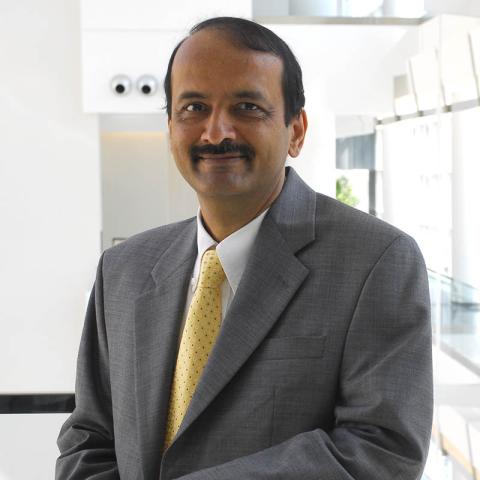
J. Sukarno Mertoguno, Ph.D., and chief innovation officer for the Information and Cyber Sciences Directorate (ICSD) of Georgia Tech Research Institute (GTRI), has assumed a joint appointment as deputy director of the Institute for Information Security & Privacy (IISP) at the Georgia Institute of Technology.
“I’m pleased to have Sukarno join the IISP as deputy director, where he will assist us with implementing interdisciplinary research, student education, and outreach programs that drive market impact in cybersecurity,” said Wenke Lee, executive director of the IISP and professor of computer science in the College of Computing. “In particular, he will initiate joint research interdisciplinary projects involving faculty from multiple academic units and researchers at GTRI, and help facilitate the collaborative relationships between Georgia Tech, the funding agencies and industry.”
This new responsibility aligns well with Sukarno’s expertise in developing innovative cybersecurity solutions at GTRI. Prior to joining GTRI, Sukarno managed basic and applied scientific research in cybersecurity and complex software for the Office of Naval Research (ONR). He was previously a system and chip architect and an entrepreneur in the San Francisco Bay Area. He received his Ph.D. in electrical engineering from SUNY-Binghamton with a focus on system architecture design. He also earned a degree in theoretical physics from the University of Indonesia.
“A visionary innovator, Sukarno has been a champion for collaborative interdisciplinary research that challenges conventional wisdom to discover new knowledge and to develop new technologies,” said Wen Masters, deputy director at GTRI’s Information and Cyber Sciences. “He is uniquely suited for this joint appointment to assist Wenke in leading the IISP to reach new heights.”
"Sukarno has been a pioneer of cybersecurity from every imaginable perspective - corporate, government, academic, and everything in-between,” said Brendan Saltaformaggio, assistant professor, School of Electrical and Computer Engineering. “Having worked with Sukarno since his time at ONR, I've seen first hand the creativity and leadership he can bring to a team. IISP will flourish with him on board.
Dr. Taesoo Kim, associate professor, College of Computing, said, “Karno's experience leading huge projects at ONR will help us position IISP in a unique way: directing us to reveal and address government and corporate problems in cyber security.”
This fall, the IISP, a National Center of Academic Excellence in Cybersecurity Research (CAE-R) will be celebrating its five years at the forefront of creating new cybersecurity solutions with immediate applications in the real world — developing innovative breakthroughs, cutting-edge curriculum, and teaching our next generation workforce in cybersecurity.