C.P. Wong

C.P. Wong
cp.wong@mse.gatech.edu

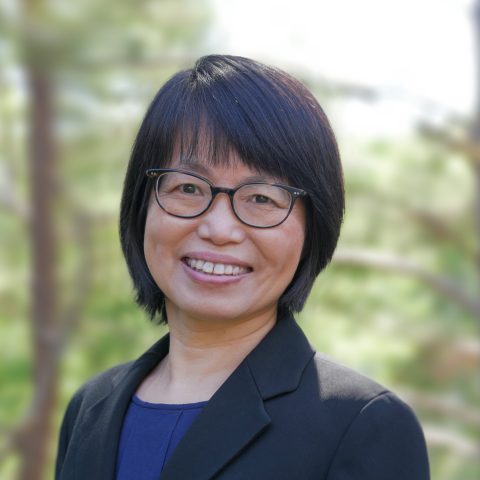
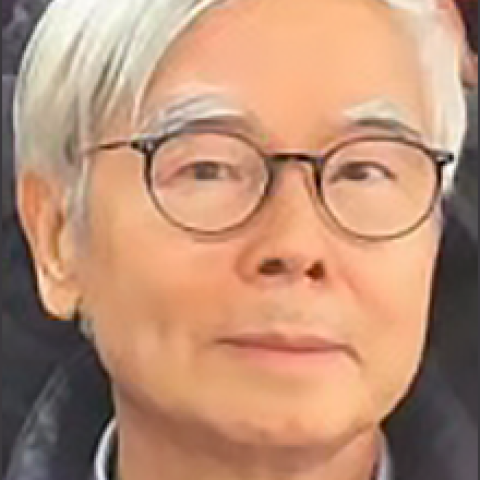
Professor C. P. Wong is the Charles Smithgall Institute Endowed Chair and Regents’ Professor. After his doctoral study, he was awarded a two-year postdoctoral fellowship with Nobel Laureate Professor Henry Taube at Stanford University. Prior to joining Georgia Tech, he was with AT&T Bell Laboratories for many years and became an AT&T Bell Laboratories Fellow in 1992. 

His research interests lie in the fields of polymeric materials, electronic packaging and interconnect, interfacial adhesions, nano-functional material syntheses and characterizations. nano-composites such as well-aligned carbon nanotubes, grahenes, lead-free alloys, flip chip underfill, ultra high k capacitor composites and novel lotus effect coating materials. 

He received many awards, among those, the AT&T Bell Labs Fellow Award in 1992, the IEEE CPMT Society Outstanding Sustained Technical Contributions Award in 1995, the Georgia Tech Sigma Xi Faculty Best Research Paper Award in 1999, Best MS, PhD and undergraduate Thesis Awards in 2002 and 2004, respectively, the University Press (London) Award of Excellence, the IEEE Third Millennium Medal in 2000, the IEEE EAB Education Award in 2001, the IEEE CPMT Society Exceptional Technical Contributions Award in 2002, the Georgia Tech Class of 1934 Distinguished Professor Award in 2004, Outstanding Ph.D. Thesis Advisor Award in 2005, the IEEE Components, Packaging and Manufacturing Technology Field Award in 2006, the Sigma Xi’s Monie Ferst Award in 2007, the Society of Manufacturing Engineers (SME)’s TEEM Award in 2008, the 2009 IEEE -CPMT David Feldman Outstanding Contribution Award and the 2009 Penn State University Distinguished Alumni Award. The 2012 International Dresden Barkhausen Award (Germany). 

He holds over 65 U.S. patents, numerous international patents, has published over 1000 technical papers, 12 books and a member of the National Academy of Engineering of the USA since 2000.


Regents' Professor, School of Materials Science and Engineering
Smithgall Institute Endowed Chair
Phone
404-894-8391
Office
Love 367
IRI/Group and Role
Bioengineering and Bioscience > Faculty
Energy > Research Community
Matter and Systems > Affiliated Faculty
Bioengineering and Bioscience
Energy
University, College, and School/Department
Georgia Institute of Technology > College of Engineering > School of Materials Science Engineering
Research Areas
Matter and Systems
  • Computing and Communication Technologies
Energy
  • Advanced Manufacturing for Energy

Corey Wilson

Corey Wilson
corey.wilson@chbe.gatech.edu

Biography
Research Interests

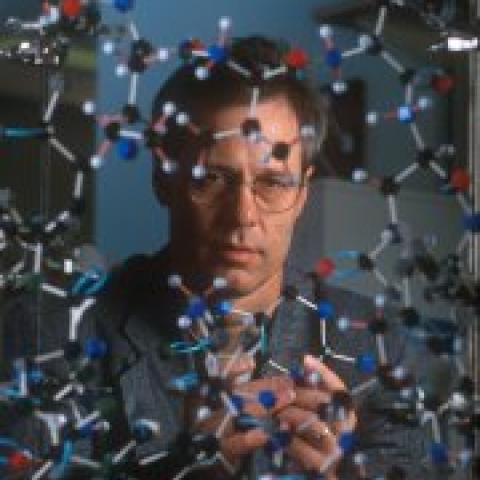
Previously an associate professor of chemical & environmental engineering, biomedical engineering, and molecular biophysics and biochemistry at Yale University, Wilson joined Georgia Tech in 2016.   His research group focuses on establishing an integrated experimental and computational framework to translate our understanding of the fundamental principles of biophysics and biochemistry (i.e., the physicochemical properties that confer function) into useful processes, devices, therapies, and diagnostics that will benefit society.
Education
PhD, Rice University

Love Family Professor
Phone
(404) 385-5397
Office
EBB 5014
IRI/Group and Role
Bioengineering and Bioscience > Faculty
Bioengineering and Bioscience
University, College, and School/Department
Georgia Institute of Technology > College of Engineering > School of Chemical and Biomolecular Engineering

Loren Williams

Loren Williams
loren.williams@chemistry.gatech.edu
  • Loren Williams is from Seattle. He received his B.Sc. in Chemistry from the University of Washington, where he worked in the laboratory of Martin Gouterman. He received his Ph.D. in Physical Chemistry from Duke University, where he worked the laboratory of Barbara Shaw. He was an American Cancer Society Postdoctoral Fellow at Harvard, and an NIH Postdoctoral Fellow at MIT with Alexander Rich. He is currently a Professor in the School of Chemistry and Biochemistry at Georgia Tech. Loren is a Fellow of the AAAS and of the International Society for the Study of the Origins of Life. He was previously Director of the NASA Astrobiology Institute funded RiboEvo Center and is currently Director of the NASA-funded Center for the Origins of Life (COOL). Loren is currently a Co-Lead of the Prebiotic Chemistry and Early Earth Environment Consortium (PCE3 a NASA Research Coordination Network). Loren has received the following awards: 
  • 1995 NSF Career Award 
  • 1996 Sigma Xi Best Paper from Georgia Tech 
  • 2012 Georgia Tech Student Advisement Award 
  • 2012 Petit Institute Above and Beyond Award 
  • 2013 Georgia Tech Faculty Award for Academic Outreach 
  • 2013 Georgia Tech College of Science Faculty Mentor Award 
  • 2017 Access Alley Award from Georgia Tech Disability Services for advocating for handicapped students 
  • 2019 Vasser Woolley Award for Excellence in Instruction 
  • 2020-21 Georgia Tech Outstanding Achievement in Research Program Development 
  • 2021 Fellow of the International Society for Study of the Origin of Life 
  • 2021 Petit Institute Above and Beyond Award 
  • 2022 College of Sciences, Faculty Mentor Award 
  • 2023 Fellow of the AAAS
Professor
Director, Center for the Origin of Life
Phone
404-385-6258
Office
Petit Biotechnology Building, Office 1309
Additional Research
We study folding and structure of RNA and DNA as modulated by sequence, covalent damage, anti-cancer drugs, proteins, other nucleic acid molecules. The oldest assembly in biology is the ribosome, which is a primary focus of our efforts. Ancient ribosomal structure and function, from beyond the root of the tree of life, can be inferred from extant structure/function combined with phylogeny, evolutionary theory, biophysical chemistry, bioinformatics and molecular biology. We use all of these approaches to construct models of ancient ribosomes, which we then study by biochemical methods. Three-dimensional structure, being more conserved over evolutionary time than sequence, offers some of the most important guideposts in our journeys down the base of the tree of life.
IRI/Group and Role
Bioengineering and Bioscience > Faculty
Bioengineering and Bioscience
University, College, and School/Department
Georgia Institute of Technology > College of Sciences > School of Chemistry & Biochemistry

Christopher Wiese

Christopher Wiese
ChrisWiese@gatech.edu

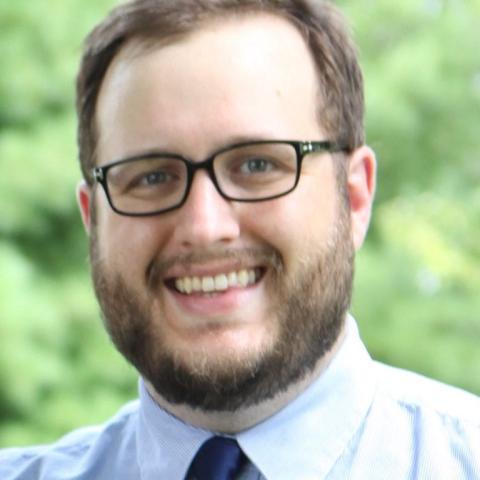
My research focuses on three major areas: (a) understanding and improving worker well-being, (b) temporal dynamics in team contexts, and (c) research methods. Collectively, my research seeks to improve our understanding of optimal human functioning more generally, across time, and within specific contexts (e.g., organizational, teams).

Assistant Professor
IRI/Group and Role
Bioengineering and Bioscience > Faculty
Data Engineering and Science > Research Community
People and Technology > Affiliated Faculty
Bioengineering and Bioscience
University, College, and School/Department
Georgia Institute of Technology

Marvin Whiteley

Marvin Whiteley
marvin.whiteley@biosci.gatech.edu

Dr. Whiteley received his B.S. degree in Zoology in 1995 from the University of Texas at Austin and his Ph.D. in Microbiology from the University of Iowa in 2001. His doctoral research involved quorum sensing and biofilm formation in the bacterium Pseudomonas aeruginosa. Following a Postdoctoral Fellowship at Stanford University in 2002, Dr. Whiteley accepted a position as an assistant professor at the University of Oklahoma/Oklahoma Health Sciences Center. In 2006, Dr. Whiteley moved to the University of Texas at Austin where he was promoted to Professor of Molecular Biosciences and Director of the LaMontagne Center for Infectious Disease. In 2017, he accepted the Bennie H. & Nelson D. Abell Chair and Georgia Research Alliance Eminent Scholar in Molecular and Cellular Biology at Georgia Institute of Technology. He also serves as Associate Director of the CF-Air Center at Emory Medical School. Dr. Whiteley has garnered numerous awards for his work including the Merck Irving S. Sigal Memorial Award for national research excellence, the Burroughs Wellcome Investigators in Pathogenesis of Infectious Disease award, recognition as a Kavli fellow of the National Academy of Sciences, the Dean’s teaching excellence award from UT-Austin, and election to the American Academy of Microbiology.

Professor
Bennie H. & Nelson D. Abell Chair in Molecular and Cellular Biology
Georgia Research Alliance Eminent Scholar
Co-Director, Emory-Children's CF Center (CF@LANTA)
Phone
404-385-5697
Office
Petit Biotechnology Building, Office 1314
Additional Research
In the Whiteley Lab, we are interested in the social lives of bacteria. Currently, we are utilizing new technologies combined with classical genetic techniques to address questions about microbial physiology, ecology, virulence, and evolution. In particular, we are working on tackling the following questions: 1. How do bacteria communicate? 2. How do polymicrobial interactions impact physiology and virulence? 3. What is the role of spatial structure in bacterial infections? 4. How does the host environment impact microbial physiology?
IRI/Group and Role
Bioengineering and Bioscience > Faculty
Bioengineering and Bioscience
University, College, and School/Department
Georgia Institute of Technology > College of Sciences > School of Biological Sciences

Lewis Wheaton

Lewis Wheaton
lewis.wheaton@ap.gatech.edu

Dr. Lewis A. Wheaton received his Ph.D. in Neuroscience and Cognitive Sciences from the University of Maryland, College Park in 2005. He was a fellow at the National Institutes of Health (Medical Neurology Branch, 2001-2005) studying neural function and recovery of motor control after stroke. In mid-2005 he was awarded a post-doctoral fellowship at the Baltimore Veterans Affairs Medical Center (Maryland) where he performed neuroscience research in aging and stroke motor control in Veterans.

In 2008, Dr. Wheaton joined the School of Applied Physiology at Georgia Tech as an Assistant Professor. He became tenured in 2014 and is currently an Associate Professor in Biological Sciences. Dr. Wheaton is the Director of the Cognitive Motor Control Laboratory at Georgia Tech, engaged in over $1 million in state and federal research funding focused on understanding aspects of human motor control rehabilitation in aging, stroke and amputation. His lab has employed numerous high school, undergraduate, graduate, and post-doctoral fellows. He is the course director for 4 courses in the School of Biological Sciences (Human Neuroimaging, Movement Disorders, Human Neuroanatomy, and the History of Neuroscience). He has Chaired/Co-Chaired 3 international conferences focused on motor control research and clinical outcomes, obtaining funding by federal and private sources. His research has yielded several manuscript publications in the field of motor control neuroscience, several focused expert reviews, and numerous conference presentations both in the US and abroad.

Dr. Wheaton is also an adjunct Associate Professor in the Department of Rehabilitation at Emory School of Medicine and a Member of the Children’s Center for Neurosciences Research at the Emory Children’s Pediatric Research Center.

Dr. Wheaton earned a BS (Biology) degree at Radford University (VA). He is an active parent volunteer at his children's schools and in the local community.

Associate Professor
Adjunct Associate Professor, Department of Rehabilitation Medicine, Emory University
Phone
404-385-2339
Office
555 14th Street 1309E
Additional Research

The Cognitive Motor Control Laboratory seeks to understand neurophysiology guiding skillful human-object interactions in upper extremity motor control. We use neuroimaging to identify anatomical and physiological circuits in humans that guide successful skilled behavior. Our clinical studies consider neural systems that can suffer injury or dysfunction related to deficits in skillful motor control, and how to utilize surrogate neural circuits in restorative motor therapies in stroke and upper limb amputation.

IRI/Group and Role
Bioengineering and Bioscience > Faculty
Bioengineering and Bioscience
Matter and Systems > Affiliated Faculty
University, College, and School/Department
Georgia Institute of Technology > College of Sciences > School of Biological Sciences
Research Areas
Matter and Systems
  • Human-Centric Technologies

Gil Weinberg

Gil Weinberg
gilw@gatech.edu

Gil Weinberg is a professor and the founding director of Georgia Tech Center for Music Technology, where he leads the Robotic Musicianship group. His research focuses on developing artificial creativity and musical expression for robots and augmented humans. Among his projects are a marimba playing robotic musician called Shimon that uses machine learning for Jazz improvisation, and a prosthetic robotic arm for amputees that restores and enhances human drumming abilities. Weinberg presented his work worldwide in venues such as The Kennedy Center, The World Economic Forum, Ars Electronica, Smithsonian Cooper-Hewitt Museum, SIGGRAPH, TED-Ed, DLD and others. His music was performed with Orchestras such as Deutsches Symphonie-Orchester Berlin, the National Irish Symphony Orchestra, and the Scottish BBC Symphony while his research has been disseminated through numerous journal articles and patents. Dr. Weinberg received his MS and Ph.D. degrees in Media Arts and Sciences from MIT and his BA from the interdisciplinary program for fostering excellence in Tel Aviv University.

Professor; School of Music
Coordinator | M.S. & Ph.D. Programs; School of Music
Director; Center for Music Technology
Phone
404.894.8939
Additional Research

Music Technology; Computer Music; Robotics; Developing Artificial Creativity and Musical Expression for Robots and Augmented Humans

IRI/Group and Role
Bioengineering and Bioscience > Faculty
Data Engineering and Science > Faculty
People and Technology > Affiliated Faculty
Robotics > Core Faculty
Data Engineering and Science
People and Technology
Robotics
Bioengineering and Bioscience
University, College, and School/Department
Georgia Institute of Technology > College of Design > School of Music
Research Areas
Artificial Intelligence

Roger Wartell

Roger Wartell

Roger Wartell received his B.S. degree in Physics from Stevens Institute of Technology in 1966. In 1971, he received his Ph.D. in Physics from the University of Rochester where he worked in the group of Elliot Montroll on the DNA helix-coil transition. From 1971-1973 he was a NIH postdoctoral fellow in the laboratory of Robert Wells at the University of Wisconsin-Madison. He was a Visiting Professor at the University of Wisconsin-Madison in 1978-79, and Visiting Scholar at National Institutes of Health-Bethesda from 1987-88. 

Wartell joined the faculty at Georgia Tech in 1974. Roger received a NIH Career Development Award in 1979 and served as Associate Chair in School of Physics from 1987-88, and Chair of the School of Biology from 1990-2004. He is a member of the NASA Astrobiology Institute at Georgia Tech. His current research is focused on protein-RNA interactions relating to sRNA regulation in bacteria, and the assembly and reactions of small RNAs in ice.

Professor Emeritus
Phone
404-894-8421
Office
Petit Biotechnology Building, Office 1307
Additional Research
Current research is directed at understanding the origin and evolution of RNA assemblies and activities that gave rise to RNA-based genetic and metabolic systems, and the interaction of a bacterial RNA-binding protein Hfq that is crucial for the regulation of gene expression by short regulatory RNAs. The first research area is examining the assembly and activities of RNAunder plausible early earth conditions ( e.g. anoxic environment, freeze-thaw cycles of aqueous solutions). We have shown that Fe2+can replace Mg2+and enhance ribozyme function under anoxic conditions. Fe2+was abundant on early earth and may have enhanced RNA activities in an anoxic environments. Freeze-thaw cycles can also promote RNA assembly under conditions where degradation is minimized. The second area of research is investigating the mechanism of the Hfq protein. Hfq is a bacterial RNA-binding protein that facilitates the hybridization of short non-coding regulatory RNAs (sRNA)to their target regions on specific mRNAs. sRNAs are important elements in the regulation of gene expression for bacteria.Hfq is highly conserved among bacterial phyla and has been shown to be a virulence factor in several bacterial species. The interactions of wild type and mutant Hfq proteins with various RNAs are examined using biochemical/ biophysical methods such as the electrophoresis mobility shift assay, fluorescence spectroscopy, and mass spectrometry.
IRI/Group and Role
Bioengineering and Bioscience > Faculty
Bioengineering and Bioscience
University, College, and School/Department
Georgia Institute of Technology > College of Sciences > School of Biological Sciences

May Dongmei Wang

May Dongmei Wang
maywang@bme.gatech.edu

May Dongmei Wang, Ph.D., is The Wallace H Coulter Distinguished Faculty Fellow, professor of BME, ECE and CSE, Director of Biomedical Big Data Initiative, and Georgia Distinguished Cancer Scholar. She is also Petit Institute Faculty Fellow, Kavli Fellow, Fellow of AIMBE, Fellow of IEEE, and Fellow of IAMBE. She received BEng from Tsinghua University China and MS/PhD from Georgia Institute of Technology (GIT). Dr. Wang’s research and teaching are in Biomedical Big Data and AI-Driven Biomedical Health Informatics and Intelligent Reality (IR) for predictive, personalized, and precision health. She has published over 270 referred journal and conference proceeding articles (13,500+ GS-Citations) and delivered over 280 invited and keynote lectures. Dr. Wang’s research has been supported by NIH, NSF, CDC, GRA, GCC, VA, Children’s Healthcare of Atlanta, Enduring Heart Foundation, Wallace Coulter Foundation, Carol Ann and David Flanagan Foundation, Shriner’s Hospitals, Microsoft Research, HP, UCB, and Amazon.

Dr. Wang chairs IEEE Engineering in Medicine and Biology Society (EMBS) BHI-Technical Community and ACM Special Interest Group in Bioinformatics (SIGBio), and is the Senior Editor of IEEE Journal of Biomedical & Health Informatics (IF=7.02), and Associate Editor for IEEE Transactions on BME, and IEEE Review of BME. She was IEEE EMBS Distinguished Lecturer and PNAS (Proceeding of National Academy of Sciences) Emerging Area Editor. During the past decade, Dr. Wang has been a standing panelist for NIH Study Sections, NSF Smart and Connect Health, and Brain Canada, and has co-chaired and helped organize more than 10 conferences by IEEE Engineering in Medicine and Biologics  Gordon Research Conferences, ACM Special Interest Groups in Bioinformatics, and IEEE Future Directions.

Dr. Wang received GIT Outstanding Faculty Mentor for Undergrad Research Award and Emory University MilliPub Award for a high-impact paper cited over 1,000 times. She was selected into 2022 Georgia Tech LeadingWomen Program and 2021 Georgia Tech Provost Emerging Leaders Program. Previously, she was Carol Ann and David Flanagan Distinguished Faculty Fellow, GIT Biomedical Informatics Program Co-Director in ACTSI, and Bioinformatics and Biocomputing Core Director in NIH/NCI-Sponsored U54 Center for Cancer Nanotechnology Excellence.

Professor of BME, ECE, and CSE
The Wallace H. Coulter Distinguished Faculty Fellow
Director of Biomedical Big Data Initiative and Georgia Distinguished Cancer Scholar, Petit Institute Faculty Fellow, Kavli Fellow
AIMBE Fellow, IAMBE Fellow, IEEE Fellow Board of Directors of American Board of AI in Medicine,
Georgia Institute of Technology and Emory University
Phone
404-385-2954
Office
UAW 4106
Additional Research
  • Artificial Intelligence
  • Bioinformatics
  • Health & Life Sciences
IRI/Group and Role
Bioengineering and Bioscience > Faculty
Data Engineering and Science > Faculty
People and Technology > Affiliated Faculty
Data Engineering and Science
People and Technology
Bioengineering and Bioscience
University, College, and School/Department
Georgia Institute of Technology > College of Engineering > Coulter Department of Biomedical Engineering
Research Areas
Artificial Intelligence

Edmund Waller

Edmund Waller
ewaller@emory.edu

Dr. Waller specializes in bone marrow transplants for acute leukemia, myelodysplastic syndrome, myeloproliferative neoplasms, lymphoma, aplastic anemia, sickle cell disease and in the management of graft-versus-host disease.

Professor of Medicine, Medical Oncology and Pathology
Rein Saral Professor of Cancer Medicine
Interim Associate Director, Clinical Research, Winship Cancer Institute
Medical Director, Center for Stem Cell Processing and Apheresis
Director, Emory Regenerative Engineering and Medicine Center
Phone
404-778-2984
Office
Winship Cancer Institute of Emory University
Additional Research
Dr. Waller's research focus is in enhancing immune reconstitution after stem cell transplant and developing cell and small-molecule based cancer immunotherapeutics. His current research activities include pre-clinical and clinical studies focused on the role of donor immune cells in optimizing anti-tumor immunity after allogenic transplantation, enhancing functional properties of chimeric-antigen-receptor T cells, and blocking novel immune check-point pathways in cancer. His NIH-funded basic and translational research lab uses mouse models and performs immunological analyses of clinical samples from patients. He has active translational research activities and serves as a principal investigator on institutional and national cooperative group clinical trials.
IRI/Group and Role
Bioengineering and Bioscience > Faculty
Bioengineering and Bioscience
University, College, and School/Department
Emory University > Department of Hematology and Medical Oncology