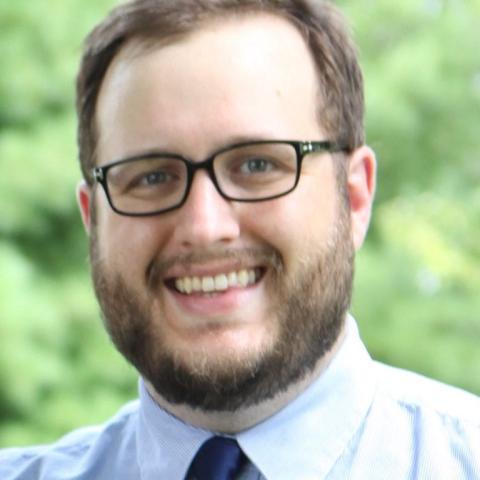
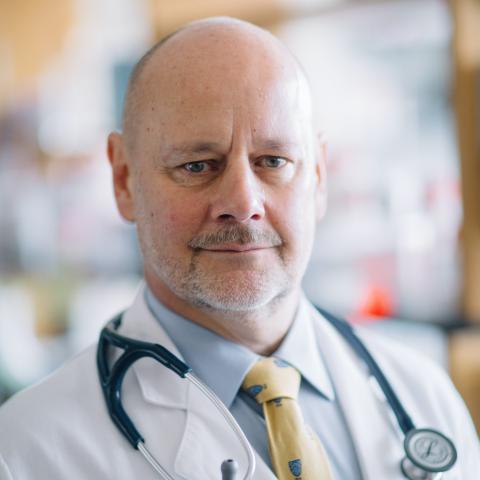
Erich Williams
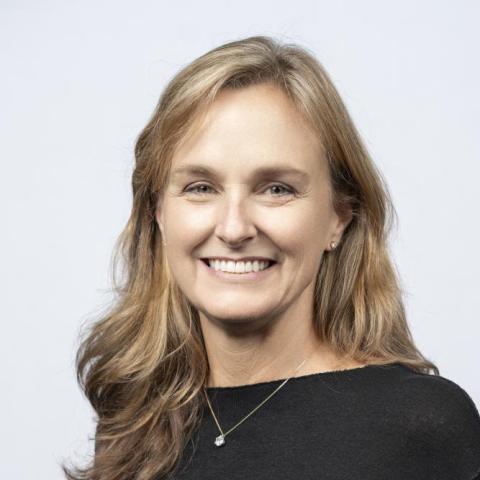
My research focuses on three major areas: (a) understanding and improving worker well-being, (b) temporal dynamics in team contexts, and (c) research methods. Collectively, my research seeks to improve our understanding of optimal human functioning more generally, across time, and within specific contexts (e.g., organizational, teams).
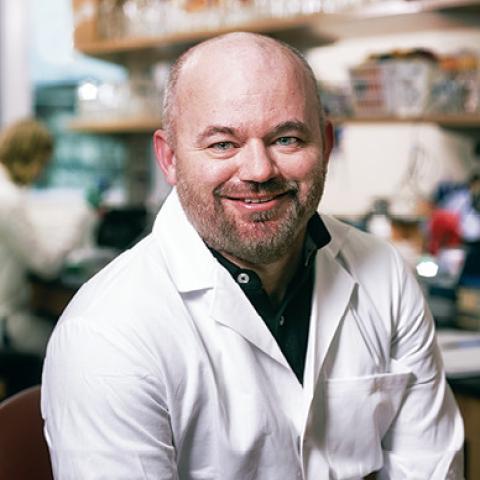
Dr. Whiteley received his B.S. degree in Zoology in 1995 from the University of Texas at Austin and his Ph.D. in Microbiology from the University of Iowa in 2001. His doctoral research involved quorum sensing and biofilm formation in the bacterium Pseudomonas aeruginosa. Following a Postdoctoral Fellowship at Stanford University in 2002, Dr. Whiteley accepted a position as an assistant professor at the University of Oklahoma/Oklahoma Health Sciences Center. In 2006, Dr. Whiteley moved to the University of Texas at Austin where he was promoted to Professor of Molecular Biosciences and Director of the LaMontagne Center for Infectious Disease. In 2017, he accepted the Bennie H. & Nelson D. Abell Chair and Georgia Research Alliance Eminent Scholar in Molecular and Cellular Biology at Georgia Institute of Technology. He also serves as Associate Director of the CF-Air Center at Emory Medical School. Dr. Whiteley has garnered numerous awards for his work including the Merck Irving S. Sigal Memorial Award for national research excellence, the Burroughs Wellcome Investigators in Pathogenesis of Infectious Disease award, recognition as a Kavli fellow of the National Academy of Sciences, the Dean’s teaching excellence award from UT-Austin, and election to the American Academy of Microbiology.
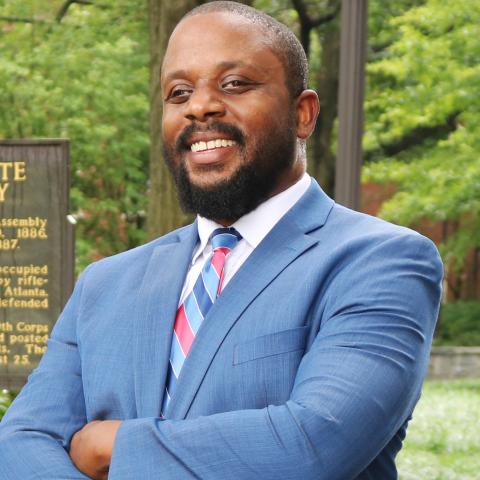
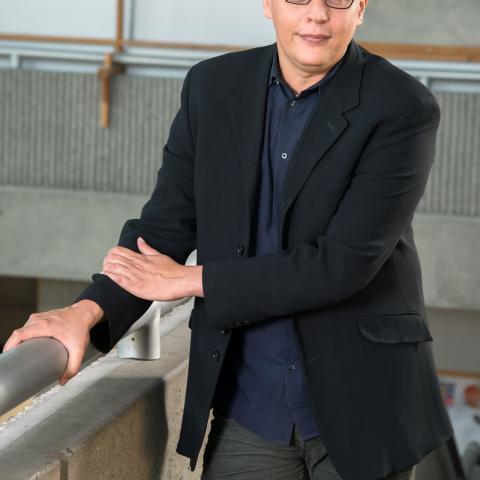
Dr. Lewis A. Wheaton received his Ph.D. in Neuroscience and Cognitive Sciences from the University of Maryland, College Park in 2005. He was a fellow at the National Institutes of Health (Medical Neurology Branch, 2001-2005) studying neural function and recovery of motor control after stroke. In mid-2005 he was awarded a post-doctoral fellowship at the Baltimore Veterans Affairs Medical Center (Maryland) where he performed neuroscience research in aging and stroke motor control in Veterans.
In 2008, Dr. Wheaton joined the School of Applied Physiology at Georgia Tech as an Assistant Professor. He became tenured in 2014 and is currently an Associate Professor in Biological Sciences. Dr. Wheaton is the Director of the Cognitive Motor Control Laboratory at Georgia Tech, engaged in over $1 million in state and federal research funding focused on understanding aspects of human motor control rehabilitation in aging, stroke and amputation. His lab has employed numerous high school, undergraduate, graduate, and post-doctoral fellows. He is the course director for 4 courses in the School of Biological Sciences (Human Neuroimaging, Movement Disorders, Human Neuroanatomy, and the History of Neuroscience). He has Chaired/Co-Chaired 3 international conferences focused on motor control research and clinical outcomes, obtaining funding by federal and private sources. His research has yielded several manuscript publications in the field of motor control neuroscience, several focused expert reviews, and numerous conference presentations both in the US and abroad.
Dr. Wheaton is also an adjunct Associate Professor in the Department of Rehabilitation at Emory School of Medicine and a Member of the Children’s Center for Neurosciences Research at the Emory Children’s Pediatric Research Center.
Dr. Wheaton earned a BS (Biology) degree at Radford University (VA). He is an active parent volunteer at his children's schools and in the local community.
The Cognitive Motor Control Laboratory seeks to understand neurophysiology guiding skillful human-object interactions in upper extremity motor control. We use neuroimaging to identify anatomical and physiological circuits in humans that guide successful skilled behavior. Our clinical studies consider neural systems that can suffer injury or dysfunction related to deficits in skillful motor control, and how to utilize surrogate neural circuits in restorative motor therapies in stroke and upper limb amputation.
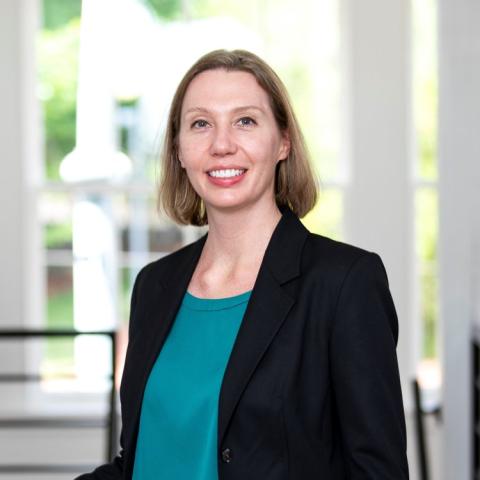
Leanne West is Chief Engineer of Pediatric Technologies at the Georgia Institute of Technology and Pediatric Innovation Catalyst at the Global Center for Medical Innovation where she leads innovation in pediatric medical devices. In her 25+ years working at Georgia Tech, she has led multimillion dollar programs and teams of researchers to develop products for government and industry partners. She also started her own company, Intelligent Access, to take her invention of a wireless personal captioning system to market. She serves as the technical liaison between Georgia Tech and pediatric hospitals around the world, with Children’s Healthcare of Atlanta and Shriners Hospitals being the main partners. West works closely with clinicians to understand and identify problems that need a solution to allow them to take better care of their patients. She is an invited Judge for many medical device pitch competitions and serves on several Boards in the healthcare and technology arenas.
West is the President of the International Children’s Advisory Network (iCAN). Since 2014, iCAN fosters greater global understanding about the importance of the pediatric patient and caregiver voice in healthcare, clinical trials, and research. iCAN gives its members the opportunities to share their stories and experiences in front of organizations like the FDA, AAP, and CDC, and conferences. iCAN is an official partner of the Food and Drug Administration (FDA) Center for Devices and Radiological Health (CDRH) as an official member organization of the Patient and Caregiver Connection Partner program and the Total Product Life Cycle Advisory Program. West is also a patient advocate for one of her two rare diseases, serving on the Foundation for Sarcoidosis Research Patient Advisory Council and Speaker’s Bureau.
She has served as the twice-elected Chair of the Georgia Tech Executive Board (2007, 2008) and was the GT Chair of the State Charitable Campaign (2017). She was recognized by Georgia Trend magazine as one of Georgia’s “40 Under 40” in 2004; she was selected for Leadership Georgia in 2008; she was a member of the team awarded the international Optical Society 2012 Paul F. Forman Engineering Excellence Award; she received Georgia Tech’s Outstanding Achievement in Research Enterprise Enhancement Award in 2014, and she was Women in Technology’s Woman of the year in 2014. In 2017, she was appointed to the board of the Georgia Technology Authority by the late Speaker of the House, David Ralston.
Assured Monitoring; Enhanced Mobility; Social Connectedness
Gil Weinberg is a professor and the founding director of Georgia Tech Center for Music Technology, where he leads the Robotic Musicianship group. His research focuses on developing artificial creativity and musical expression for robots and augmented humans. Among his projects are a marimba playing robotic musician called Shimon that uses machine learning for Jazz improvisation, and a prosthetic robotic arm for amputees that restores and enhances human drumming abilities. Weinberg presented his work worldwide in venues such as The Kennedy Center, The World Economic Forum, Ars Electronica, Smithsonian Cooper-Hewitt Museum, SIGGRAPH, TED-Ed, DLD and others. His music was performed with Orchestras such as Deutsches Symphonie-Orchester Berlin, the National Irish Symphony Orchestra, and the Scottish BBC Symphony while his research has been disseminated through numerous journal articles and patents. Dr. Weinberg received his MS and Ph.D. degrees in Media Arts and Sciences from MIT and his BA from the interdisciplinary program for fostering excellence in Tel Aviv University.
Music Technology; Computer Music; Robotics; Developing Artificial Creativity and Musical Expression for Robots and Augmented Humans
Roger Wartell received his B.S. degree in Physics from Stevens Institute of Technology in 1966. In 1971, he received his Ph.D. in Physics from the University of Rochester where he worked in the group of Elliot Montroll on the DNA helix-coil transition. From 1971-1973 he was a NIH postdoctoral fellow in the laboratory of Robert Wells at the University of Wisconsin-Madison. He was a Visiting Professor at the University of Wisconsin-Madison in 1978-79, and Visiting Scholar at National Institutes of Health-Bethesda from 1987-88.
Wartell joined the faculty at Georgia Tech in 1974. Roger received a NIH Career Development Award in 1979 and served as Associate Chair in School of Physics from 1987-88, and Chair of the School of Biology from 1990-2004. He is a member of the NASA Astrobiology Institute at Georgia Tech. His current research is focused on protein-RNA interactions relating to sRNA regulation in bacteria, and the assembly and reactions of small RNAs in ice.
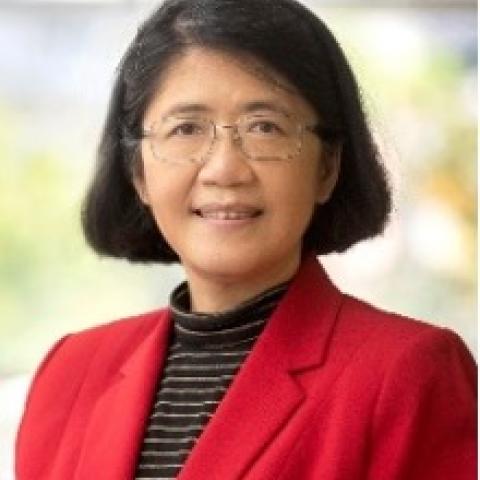
May Dongmei Wang, Ph.D., is The Wallace H Coulter Distinguished Faculty Fellow, professor of BME, ECE and CSE, Director of Biomedical Big Data Initiative, and Georgia Distinguished Cancer Scholar. She is also Petit Institute Faculty Fellow, Kavli Fellow, Fellow of AIMBE, Fellow of IEEE, and Fellow of IAMBE. She received BEng from Tsinghua University China and MS/PhD from Georgia Institute of Technology (GIT). Dr. Wang’s research and teaching are in Biomedical Big Data and AI-Driven Biomedical Health Informatics and Intelligent Reality (IR) for predictive, personalized, and precision health. She has published over 270 referred journal and conference proceeding articles (13,500+ GS-Citations) and delivered over 280 invited and keynote lectures. Dr. Wang’s research has been supported by NIH, NSF, CDC, GRA, GCC, VA, Children’s Healthcare of Atlanta, Enduring Heart Foundation, Wallace Coulter Foundation, Carol Ann and David Flanagan Foundation, Shriner’s Hospitals, Microsoft Research, HP, UCB, and Amazon.
Dr. Wang chairs IEEE Engineering in Medicine and Biology Society (EMBS) BHI-Technical Community and ACM Special Interest Group in Bioinformatics (SIGBio), and is the Senior Editor of IEEE Journal of Biomedical & Health Informatics (IF=7.02), and Associate Editor for IEEE Transactions on BME, and IEEE Review of BME. She was IEEE EMBS Distinguished Lecturer and PNAS (Proceeding of National Academy of Sciences) Emerging Area Editor. During the past decade, Dr. Wang has been a standing panelist for NIH Study Sections, NSF Smart and Connect Health, and Brain Canada, and has co-chaired and helped organize more than 10 conferences by IEEE Engineering in Medicine and Biologics Gordon Research Conferences, ACM Special Interest Groups in Bioinformatics, and IEEE Future Directions.
Dr. Wang received GIT Outstanding Faculty Mentor for Undergrad Research Award and Emory University MilliPub Award for a high-impact paper cited over 1,000 times. She was selected into 2022 Georgia Tech LeadingWomen Program and 2021 Georgia Tech Provost Emerging Leaders Program. Previously, she was Carol Ann and David Flanagan Distinguished Faculty Fellow, GIT Biomedical Informatics Program Co-Director in ACTSI, and Bioinformatics and Biocomputing Core Director in NIH/NCI-Sponsored U54 Center for Cancer Nanotechnology Excellence.
Dr. Waller specializes in bone marrow transplants for acute leukemia, myelodysplastic syndrome, myeloproliferative neoplasms, lymphoma, aplastic anemia, sickle cell disease and in the management of graft-versus-host disease.