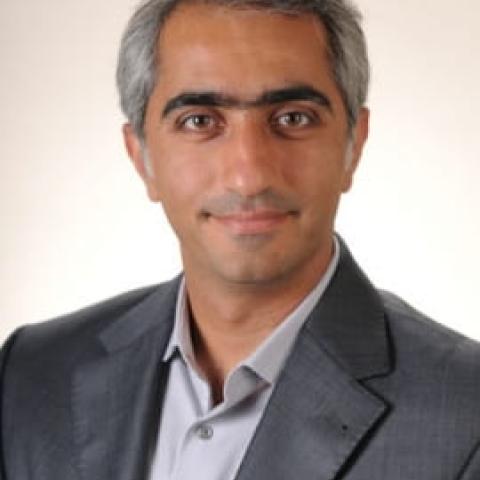
Kamran Paynabar

Kamran Paynabar's profile picture
kamran.paynabar@isye.gatech.edu

Kamran Paynabar is the Fouts Family Early Career Professor and Associate Professor in the H. Milton Stewart School of Industrial and Systems Engineering at Georgia Tech. He received his B.Sc. and M.Sc. in Industrial Engineering from Iran in 2002 and 2004, respectively, and his Ph.D. in Industrial and Operations Engineering from The University of Michigan in 2012. He also holds an M.A. in Statistics from The University of Michigan. His research interests comprise both applied and methodological aspects of machine-learning and statistical modeling integrated with engineering principles. He is a recipient of the INFORMS Data Mining Best Student Paper Award, the Best Application Paper Award from IIE Transactions, the Best QSR refereed paper from INFORMS, and the Best Paper Award from POMS. He has been recognized with the Georgia Tech campus level 2014 CETL/BP Junior Faculty Teaching Excellence Award and the Provost Teaching and Learning Fellowship. He served as the chair of QSR of INFORMS, and the president of QCRE of IISE.

Assistant Professor
Phone
404.385.3141
Office
Groseclose Building, Room 436
Additional Research
  • Aerospace
  • Artificial Intelligence
  • Automotive
  • Big Data Analytics
  • Biobased Materials
IRI/Group and Role
Manufacturing > Affiliated Faculty
Data Engineering and Science > Faculty
Data Engineering and Science > TRIAD Associate
Renewable Bioproducts > Affiliated Faculty
Manufacturing
Data Engineering and Science
University, College, and School/Department
Georgia Institute of Technology > College of Engineering > School of Industrial Systems Engineering
Research Areas
Artificial Intelligence
Renewable Bioproducts
  • Pulp, Paper, Packaging and Tissue

Seung-Joon Paik

Seung-Joon Paik's profile picture
seung.paik@ien.gatech.edu

Seung-Joon Paik received his B.S. degree at the School of Electrical Engineering in 1999 and the M.S. and Ph.D. degrees at the Electrical Engineering and Computer Science from Seoul National University, Seoul, Korea, in 2001 and 2005, respectively. His doctorate research focused on the design, microfabrication and testing of silicon microneedles for neurophysiologic applications, including microfluidic channels and microelectrodes. He was with Automation and Systems Research Institute in Seoul National University, as a postdoctoral associate from 2005 to 2007, where he developed sensors and systems of Inertial Measurement Unit (IMU) for localization and locomotion of robots. After joining a spin-off company from the research lab, SML Electronics, Inc., in 2007, he led the process team for the 8-inch wafer-level packaging process and foundry manufacturing process of MEMS accelerometers and gyroscopes for mobile applications as a senior research engineer. In 2008, he joined the MicroSensors and MicroActuators Laboratory (MSMA Lab.) in Georgia Institute of Technology, Atlanta, Georgia. He has led the BioMEMS research group at the MSMA Lab as a postdoctoral fellow. The BioMEMS research group is dedicated to developing micro/nano needles and biosensors for drug delivery and electrochemical sensing. In 2013, as a research engineer II at the Institute for Electronics and Nanotechnology (IEN) in Georgia Tech, he oversees and coordinates lab sections for College of Engineering courses within IEN which provides instructions to students about CMOS transistor fabrication and MEMS fabrication. He has been teaching and mentoring junior-level research engineers and graduate students on design, analysis, micromachining processes, and technical writing and presentation at Seoul National University, SML Electronics, and Georgia Institute of Technology. In 2014, he also worked in Southern Polytechnic State University (currently, Kennesaw State University) as an adjunct professor and taught a course of Microelectronic Engineering and its labs.

He has published 65+ reviewed journal and conference papers, and invented 13+ patents in USA and Korea, and has been a reviewer for the following Journals – IEEE Journal of Microelectromechanical Systems (JMEMS); IOP Journals of Micromechanics and Microengineering, Nanotechnology, Material Science and Technology, Journal of Physics D, and Smart Materials and Structures; and Sensors and Actuators A: Physics. His current interests are in research and development for the micromachining of silicon and polymer materials and in biomedical applications of micromachined devices and also in inertial sensors, 3-D multi-chip packaging of MEMS devices, energy storage/conversion devices and nano-scale structures.

Teaching Lab Coordinator
Research Engineer II
Phone
404.894.8807
Office
Pettit 205
IRI/Group and Role
Matter and Systems > Research Faculty
University, College, and School/Department
Georgia Institute of Technology > College of Engineering

Sankar Nair

Sankar Nair's profile picture
sankar.nair@chbe.gatech.edu
Professor, School of Chemical and Biomolecular Engineering
James F. Simmons Faculty Fellow, School of Chemical and Biomolecular Engineering
Associate Chair for Industry Outreach, School of Chemical and Biomolecular Engineering
Phone
404.894.4826
Office
ES&T 2224
Additional Research

Nanomaterials; Biofuels; Carbon Capture; Catalysis; Separations Technology; Chemical Recovery; Energy & Water

IRI/Group and Role
Renewable Bioproducts > Affiliated Faculty
Energy > Hydrogen Group
Energy > Research Community
Energy
University, College, and School/Department
Georgia Institute of Technology > College of Engineering > School of Chemical and Biomolecular Engineering
Research Areas
Energy
  • Carbon Capture, Utilization and Storage
  • Advanced Manufacturing for Energy
Renewable Bioproducts
  • Bioindustrial Manufacturing and Biorefining
  • Pulp, Paper, Packaging and Tissue

Christopher Muhlstein

Christopher Muhlstein's profile picture
christopher.muhlstein@mse.gatech.edu

Muhlstein has worked as an engineering consultant at Exponent, Inc. (Failure Analysis Associates). In September, 2002 he joined the faculty in the Department of Materials Science and Engineering at The Pennsylvania State University and was tenured and promoted to associate professor in 2008.

 Muhlstein’s research focuses on understanding the mechanisms of fracture and fatigue in bulk and thin film materials. Muhlstein is a member of Alpha Sigma Mu and Keramos honor societies and an NSF CAREER award recipient. In 2007 he was also named the Corning Research Faculty Fellow in Materials Science and Engineering at The Pennsylvania State University. 

Associate Professor, School of Materials Science and Engineering
Associate Director, MPRL
Phone
404.385.1235
Office
Love 274
Additional Research

Fracture and Fatigue; Thin Films; Polymeric Composites; Advanced Characterization; Nanomaterials; Structural Materials; Paper & Board Mechanics; Biomaterials; Nanocellulose Applications; Biocomposites; New Materials

IRI/Group and Role
Renewable Bioproducts > Affiliated Faculty
Manufacturing > Affiliated Faculty
University, College, and School/Department
Georgia Institute of Technology > College of Engineering > School of Materials Science Engineering

Robert Moon

Robert Moon's profile picture
robertmoon@fs.fed.us
Adjunct Professor
Phone
(404) 894-1026
Additional Research

Sustainable Manufacturing; Cellulosic Nanomaterials; Biomaterials; Nanocellulose Applications; Biocomposites; Aerogels & Hydrogels

IRI/Group and Role
Renewable Bioproducts > Affiliated Faculty
Renewable Bioproducts > Leadership
Renewable Bioproducts
University, College, and School/Department
Georgia Institute of Technology > College of Engineering > School of Materials Science Engineering
Research Areas
Renewable Bioproducts
  • Bioindustrial Manufacturing and Biorefining
  • Pulp, Paper, Packaging and Tissue
  • Circular Materials

Carson Meredith

Carson Meredith headshot photo
carson.meredith@chbe.gatech.edu

Carson Meredith is Professor and James Preston Harris Faculty Fellow in the School of Chemical & Biomolecular Engineering at Georgia Tech and serves as Executive Director of the Renewable Bioproducts Institute (RBI). 


His research focuses on sustainable materials and bioproducts, with particular emphasis on biomass-derived polymers such as cellulose and chitin nanomaterials. Representing the contributions of students and collaborators, this work addresses critical challenges in packaging, coatings, and recycling, and has been featured in NewsweekNBC Nightly NewsBBC, and NPR. Meredith’s research also includes innovations in polymer films, foams, composites and particle adhesion.


Meredith has published over 140 peer-reviewed articles and book chapters, with more than 7,600 citations. His recent research includes the development of recyclable nanocellulose coatings and water vapor-resistant films using renewable materials. He has received multiple patents and has led over $30 million in federal and industry funded research. 


Meredith has served in leadership roles across campus and nationally. At Georgia Tech, he has led RBI since 2020, one of eleven interdisciplinary research institutes, where he has built a community of over 70 faculty focused on circular materials, bio industrial manufacturing, and low-impact papermaking. He is also a member of advisory boards for the Bioproducts Institute (University of British Columbia) and the DOE Joint Bioenergy Institute (JBEI) and serves on the editorial board of Green Materials


He teaches courses in forest product technology and sustainable materials, and co-founded GT-EQUAL, the first American Chemistry Society Bridge Program in chemical engineering. He also led the development of a graduate certificate in Data Science for the Chemical Industry and created a MOOC on High-Throughput Development of Materials, which has reached over 14,000 learners. 


Meredith earned his Ph.D. in Chemical Engineering from the University of Texas at Austin and his B.Ch.E. from Georgia Tech. 

Shape 

Research 

Meredith’s research centers on sustainable materials and bioproducts, with a focus on: 

  • Cellulose and chitin nanomaterials 

  • Renewable packaging and coatings         

  • Polymer thin films and foams

  • Particle adhesion 

  • Energy efficient drying in natural fiber manufacturing


His work integrates environmental sustainability into materials design and manufacturing, and he collaborates across disciplines to advance scalable climate solutions. 

Shape 

Awards and Distinctions 


Selected Publications 

  • Hickmann, T., Tao, L., Stingelin, N., Meredith, J.C. (2024). Low-water-permeability foils based on bio-renewable cellulose-derivatives. RSC Sustainability, 2, 3451–3455. 

  • Ji, Y., Shen, D.E., Lu, Y., Schueneman, G.T., Shofner, M.L., Meredith, J.C. (2023). Aqueous-based recycling of cellulose nanocrystal / chitin nanowhisker barrier coatings. ACS Sustainable Chemistry and Engineering, 11, 10874–10883. 

  • Shin, D., Choi, W.T., Lin, H., Qu, Z., Breedveld, V., Meredith, J.C. (2019). Humidity-Tolerant Capillary Viscous Adhesion of the Honey Bee Pollen Basket Fluid. Nature Communications, 10, 1379. 

  • Satam, C., Irvin, C.W., Lang, A.W., Jallorina, J.C.R., Shofner, M.L., Reynolds, J.R., Meredith, J.C. (2018). Spray-Coated Multilayer Cellulose Nanocrystal—Chitin Nanofiber Films for Barrier Applications. ACS Sustainable Chemistry and Engineering, 6, 10637–10644. 


A full list of publications is available on Google Scholar. 

Executive Director, Renewable Bioproducts Institute
Professor and James Harris Faculty Fellow, School of Chemical and Biomolecular Engineering
Phone
404.385.2151
Office
ES&T 1212
Additional Research

Catalysis; Cellulosic Nanomaterials; Separation Technologies; Nanocellulose Applications; Aerogels & Hydrogels; Films & Coatings; Coatings & Barriers; Biomaterials

IRI/Group and Role
Renewable Bioproducts > Leadership
Renewable Bioproducts > Affiliated Faculty
Energy > Research Community
University, College, and School/Department
Georgia Institute of Technology > College of Engineering > School of Chemical and Biomolecular Engineering
Research Areas
Energy
  • Advanced Manufacturing for Energy
Renewable Bioproducts
  • Circular Materials
  • Pulp, Paper, Packaging and Tissue

Andrew Medford

Andrew Medford's profile picture
andrew.medford@chbe.gatech.edu

Dr. Medford is interested in leveraging materials informatics, statistics, and machine learning to maximize the practical impact of fundamental atomic-scale simulations in the field of surface science and catalysis. His research areas include heterogeneous catalysis, oxide surface chemistry, density functional theory, kinetic models, uncertainty quantification, and Bayesian optimization and inference.

Assistant Professor, School of Chemical and Biomolecular Engineering
Phone
(404) 385-5531
Additional Research

Catalysis, Biochemicals, Biorefining, Chemistry, Sugars, Molecular Simulations, Computational Biology

IRI/Group and Role
Data Engineering and Science > Faculty
Renewable Bioproducts > Affiliated Faculty
Energy > Hydrogen Group
Energy > Research Community
Data Engineering and Science
Energy
University, College, and School/Department
Georgia Institute of Technology > College of Engineering > School of Chemical and Biomolecular Engineering

Research Areas
Energy
  • Carbon Capture, Utilization and Storage
  • AI Energy Nexus
  • Fuels
Renewable Bioproducts
  • Bioindustrial Manufacturing and Biorefining

Jamshad Mahmood

Jamshad Mahmood's profile picture
jamshad.mahmood@rbi.gatech.edu

Jamshad Mahmood has over 23 years of experience in corrosion testing and manufacturing of recovery boilers and pressure vessels. He is a Mechanical/Research Engineer with expertise in the design, manufacturing of industrial equipments and conducting lab corrosion testing e.g., slow strain rate corrosion testing, electrochemical corrosion testing, high-temperature aqueous corrosion testing and molten salts corrosion testing. In addition to laboratory experimentation, Jamshad conducted several field studies evaluating in-situ corrosion of pulp mill equipments e.g., digesters, paper machines, storage tanks and recovery boiler tubes. He manages the corrosion laboratories and chemical inventories for the corrosion group. Prior to joining the Institute of Paper Science and Technology in 1997, he worked as Manager Production for 8 years with Descon Engineering Works – one of the large boiler manufactures.

Mechanical Engineer II
Phone
(404) 894-6647
Additional Research

Corrosion & Reliability; Chemical Recovery; Environmental Processes

IRI/Group and Role
Renewable Bioproducts > Researchers
Research Areas
Renewable Bioproducts
  • Bioindustrial Manufacturing and Biorefining
  • Pulp, Paper, Packaging and Tissue

Chris Luettgen

Chris Luettgen's profile picture
chris.luettgen@rbi.gatech.edu

- - - - - - - - - - - - - - - - - - - - -
Professor of the Practice                       
School of Chemical and Biomolecular Engineering

College of Engineering, Georgia Institute of Technology

Associate Director, Pulp, Paper, Packaging and Tissue, Renewable Bioproducts Institute, an Interdisciplinary Research Institute at GT

Director, GT Pulp and Paper Engineering Undergraduate Certificate Program and Foundation
 

Brief Biography:  
Luettgen has 25 plus years of industry experience, with Scott Paper and Kimberly-Clark Corp., where he most recently served as head of North American Innovation the Kimberly-Clark Professional business sector. He has held positions in product development and innovation as well as in capital project management and manufacturing facility leadership.

For several years, Luettgen has served on the Georgia Tech Renewable Bioproducts Institute Industry Board of Advisors, and as the Chairman of the Board of the Technical Association of the Pulp & Paper Industry (TAPPI).  He earned his bachelor's degree in Paper Engineering at Western Michigan University (’85), his master’s degree at the Institute of Paper Chemistry, Appleton, WI (’87), and his Ph.D. in Surface Chemistry at the Institute of Paper Science and Technology - now the Renewable Bioproducts Institute at Georgia Tech (’91).

He rejoined Georgia Tech in November 2014 as a Professor of the Practice in the School of Chemical and Biomolecular Engineering, and Associate Director of Pulp, Paper, Tissue and Packaging at RBI. He also serves as the Director of the undergraduate Pulp and Paper Certificate Program and its Foundation.

Areas of research interest include:  Recycling; renewable cellulosic feedstocks; replacing fossil-based products with bio-based materials; commercialization of nanocellulosic materials in consumer and packaging products; Smart Manufacturing and Industry 4.0; tissue/towel manufacturing and converting; and manufacturing leadership / operational excellence.

Professor of the Practice
Initiative Lead: Process Efficiency & Intensification of Pulp Paper Packaging & Tissue Manufacturing
Phone
(404) 894-6908
Additional Research

Aeration & Sludge; Bioproducts; Cellulosic Nanomaterials; Deinking; Dissolving Pulp & Regenerated Cellulose; Nanocellulose Applications; Paper; Papermaking; Polymer & Fiber; Pulp & Paper; Pulp & Paper Manufacturing; Recycling; Tissue; Wet-end Chemistry

IRI/Group and Role
Renewable Bioproducts > Affiliated Faculty
Renewable Bioproducts > Leadership
Research Areas
Renewable Bioproducts
  • Pulp, Paper, Packaging and Tissue
Subscribe to Biotechnology