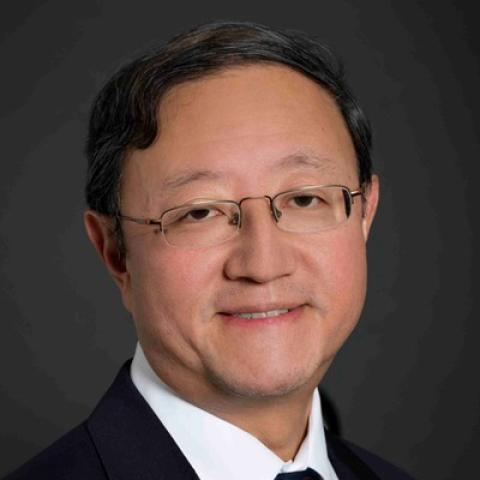
Richard Fujimoto

Richard Fujimoto's profile picture
richard.fuijmoto@cc.gatech.edu

Richard Fujimoto is a Regents’ Professor, Emeritus in the School of Computational Science and Engineering at the Georgia Institute of Technology. He received the Ph.D. degree from the University of California-Berkeley in 1983 in Computer Science and Electrical Engineering. He also received an M.S. degree from the same institution as well as two B.S. degrees from the University of Illinois-Urbana. 

Fujimoto is a pioneer in the parallel and distributed discrete event simulation field. Discrete event simulation is widely used in areas such as telecommunications, transportation, manufacturing, and defense, among others. His work developed fundamental understandings of synchronization algorithms that are needed to ensure the correct execution of discrete event simulation programs on high performance computing (HPC) platforms. His team developed many new algorithms and computational techniques to accelerate the execution of discrete event simulations and developed software realizations that impacted several application domains. For example, his Georgia Tech Time Warp software was deployed by MITRE Corp. to create online fast-time simulations of commercial air traffic to help reduce delays in the U.S. National Airspace. An active researcher in this field since 1985, he authored or co-authored three books and hundreds of technical papers including seven that were cited for “best paper” awards or other recognitions. His research included several projects with Georgia Tech faculty in telecommunications, transportation, sustainability, and materials leading to numerous publications co-authored with faculty across campus.

Regents' Professor Emeritus
Phone
404.894.5615
Office
Coda Building, 1313
Additional Research

discrete-event simulation programs on parallel and distributed computing platforms
IRI/Group and Role
Manufacturing > Affiliated Faculty
Sustainable Systems
Manufacturing
Data Engineering and Science
University, College, and School/Department
Georgia Institute of Technology > College of Computing > School of Computer Science
Research Areas
Artificial Intelligence

Chaitanya Deo

Chaitanya Deo's profile picture
chaitanya.deo@nre.gatech.edu

Dr. Deo came to Georgia Tech in August 2007 as an Assistant Professor of Nuclear and Radiological Engineering. Prior, he was a postdoctoral research associate in the Materials Science and Technology Division of the Los Alamos National Laboratory. He studied radiation effects in structural materials (iron and ferritic steels) and nuclear fuels (uranium dioxide). He also obtained research experience at Princeton University (Mechanical Engineering), Lawrence Livermore National Laboratory, and Sandia National Laboratories.

Professor, Woodruff School of Mechanical Engineering
Phone
(404) 385.4928
Additional Research

Nuclear; Thermal Systems; Materials In Extreme Environments; computational mechanics; Materials Failure and Reliability; Ferroelectronic Materials; Materials Data Sciences

IRI/Group and Role
Data Engineering and Science > Affiliated Faculty
Energy > Research Community
Data Engineering and Science
Matter and Systems > Affiliated Faculty
Energy
University, College, and School/Department
Georgia Institute of Technology > College of Engineering > Woodruff School of Mechanical Engineering
Research Areas
Artificial Intelligence
Energy
  • Nuclear

Zachary Danziger

Zachary Danziger's profile picture
zachary.danziger@emory.edu

The effortlessness of moving your body belies the lurking complexity driving it. We are trying to understand how the nervous system makes something so complicated as controlling a human body feel so natural. We use human subjects studies, animal experiments, mathematical biology, and artificial intelligence to understand neural control of movement. New theories and insight promise advances in physical therapy, human-machine collaboration, brain-computer interfaces, neural modulation of peripheral reflexes, and more.

Associate Professor Division of Physical Therapy, Department of Rehabilitation Medicine
Associate Professor, W.H. Coulter Department of Biomedical Engineering
Phone
404-712-4801
IRI/Group and Role
Bioengineering and Bioscience > Faculty
Bioengineering and Bioscience
University, College, and School/Department
Emory University
Research Areas
Artificial Intelligence

Thomas Conte

Thomas Conte's profile picture
conte@gatech.edu

Tom Conte holds a joint appointment in the Schools of Electrical & Computer Engineering and Computer Science at the Georgia Institute of Technology. He is the founding director of the Center for Research into Novel Computing Hierarchies (CRNCH). His research is in the areas of computer architecture and compiler optimization, with emphasis on manycore architectures, microprocessor architectures, back-end compiler code generation, architectural performance evaluation and embedded computer system architectures.

Professor, School of Electrical & Computer Engineering and School of Computer Science
Phone
(404) 385-7657
Office
Klaus 2334
Additional Research

Computer Architecture; Compiler Optimization

IRI/Group and Role
Data Engineering and Science > Affiliated Faculty
Energy > Research Community
Data Engineering and Science
Energy
University, College, and School/Department
Georgia Institute of Technology > College of Computing > School of Computer Science
Georgia Institute of Technology > College of Engineering > School of Electrical and Computer Engineering
Research Areas
Artificial Intelligence
Energy
  • Energy Systems, Grid Resilience, and Cybersecurity

Diego Cifuentes

Diego Cifuentes 's profile picture
diego.cifuentes@isye.gatech.edu

Diego Cifuentes is an Assistant Professor in the H. Milton Stewart School of Industrial and Systems Engineering at Georgia Tech. His research centers around the development of mathematical optimization methods, and the application of these methods in engineering areas such as machine learning, statistics, robotics, power systems, and computer vision. He also works in the theoretical analysis of optimization methods, leveraging geometric and combinatorial information to improve efficiency and robustness. Prior to joining ISyE, he served as an applied math instructor in MIT and as a postdoctoral researcher in the Max Planck Institute for Mathematics in the Sciences.

He earned his Ph.D. and M.S. in Electrical Engineering and Computer Science from MIT, and his B.S. in Mathematics and B.S. in Electronics Engineering from Universidad de los Andes.

Assistant Professor
Office
Groseclose 326
Additional Research

Mathematical optimization methodsStatisticsComputer vision

IRI/Group and Role
Data Engineering and Science > Faculty
Data Engineering and Science
University, College, and School/Department
Georgia Institute of Technology > College of Engineering > School of Industrial Systems Engineering
Research Areas
Artificial Intelligence

Vince Calhoun

Vince Calhoun's profile picture
vcalhoun@gatech.edu

Vince Calhoun, Ph.D., is the founding director of the tri-institutional Center for Translational Research in Neuroimaging and Data Science (TReNDS) where he holds appointments at Georgia State, Georgia Tech and Emory. He is the author of more than 900 full journal articles. His work includes the development of flexible methods to analyze neuroimaging data including blind source separation, deep learning, multimodal fusion and genomics, neuroinformatics tools. Calhoun is a fellow of the Institute of Electrical and Electronic Engineers, The American Association for the Advancement of Science, The American Institute of Biomedical and Medical Engineers, The American College of Neuropsychopharmacology, The Organization for Human Brain Mapping (OHBM) and the International Society of Magnetic Resonance in Medicine. He currently serves on the IEEE BISP Technical Committee and is also a member of IEEE Data Science Initiative Steering Committee as well as the IEEE Brain Technical Committee.

Director TReNDS
Director CABI
Distinguished University Professor
IRI/Group and Role
Bioengineering and Bioscience > Faculty
Bioengineering and Bioscience
Research Areas
Artificial Intelligence

Mark Borodovsky

Mark Borodovsky's profile picture
borodovsky@gatech.edu

Dr. Borodovsky and his group develop machine learning algorithms for computational analysis of biological sequences: DNA, RNA and proteins. Our primary focus is on prediction of protein-coding genes and regulatory sites in genomic DNA. Probabilistic models play an important role in the algorithm framework, given the probabilistic nature of biological sequence evolution.

Regents' Professor
Director, Center for Bioinformatics and Computational Genomics
Senior Advisor in Bioinformatics, Division of High Consequence Pathogens and Pathology, Centers for Disease Control and Prevention in Atlanta
Phone
404-894-8432
Office
EBB 2105
Additional Research

Development and applicaton of new machine learning and pattern recognition methods in bioinformatics and biological systems. Development and applicaton of new machine learning and pattern recognition methods in bioinformatics and biological systems. Chromatin; Epigenetics; Bioinformatics

IRI/Group and Role
Bioengineering and Bioscience > Faculty
Data Engineering and Science > Affiliated Faculty
Data Engineering and Science
Bioengineering and Bioscience
University, College, and School/Department
Georgia Institute of Technology > College of Engineering > Coulter Department of Biomedical Engineering
Research Areas
Artificial Intelligence

Amirali Aghazadeh

Amirali Aghazadeh's profile picture
aaghazadeh3@gatech.edu

Amirali Aghazadeh is an Assistant Professor in the School of Electrical and Computer Engineering and also program faculty of Machine Learning, Bioinformatics, and Bioengineering Ph.D. programs. He has affiliations with the Institute for Data Engineering and Science (IDEAS) and Institute for Bioengineering and Biosciences. Before joining Georgia Tech, Aghazaeh was a postdoc at Stanford and UC Berkeley and completed his Ph.D. at Rice University. His research focuses on developing machine learning and deep learning solutions for protein and small molecular design and engineering.
 

Assistant Professor
Phone
713-257-5758
Office
CODA S1209
IRI/Group and Role
Bioengineering and Bioscience > Faculty
Data Engineering and Science > Faculty
Data Engineering and Science
Bioengineering and Bioscience
Matter and Systems > Affiliated Faculty
Space > Faculty
University, College, and School/Department
Georgia Institute of Technology > College of Engineering > School of Electrical and Computer Engineering
Research Areas
Artificial Intelligence

Jacob Abernethy

Jacob Abernethy's profile picture
prof@gatech.edu

Jacob Abernethy is an Associate Professor in the College of Computing at Georgia Tech. He started his faculty career in the Department of Electrical Engineering and Computer Science at the University of Michigan. He completed his Ph.D. in Computer Science at the University of California at Berkeley, and then spent two years as a Simons postdoctoral fellow at the CIS department at UPenn. Abernethy's primary interest is in Machine Learning, with a particular focus in sequential decision making, online learning, online algorithms and adversarial learning models. He did his Master's degree at TTI-C, and his Bachelor's Degree at MIT.

Director for Student Engagement, IDEaS
IRI/Group and Role
Data Engineering and Science > Leadership
Data Engineering and Science > TRIAD Associate
Data Engineering and Science
University, College, and School/Department
Georgia Institute of Technology > College of Computing > School of Computer Science
Research Areas
Artificial Intelligence
Subscribe to Algorithms & Optimizations